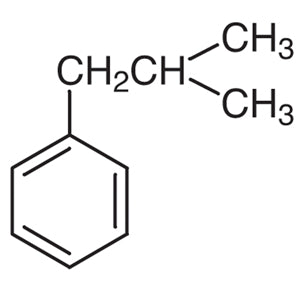
Isobutylbenzene is an organic compound widely used in various chemical applications within laboratory settings. It is a key building block in synthetic chemistry, particularly in the development of complex molecules. The compound consists of an isobutyl group attached to a benzene ring, which gives it a unique chemical structure and reactivity profile. Its versatility makes it an essential component in many laboratory processes, supporting both research and industrial applications. Due to its stability and predictable behavior, it is frequently used in synthetic pathways where controlled reactivity is required.
The properties of isobutylbenzene that make it a preferred choice include its non-polar nature and solubility in organic solvents such as hexane and chloroform. These characteristics allow it to be easily incorporated into chemical reactions that require non-polar environments. Additionally, its chemical stability under normal laboratory conditions ensures minimal degradation during storage and use. This stability, combined with its reactivity, makes it a reliable and efficient material for a wide range of chemical applications.
In Indonesian laboratories, isobutylbenzene is commonly used in chemical research and development. It plays a vital role in the synthesis of industrial chemicals and the creation of new compounds. Its availability and consistent performance make it a go-to material for researchers working on various chemical projects. The compound’s properties align well with the needs of Indonesian laboratories, supporting both academic and industrial research efforts.
- Synthetic chemistry applications benefit from isobutylbenzene due to its stable structure and predictable reactivity, making it ideal for complex molecule synthesis.
- Polymerization reactions often utilize isobutylbenzene as a starting material because of its non-polar nature and compatibility with organic solvents.
- Organic synthesis processes rely on isobutylbenzene for its ability to participate in substitution and condensation reactions under controlled conditions.
- Industrial chemical development uses isobutylbenzene as a building block for creating new compounds with specific functional groups.
- Research laboratories employ isobutylbenzene in the development of specialty chemicals due to its versatility and chemical stability.
| Brand | TCI |
|---|---|
| CAS number | 538-93-2 |
| Molecular formula | — |
| Purity | — |
| Category | Chemistry > Building Blocks > Non-Heterocyclic Building Blocks |
| Pack sizes | Available in various quantities as per standard laboratory supply |
| Physical form | Liquid |
| Storage | Store in a cool, dry place away from direct sunlight |
Isobutylbenzene should be stored in a cool, dry place away from direct sunlight to maintain its chemical stability. It is recommended to use sealed containers made of materials compatible with organic solvents, such as glass or high-density polyethylene. Due to its non-polar nature, it is important to ensure proper ventilation when handling the compound to avoid inhalation of vapors. Laboratory personnel should wear appropriate personal protective equipment, including gloves and safety goggles, to minimize exposure. The compound should not be stored near incompatible materials such as strong oxidizers or acids. Regular monitoring of storage conditions ensures the compound remains in optimal condition for use in laboratory applications.
—
Produk Terkait
-
1,3,5-Tri-tert-butylbenzene TCI T1633
Regular price From Rp 1.378.650,00Regular price -
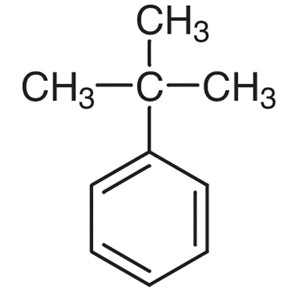
tert-Butylbenzene TCI B0715
Regular price From Rp 505.050,00Regular price -
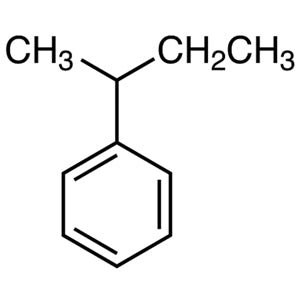
sec-Butylbenzene TCI B0714
Regular price From Rp 637.350,00Regular price -
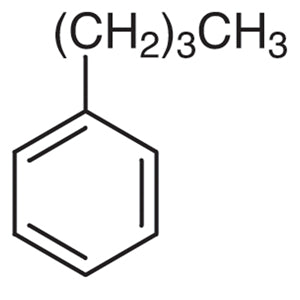
Butylbenzene TCI B0713
Regular price From Rp 875.700,00Regular price -
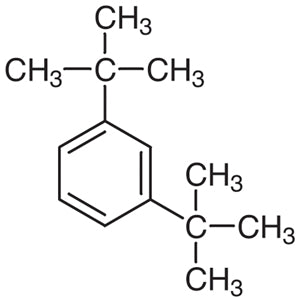
1,3-Di-tert-butylbenzene TCI D2431
Regular price From Rp 2.174.550,00Regular price -
1,4-Di-tert-butylbenzene TCI D2111
Regular price From Rp 903.000,00Regular price -
1,4-Dibutylbenzene TCI D2781
Regular price From Rp 3.683.400,00Regular price -
4-tert-Butylbenzenesulfonamide TCI B3837
Regular price Rp 1.035.300,00Regular price