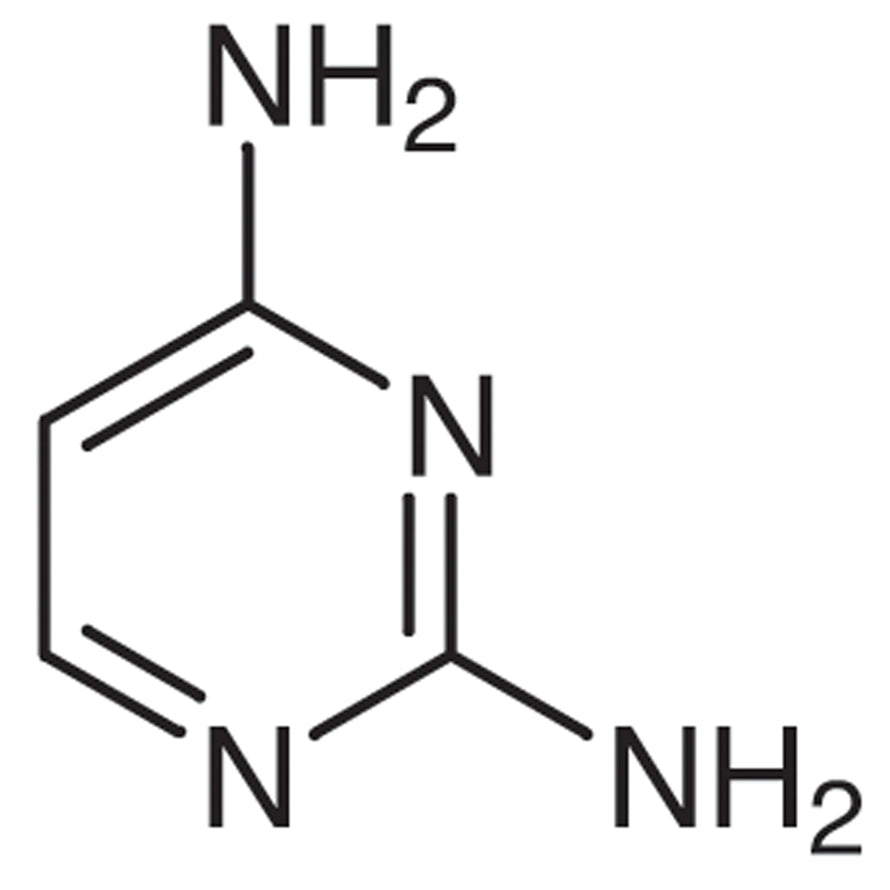
TCI D2120 2,4-Diaminopyrimidine is a six-membered heterocyclic compound containing two nitrogen atoms within the ring and two amino groups located at the 2- and 4-positions. Supplied by TCI as a heterocyclic building block, it occupies an important place in medicinal chemistry research because the pyrimidine scaffold is one of the most frequently encountered motifs in biological molecules as well as across many classes of active pharmaceutical ingredients. In the laboratory, this compound serves as a ready-to-use core that can be further functionalised to build libraries of derivative compounds within active-compound discovery programmes.
The characteristic that makes this material a preferred choice is its capacity for dual hydrogen bonding. The two amino groups act as hydrogen-bond donors while the ring nitrogen atoms act as acceptors, allowing the compound to interact strongly and in a directional manner with binding sites on proteins and with other molecules in supramolecular assemblies. Those same amino groups also provide readily addressable reaction points through acylation, alkylation, sulfonylation, condensation, and coupling reactions, so researchers can extend the structure in a variety of directions from a single, well-defined starting scaffold.
In Indonesian laboratories, this building block is typically used in university and institutional research groups working on medicinal chemistry and organic synthesis, as well as in pharmaceutical development laboratories exploring new derivative structures. It is generally handled at bench scale during exploratory synthesis, where the pyrimidine ring is elaborated step by step and the resulting derivatives are characterised before being carried forward into screening. Its role as a defined, commercially supplied core removes the need to prepare the scaffold in house.
- Medicinal chemistry scaffold development — the pyrimidine ring is a recurring motif in bioactive molecules, so this compound provides a validated starting core for building candidate structures.
- Derivative library synthesis — the two amino groups can be diversified independently through acylation, alkylation, and sulfonylation, allowing many analogues to be generated from one common intermediate.
- Heterocyclic building block chemistry — as a ready-to-use core supplied in defined form, it saves synthetic steps that would otherwise be required to construct the diaminopyrimidine ring itself.
- Supramolecular and molecular recognition studies — the donor–acceptor hydrogen bonding pattern from the amino groups and ring nitrogens supports strong, directional assembly with complementary partner molecules.
- Coupling and condensation reaction studies — the reactive amino substituents participate readily in condensation and coupling chemistry, making the compound a useful substrate for methodology and route-scouting work.
| Brand | TCI |
|---|---|
| CAS number | 156-81-0 |
| Molecular formula | — |
| Purity | — |
| Category | Chemistry > Building Blocks > Heterocyclic Building Blocks |
| Pack sizes | available in the standard research pack sizes offered by TCI for this catalogue item; storage should follow the conditions stated on the manufacturer's label and safety data sheet. |
| Physical form | — |
| Storage | — |
- Product code: D2120
- Chemical name: 2,4-Diaminopyrimidine
Store the material in its original tightly closed container, in a cool, dry, and well-ventilated area away from direct sunlight, moisture, and incompatible substances, following the storage conditions stated on the manufacturer's label and safety data sheet. Keep the container closed when not in use and reseal promptly after weighing to avoid moisture uptake and contamination. Handle in a fume hood using appropriate personal protective equipment, including laboratory coat, gloves, and eye protection, and avoid generating or inhaling dust. Use clean, dry spatulas and glassware when transferring material, label all secondary containers clearly, and dispose of residues and contaminated materials in accordance with institutional chemical waste procedures. Consult the safety data sheet before first use.
—
Produk Terkait
-
4,5-Diaminopyrimidine TCI D3858
Regular price Rp 4.188.450,00Regular price -
4,6-Diaminopyrimidine TCI D3648
Regular price From Rp 1.881.600,00Regular price -
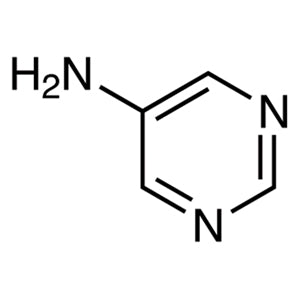
5-Aminopyrimidine TCI A2589
Regular price Rp 2.491.650,00Regular price -
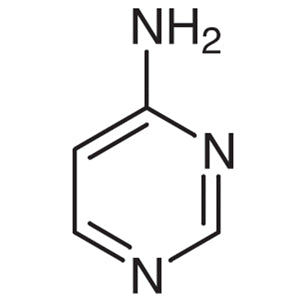
4-Aminopyrimidine TCI A2251
Regular price Rp 3.949.050,00Regular price -
2-Aminopyrimidine TCI A0412
Regular price Rp 1.167.600,00Regular price -
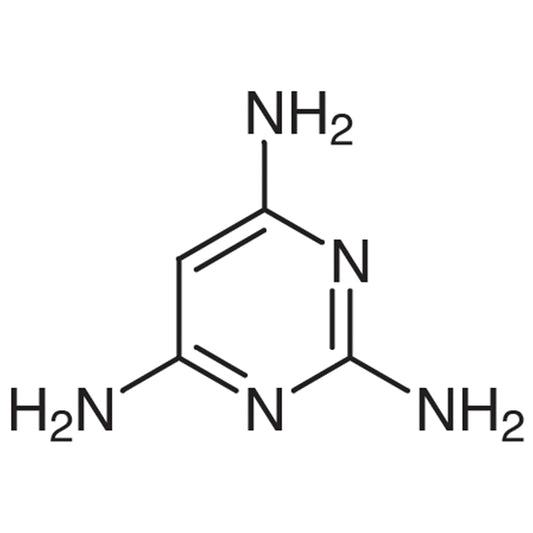
2,4,6-Triaminopyrimidine TCI T0834
Regular price From Rp 928.200,00Regular price -
2,4,5,6-TetraaminopyrimidineSulfate TCI T1462
Regular price Rp 1.538.250,00Regular price -
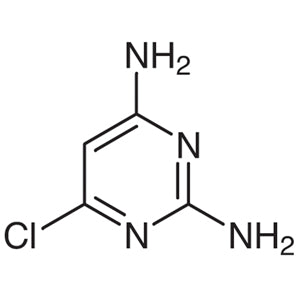
6-Chloro-2,4-diaminopyrimidine TCI C0811
Regular price Rp 1.167.600,00Regular price