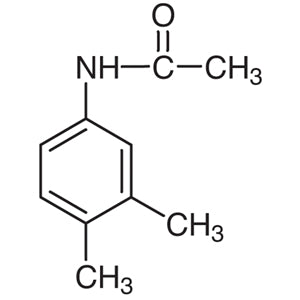
TCI D2122 3',4'-Dimethylacetanilide, CAS 2198-54-1, is an acetanilide derivative carrying two methyl groups at the 3 and 4 positions of its aromatic ring. The compound belongs to the class of simple aromatic amides that are frequently used as intermediates in organic synthesis, particularly when researchers require a benzene ring bearing a double methyl substitution pattern together with an amine group that has already been protected. In the laboratory, the acetamide group in this molecule serves a dual role: it shields the nitrogen from unwanted reactions while simultaneously directing electrophilic substitution toward specific positions on the aromatic ring.
The properties that make this compound a preferred choice begin with its stability as a solid at room temperature, which simplifies weighing and transfer operations. Handling is relatively straightforward compared with free aniline, which oxidises readily and carries a sharp odour. The acetyl group is also easy to remove by either acid or base hydrolysis whenever the free amine is needed again, so the protection step does not become a synthetic dead end. In addition, the 3,4-dimethyl substitution pattern imparts a distinctive combination of electronic character and steric hindrance, which is useful for controlling selectivity during subsequent nitration, halogenation, or sulfonation steps.
In Indonesian laboratories, this material typically finds a place on the bench in university and institutional organic synthesis groups, in research units developing new molecules, and in analytical work where a well-defined aromatic amide is required as a starting material or comparison substance. As a TCI product, consistency of quality between lots makes it easier for researchers to compare results across repeated experiments and across different working periods, which matters when a synthesis route is being optimised step by step.
- Protected aniline building block: the acetamide group masks the nitrogen during multi-step sequences, then releases the free amine cleanly by acid or base hydrolysis when required.
- Directed electrophilic aromatic substitution studies: the acetamido group orients incoming electrophiles to defined ring positions, giving predictable outcomes in nitration, halogenation, and sulfonation experiments.
- Non-heterocyclic building block for organic synthesis: supplies a ready-made 3,4-dimethyl-substituted benzene core, saving the effort of installing that substitution pattern from scratch.
- Selectivity and steric hindrance investigations: the adjacent 3,4-methyl pair creates a distinctive electronic and steric environment useful for probing regiochemical preferences in ring functionalisation.
- Reference and comparison material in method development: consistent lot-to-lot quality from TCI allows results from repeated syntheses and analytical runs to be compared reliably over time.
| Brand | TCI (Tokyo Chemical Industry) |
|---|---|
| CAS number | 2198-54-1 |
| Molecular formula | — |
| Purity | — |
| Category | Chemistry > Building Blocks > Non-Heterocyclic Building Blocks |
| Pack sizes | — |
| Physical form | solid at room temperature; pack sizes available on request |
| Storage | — |
- Product code: D2122
- Chemical name: 3',4'-Dimethylacetanilide
Store the container in a cool, dry, well-ventilated area away from direct sunlight, heat sources, and incompatible reagents such as strong oxidising agents, strong acids, and strong bases. Keep the material in its original tightly closed container, or transfer it to a clean, chemically compatible screw-cap glass or amber bottle that is clearly labelled with the substance name and CAS number. Handle the solid in a fume hood or a well-ventilated workspace to limit dust exposure, and wear standard laboratory personal protective equipment including a lab coat, safety glasses, and suitable chemical-resistant gloves. Avoid inhaling dust, avoid contact with skin and eyes, and wash hands thoroughly after use. Reseal the container promptly after weighing to prevent moisture uptake, and dispose of residues and contaminated materials in accordance with the applicable institutional and local chemical waste procedures. Always consult the manufacturer's safety data sheet before first use.
—
Produk Terkait
-
2-Chloro-2',6'-dimethylacetanilide TCI C2307
Regular price From Rp 610.050,00Regular price -
4'-Bromo-3'-methylacetanilide TCI B3142
Regular price From Rp 477.750,00Regular price -
4'-Bromo-2'-methylacetanilide TCI B1556
Regular price Rp 1.961.400,00Regular price -
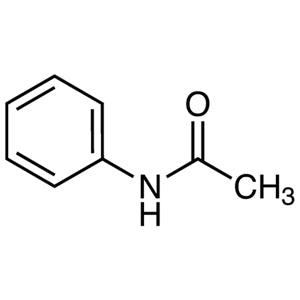
Acetanilide TCI A3272
Regular price Rp 1.140.300,00Regular price -
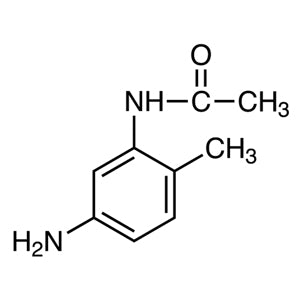
5'-Amino-2'-methylacetanilide TCI A2724
Regular price From Rp 1.565.550,00Regular price -
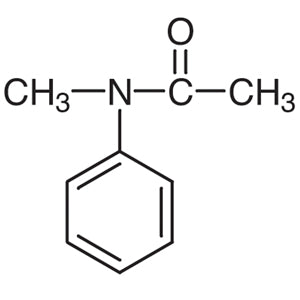
N-Methylacetanilide TCI M0134
Regular price Rp 1.431.150,00Regular price -
2'-Hydroxy-5'-methylacetanilide TCI H1442
Regular price From Rp 452.550,00Regular price -
4'-Methylacetoacetanilide TCI A1021
Regular price Rp 557.550,00Regular price