


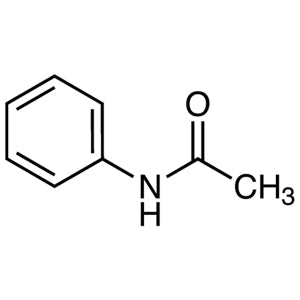
Acetanilide is a widely used chemical compound in laboratory settings, particularly in organic chemistry experiments. As a fundamental building block, it plays a crucial role in the synthesis of various organic compounds, including paracetamol and other pharmaceutical derivatives. Its versatility makes it an essential reagent for researchers and students alike. In the laboratory, acetanilide is commonly employed to study molecular structures, reaction mechanisms, and the development of new chemical compounds. Its stability and availability in multiple packaging formats ensure its use across a wide range of experimental scales and applications.
One of the key reasons acetanilide is preferred in laboratory work is its chemical stability and high melting point. These properties make it suitable for experiments requiring elevated temperatures without significant evaporation or decomposition. Additionally, its solid form simplifies handling and accurate measurement, which is critical in both educational and research environments. The compound's predictable behavior under various reaction conditions further enhances its reliability as a standard reagent in chemical synthesis.
In Indonesian laboratories, acetanilide is frequently used in both educational and applied research contexts. It is an integral part of chemistry practical courses in higher education institutions and secondary schools, where students gain hands-on experience with chemical synthesis techniques. Its application in applied research supports the development of new compounds and the exploration of medicinal and pharmacological properties, contributing to scientific advancement in the region.
- Organic synthesis experiments benefit from acetanilide's stability and predictable chemical behavior, making it a reliable reagent for creating complex organic compounds.
- Educational laboratories use acetanilide to teach fundamental concepts in chemical synthesis, providing students with practical experience in laboratory techniques.
- Pharmaceutical research applications often involve acetanilide as a precursor for the development of analgesic and anti-inflammatory drugs, such as paracetamol.
- Analytical chemistry experiments may utilize acetanilide as a standard reference material for calibration and quality control purposes.
- Industrial chemical processes incorporate acetanilide due to its chemical inertness and ease of handling, supporting large-scale production of organic compounds.
| Brand | TCI |
|---|---|
| CAS number | 103-84-4 |
| Molecular formula | — |
| Purity | — |
| Category | Chemistry > Building Blocks > Non-Heterocyclic Building Blocks |
| Pack sizes | Available in various quantities to suit different laboratory needs |
| Physical form | Solid |
| Storage | Store in a cool, dry place away from direct sunlight |
Acetanilide should be stored in a cool, dry environment to maintain its chemical stability and prevent degradation. It is best kept in airtight containers to minimize exposure to moisture and air, which could affect its integrity over time. Due to its solid form, it is easily measurable and suitable for use in both small-scale and large-scale experiments. In laboratory settings, it is important to handle acetanilide with care, using appropriate personal protective equipment to ensure safety. While it is generally considered non-toxic, proper handling procedures should be followed to avoid any potential hazards associated with chemical exposure. Its inert nature makes it relatively safe to work with, but standard laboratory safety protocols should still be observed when handling any chemical compound.
—
Produk Terkait
-
4'-Iodoacetanilide TCI I0846
Regular price From Rp 848.400,00Regular priceRp 609.000,00Sale price From Rp 848.400,00 -
4'-Acetoxyacetanilide TCI A0067
Regular price From Rp 1.167.600,00Regular priceRp 831.600,00Sale price From Rp 1.167.600,00 -
Acetoacetanilide TCI A0046
Regular price From Rp 557.550,00Regular priceRp 405.300,00Sale price From Rp 557.550,00 -
4'-Bromo-3'-methylacetanilide TCI B3142
Regular price From Rp 530.250,00Regular priceRp 386.400,00Sale price From Rp 530.250,00 -
4'-Bromo-3'-chloroacetanilide TCI B3141
Regular price From Rp 822.150,00Regular priceRp 590.100,00Sale price From Rp 822.150,00 -
4'-Bromo-2'-chloroacetanilide TCI B2413
Regular price From Rp 875.700,00Regular priceRp 627.900,00Sale price From Rp 875.700,00 -
4'-Bromo-2'-methylacetanilide TCI B1556
Regular price Rp 2.013.900,00Regular priceRp 1.423.800,00Sale price Rp 2.013.900,00 -
2-Benzoylacetanilide TCI B0904
Regular price From Rp 795.900,00Regular priceRp 572.250,00Sale price From Rp 795.900,00


