TCI D2169 trans-2,3-Dibromo-2-butene-1,4-diol is a four-carbon compound that combines three different types of functional group within one small molecule: a carbon-carbon double bond with defined trans geometry, two bromine atoms attached to the double-bond carbons, and two primary hydroxyl groups at either end of the chain. This density of functionality makes it a highly versatile building block in the organic synthesis laboratory, because researchers can choose to react the hydroxyl groups first, use the bromine atoms as coupling points, or address both in a staged, planned route.
The property that gives this compound its value is the presence of vinylic bromine bonded directly to sp2 carbon. Carbon-bromine bonds of this type are a natural partner for palladium-catalysed cross-coupling reactions, opening the way to the formation of both carbon-carbon and carbon-heteroatom bonds on the alkene framework. The primary hydroxyl groups at each end can be esterified, etherified, protected, or converted into leaving groups, and because they sit in symmetrical positions, double modification proceeds uniformly. The locked trans configuration is also important, since it carries defined stereochemical information forward through the synthetic sequence.
In Indonesian laboratories, a reagent of this kind is typically used in university and institutional research groups working on organic synthesis, methodology development, and the preparation of intermediates for further study. It is normally ordered in small research quantities for bench-scale reactions rather than production work, and is handled alongside standard cross-coupling catalysts, protecting-group reagents, and anhydrous solvents. Because it is supplied by TCI as a catalogue research chemical, laboratories generally plan its use against a specific synthetic route and store the remainder of the pack for subsequent steps.
Related TCI products
- TCI B3384 821-11-4 trans-2-Butene-1,4-diol
- TCI B0693 6117-80-2 cis-2-Butene-1,4-diol
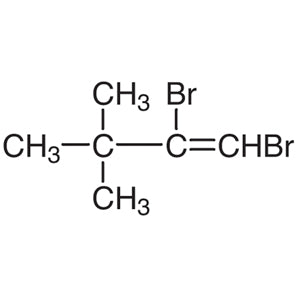
- TCI D2914 99584-95-9 1,2-Dibromo-3,3-dimethyl-1-butene
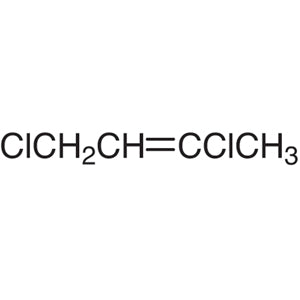
- TCI D0351 926-57-8 1,3-Dichloro-2-butene (cis- and trans- mixture)
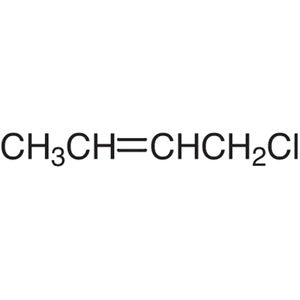
- TCI C1686 591-97-9 Crotyl Chloride (cis- and trans- mixture, contains 38% 3-Chloro-1-butene at maximum)
- TCI D2944 821-06-7 trans-1,4-Dibromo-2-butene
- Palladium-catalysed cross-coupling studies — the vinylic carbon-bromine bonds serve as reliable coupling handles for building carbon-carbon bonds directly onto a defined alkene framework.
- Stereodefined intermediate synthesis — the locked trans geometry of the double bond allows researchers to carry known stereochemical information through several steps of a planned route.
- Selective functional group chemistry — the two primary hydroxyl groups can be esterified, etherified, or protected first, leaving the bromine positions available for later transformation.
- Symmetrical bis-functionalisation work — because both hydroxyl groups occupy equivalent positions on the chain, double modification reactions proceed uniformly and simplify product characterisation.
- Non-heterocyclic building block applications — as a compact four-carbon scaffold with three functional group types, it supports methodology development and fragment assembly in synthetic organic research.
| Brand | TCI (Tokyo Chemical Industry) |
|---|---|
| CAS number | 21285-46-1 |
| Molecular formula | — |
| Purity | — |
| Category | Chemistry > Building Blocks > Non-Heterocyclic Building Blocks |
| Pack sizes | available in standard TCI research-scale pack sizes; please confirm the size required when ordering |
| Physical form | — |
| Storage | store according to the conditions stated on the manufacturer's label and safety data sheet |
- Catalogue number: D2169
- Chemical name: trans-2,3-Dibromo-2-butene-1,4-diol
Store the container tightly closed in a cool, dry, well-ventilated area away from direct sunlight, heat sources, and incompatible chemicals, following the storage conditions given on the TCI label and safety data sheet. Keep the material in its original supplier container, or in a clean, clearly labelled glass container with a chemically resistant closure if transfer is necessary. Handle all weighing and transfer operations in a fume hood, wearing safety glasses, chemically resistant gloves, and a laboratory coat. Avoid inhalation of dust and contact with skin and eyes, close the container immediately after use to limit moisture uptake, and consult the manufacturer's safety data sheet before first use and for waste disposal guidance.
—
Produk Terkait
-
trans-2-Butene-1,4-diol TCI B3384
Regular price From Rp 2.757.300,00Regular price -
cis-2-Butene-1,4-diol TCI B0693
Regular price From Rp 717.150,00Regular price -
1,2-Dibromo-3,3-dimethyl-1-butene TCI D2914
Regular price Rp 1.458.450,00Regular price -
1,3-Dichloro-2-butene(cis-andtrans-mixture) TCI D0351
Regular price Rp 8.533.350,00Regular price -
CrotylChloride(cis-andtrans-mixture,contains38%3-Chloro-1-buteneatmaximum) TCI C1686
Regular price From Rp 689.850,00Regular price -
trans-1,4-Dibromo-2-butene TCI D2944
Regular price From Rp 2.809.800,00Regular price -
2,7-Dibromo-9-phenyl-9H-fluoren-9-ol TCI D5448
Regular price From Rp 1.749.300,00Regular price -
2,4-Dibromo-6-nitrophenol TCI D5323
Regular price Rp 1.881.600,00Regular price