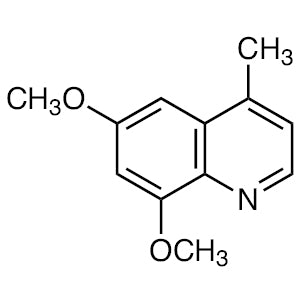
6,8-Dimethoxy-4-methylquinoline is a heterocyclic building block constructed on the quinoline framework, a fused aromatic ring system containing a single nitrogen atom. In this compound, the benzene ring carries two methoxy groups while position 4 of the pyridine ring carries a methyl group. The quinoline skeleton itself is one of the most frequently encountered motifs in pharmaceutical active ingredients, dyes, and coordination ligands, so a pre-substituted derivative such as this one saves considerable time for researchers who want to move directly into advanced functionalization steps without building the ring system from scratch.
The properties that make this compound attractive are the combination of an electron-rich oxygenation pattern and a reactive methyl group. The two methoxy groups push electron density into the aromatic system, which in turn influences the regioselectivity of substitution reactions and shifts the absorption characteristics of the compound. The methyl group at position 4 is relatively acidic because of its proximity to the ring nitrogen, so it can be deprotonated and reacted with aldehydes or other electrophiles to extend the carbon chain. The ring nitrogen itself functions as a Lewis base and a coordination site.
In Indonesian laboratories, a substituted quinoline of this type is typically used in university and institutional research groups working on synthetic organic chemistry, medicinal chemistry scaffolds, and coordination compounds. Because the substitution pattern is already in place, the material fits well into multi-step synthetic routes where researchers need a dependable starting point rather than a lengthy ring-construction sequence. It is generally handled as a research-scale reagent within the normal workflow of a synthesis or characterization laboratory.
- Medicinal chemistry scaffold synthesis — the quinoline core is one of the most common motifs in pharmaceutical active ingredients, so this pre-substituted derivative shortens the route toward analogue libraries.
- Side-chain elongation at the 4-methyl position — the methyl group is relatively acidic due to the adjacent ring nitrogen, allowing deprotonation and condensation with aldehydes or other electrophiles.
- Aromatic substitution chemistry — the two electron-donating methoxy groups raise electron density on the ring system and thereby guide the regioselectivity of further substitution reactions.
- Coordination chemistry and ligand preparation — the ring nitrogen atom acts as a Lewis base and coordination site, making the compound a useful precursor for metal-binding ligand systems.
- Dye and chromophore research — the quinoline framework is a recognised motif in dye chemistry, and the methoxy substitution pattern shifts the absorption characteristics of the molecule.
| Brand | TCI |
|---|---|
| CAS number | 51049-14-0 |
| Molecular formula | — |
| Purity | — |
| Category | Chemistry > Building Blocks > Heterocyclic Building Blocks |
| Pack sizes | research-scale packaging as offered by the manufacturer; please confirm the available size when ordering |
| Physical form | — |
| Storage | keep in the tightly closed original container, protected from light and moisture |
- Catalogue reference: D2190
- Chemical name: 6,8-Dimethoxy-4-methylquinoline
Store the material in its tightly closed original container in a cool, dry, well-ventilated area, away from direct sunlight, heat sources, and incompatible chemicals. Amber glass or the manufacturer's supplied container is preferred, since the methoxy-substituted aromatic system is light-absorbing and prolonged light exposure is best avoided. Handle the compound inside a fume hood, wearing safety glasses, gloves, and a laboratory coat, and avoid inhaling dust or generating aerosols during weighing and transfer. Use clean, dry spatulas to prevent contamination and moisture ingress, close the container promptly after use, and label all derived solutions clearly. Follow the manufacturer's safety data sheet and your institutional chemical waste procedures for disposal of residues.
—
Produk Terkait
-
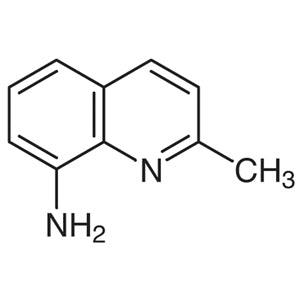
8-Amino-2-methylquinoline TCI A0416
Regular price From Rp 1.273.650,00Regular price -
4,6,8-Trimethylquinoline TCI T1409
Regular price Rp 5.644.800,00Regular price -
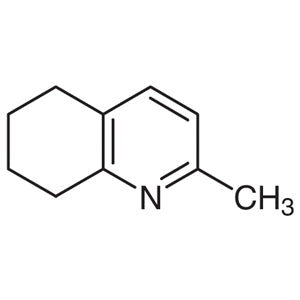
5,6,7,8-Tetrahydro-2-methylquinoline TCI T1408
Regular price Rp 2.016.000,00Regular price -
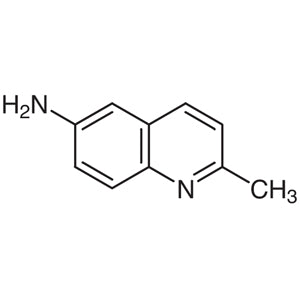
6-Amino-2-methylquinoline TCI A1047
Regular price Rp 3.976.350,00Regular price -
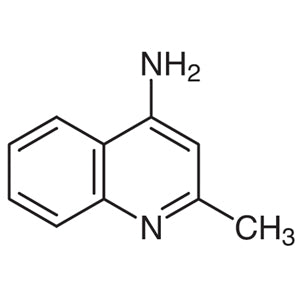
4-Amino-2-methylquinoline TCI A0415
Regular price Rp 3.207.750,00Regular price -
2-Methylquinoline TCI Q0005
Regular price From Rp 452.550,00Regular price -
1-Methylquinolin-2(1H)-one TCI M3591
Regular price From Rp 3.127.950,00Regular price -
2-MethylquinolineN-Oxide TCI M3000
Regular price From Rp 1.485.750,00Regular price