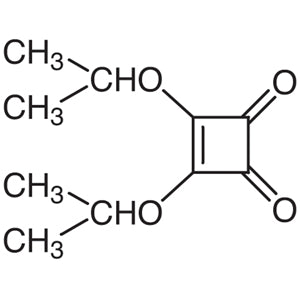
TCI D2207 3,4-Diisopropoxy-3-cyclobutene-1,2-dione, also known as diisopropyl squarate, is a squaric acid ester bearing two isopropoxy groups attached to a four-membered cyclobutenedione ring. Like other squarate esters, this compound serves as a key intermediate for constructing squaramides, a structural motif that plays a major role in modern organocatalysis, molecular recognition, and the design of active compounds. Having this ready-to-use building block on hand saves considerable laboratory time, because researchers can proceed directly to substitution reactions instead of preparing squaric acid derivatives themselves from basic starting materials.
The important difference compared with straight-chain squarate esters lies in the sterically bulkier isopropoxy groups. That steric crowding slows down the second substitution, so researchers gain better control when they wish to stop at the mono-substitution stage and then introduce a different amine in a subsequent step. This capability is especially valuable in the preparation of unsymmetrical squaramides, which form the backbone of many catalysts and receptors. The squarate ring itself is rigid, planar, and able to donate two hydrogen bonds with fixed geometry, which is precisely what makes the resulting scaffolds so useful.
In Indonesian laboratories, this building block is typically found in university and institutional research groups working on synthetic organic chemistry, catalyst development, and medicinal chemistry programmes. Because it belongs to the non-heterocyclic building blocks category, it is generally purchased in small research quantities for exploratory synthesis rather than in bulk. Availability of a defined, ready-prepared reagent is particularly helpful where local preparation of squaric acid derivatives would otherwise add several steps to a project timeline.
Related TCI products
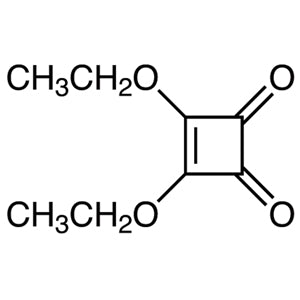
- TCI D3253 5231-87-8 3,4-Diethoxy-3-cyclobutene-1,2-dione
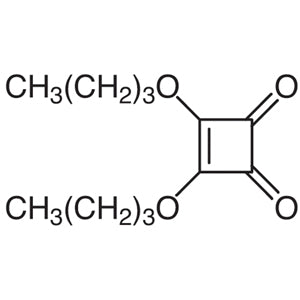
- TCI D2203 2892-62-8 3,4-Dibutoxy-3-cyclobutene-1,2-dione
- TCI D2099 5222-73-1 3,4-Dimethoxy-3-cyclobutene-1,2-dione
- TCI D1399 2892-51-5 3,4-Dihydroxy-3-cyclobutene-1,2-dione
- TCI T3799 15968-37-3 1,3,4,6-Tetrakis(butoxymethyl)tetrahydroimidazo[4,5-d]imidazole-2,5(1H,3H)-dione
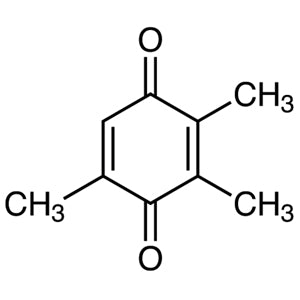
- TCI T3768 935-92-2 2,3,5-Trimethylcyclohexa-2,5-diene-1,4-dione
- Unsymmetrical squaramide synthesis — the bulky isopropoxy groups slow the second substitution, letting researchers isolate the mono-substituted intermediate before introducing a second, different amine.
- Organocatalyst preparation — squaramide-based catalysts built from this intermediate rely on the rigid, planar ring that donates two hydrogen bonds with fixed geometry for substrate activation.
- Molecular recognition and receptor design — the defined hydrogen-bond donor geometry of the squarate scaffold makes it suitable for building anion receptors and host molecules for binding studies.
- Medicinal chemistry and active compound design — squaramide motifs derived from this ester are widely used as amide bioisosteres in the design of biologically active candidate structures.
- General building block chemistry in synthetic method development — as a non-heterocyclic building block, it provides a reliable starting point for exploring new substitution and coupling methodologies.
| Brand | TCI |
|---|---|
| CAS number | 61699-62-5 |
| Molecular formula | — |
| Purity | — |
| Category | Chemistry > Building Blocks > Non-Heterocyclic Building Blocks |
| Pack sizes | available in standard research-scale TCI catalogue pack sizes; please confirm the current option when ordering |
| Physical form | — |
| Storage | keep in a cool, dry place in the tightly closed original container |
- Chemical name: 3,4-Diisopropoxy-3-cyclobutene-1,2-dione (diisopropyl squarate)
- Catalogue code: D2207
Store the container tightly closed in a cool, dry, well-ventilated area away from moisture, direct sunlight, and sources of heat or ignition. As an activated ester, the material is best kept in its original supplier packaging or in a tightly sealed amber glass bottle, and dispensing under an inert atmosphere is advisable if the laboratory routinely handles moisture-sensitive reagents. Handle all weighing and transfer operations inside a fume hood while wearing safety glasses, chemically resistant gloves, and a laboratory coat. Avoid contact with skin and eyes and avoid breathing any dust or vapour. Keep the compound separate from strong bases, amines, and strong oxidising agents, since these may react with the ester. Always consult the manufacturer's Safety Data Sheet before use, and dispose of residues and contaminated materials through the laboratory's approved chemical waste channel.
—
Produk Terkait
-
3,4-Diethoxy-3-cyclobutene-1,2-dione TCI D3253
Regular price From Rp 2.016.000,00Regular price -
3,4-Dibutoxy-3-cyclobutene-1,2-dione TCI D2203
Regular price From Rp 2.254.350,00Regular price -
3,4-Dimethoxy-3-cyclobutene-1,2-dione TCI D2099
Regular price From Rp 848.400,00Regular price -
3,4-Dihydroxy-3-cyclobutene-1,2-dione TCI D1399
Regular price From Rp 1.458.450,00Regular price -
1,3,4,6-Tetrakis(butoxymethyl)tetrahydroimidazo[4,5-d]imidazole-2,5(1H,3H)-dione TCI T3799
Regular price Rp 5.141.850,00Regular price -
2,3,5-Trimethylcyclohexa-2,5-diene-1,4-dione TCI T3768
Regular price Rp 3.949.050,00Regular price -
1,3,4,6-Tetrakis(hydroxymethyl)tetrahydroimidazo[4,5-d]imidazole-2,5(1H,3H)-dione TCI T3297
Regular price From Rp 1.035.300,00Regular price -
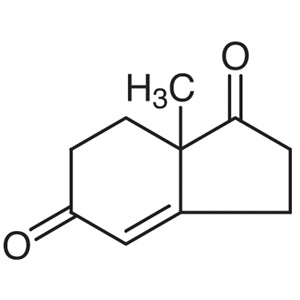
2,3,7,7a-Tetrahydro-7a-methyl-1H-indene-1,5(6H)-dione TCI T2635
Regular price From Rp 2.306.850,00Regular price


![15968-37-3 1,3,4,6-Tetrakis(butoxymethyl)tetrahydroimidazo[4,5-d]imidazole-2,5(1H,3H)-dione - AMI Scientific](http://amiscientific.com/cdn/shop/files/TCI2510T3799.jpg?v=1769058295&width=533)
![5395-50-6 1,3,4,6-Tetrakis(hydroxymethyl)tetrahydroimidazo[4,5-d]imidazole-2,5(1H,3H)-dione - AMI Scientific](http://amiscientific.com/cdn/shop/files/TCI2510T3297.jpg?v=1769181342&width=533)