3,4-Dihydroxy-3-cyclobutene-1,2-dione with CAS number 2892-51-5, better known as squaric acid, is a four-membered oxocarbon compound bearing two hydroxyl groups and two carbonyl groups on a cyclobutenedione framework. This unusual structure produces a highly distinctive cross-conjugated system that has no direct counterpart among ordinary organic compounds. In the laboratory, it serves as an important building block for constructing squaramides, squaraine dyes, and a wide range of functional molecules that exploit the rigid four-membered ring geometry as a linker joining two recognition units.
The characteristic that makes squaric acid so valuable is its acidity, which is high for a dihydroxy organic compound, arising from stabilisation of the anion through charge delocalisation across the specially aromatic oxocarbon ring. Once converted into a squarate diester, the compound can react sequentially with two different amines, giving unsymmetrical squaramides that present two hydrogen bond donors pointing in parallel directions. This feature is what makes its derivatives so effective as organocatalysts and anion receptors. The planar, rigid framework also holds substituents in a fixed spatial relationship.
In Indonesian laboratories, this material is typically used in university and institutional research groups working on organic synthesis, supramolecular chemistry, and asymmetric organocatalysis, where squaramide-based catalysts and receptors are prepared on a small scale. It is also handled in laboratories developing functional dyes and molecular probes based on the squaraine scaffold. Purchasing is usually in modest research quantities, since the compound is consumed as a synthetic intermediate rather than a bulk reagent.
- Squaramide synthesis for organocatalysis: the compound is first converted to a squarate diester, then treated sequentially with two different amines to build unsymmetrical bifunctional catalysts.
- Anion receptor development in supramolecular chemistry: the two parallel hydrogen bond donors of the resulting squaramide bind anionic guests with a well defined, directional geometry.
- Squaraine dye preparation: the electron-poor four-membered ring acts as the central acceptor unit in extended chromophores used for functional dye and probe studies.
- Rigid linker chemistry for bifunctional molecules: the planar cyclobutenedione framework holds two recognition units at a fixed distance and orientation without conformational drift.
- Acid-base and oxocarbon chemistry studies: its unusually high acidity for a dihydroxy organic compound makes it a reference substrate for teaching and investigating charge delocalisation.
| Brand | TCI |
|---|---|
| CAS number | 2892-51-5 |
| Molecular formula | — |
| Purity | — |
| Category | Chemistry > Building Blocks > Non-Heterocyclic Building Blocks |
| Pack sizes | available in standard research quantities as supplied by the manufacturer |
| Physical form | — |
| Storage | — |
- Product code: D1399
- Chemical name: 3,4-Dihydroxy-3-cyclobutene-1,2-dione (squaric acid)
Store the material in its original tightly closed manufacturer container, in a cool, dry, and well ventilated area away from moisture and incompatible materials, particularly bases and strong oxidising agents. Because the compound is an acidic solid, handle it in a fume hood using nitrile gloves, safety goggles, and a laboratory coat, and avoid generating dust during weighing and transfer. Use clean, dry spatulas and glass or chemically resistant containers when subdividing material, and close the container promptly after use to limit moisture uptake. Wash hands after handling and consult the manufacturer's safety data sheet before first use.
—
Produk Terkait
-
Bis(2,2,6,6-tetramethyl-3,5-heptanedionato)copper(II) TCI B6318
Regular price From Rp 3.896.550,00Regular price -
Bis(2,2,6,6-tetramethyl-3,5-heptanedionato)lead(II) TCI B6371
Regular price From Rp 2.227.050,00Regular price -
1,1'-[Methylenebis(4,1-phenylene)]bis(2-hydroxy-2-methylpropan-1-one) TCI B6768
Regular price From Rp 1.458.450,00Regular price -
Tris(2,4-pentanedionato)chromium(III) TCI C0336
Regular price From Rp 795.900,00Regular price -
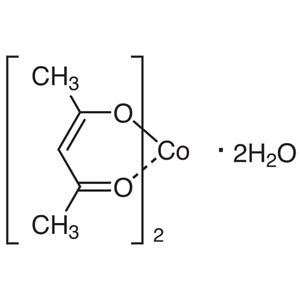
Bis(2,4-pentanedionato)cobalt(II)Dihydrate TCI C0373
Regular price From Rp 2.041.200,00Regular price -
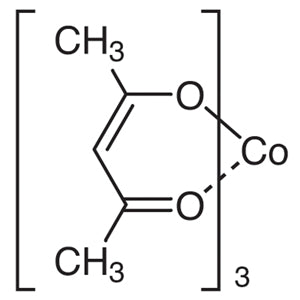
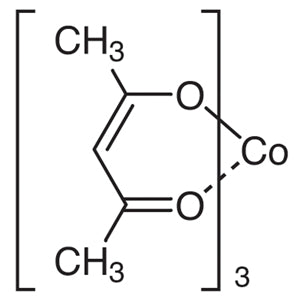
Tris(2,4-pentanedionato)cobalt(III) TCI C0374
Regular price From Rp 1.431.150,00Regular price -
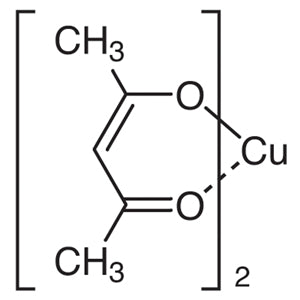
Bis(2,4-pentanedionato)copper(II) TCI C0384
Regular price From Rp 637.350,00Regular price -
Capsanthin(=PaprikaExtract)(Vegetableoilsolution) TCI C0781
Regular price Rp 1.167.600,00Regular price


![1,1'-[Methylenebis(4,1-phenylene)]bis(2-hydroxy-2-methylpropan-1-one) (CAS 474510-57-1) - TCI B6768 - AMI Scientific](http://amiscientific.com/cdn/shop/files/TCI2510B6768.jpg?v=1767094201&width=533)