TCI B6371 is bis(2,2,6,6-tetramethyl-3,5-heptanedionato)lead(II), CAS number 21319-43-7. It is a lead(II) coordination compound in which the metal centre is bound to two β-diketonate ligands. In the literature, compounds of this type are often abbreviated as Pb(TMHD)2 or Pb(thd)2. The material belongs to the inorganic chemistry and main-group element catalysis group. In the laboratory it serves as a source of lead that dissolves in organic solvents, so it is a good precursor for synthesising lead-based materials and for coordination chemistry studies.
Its bulky β-diketonate ligands carry tert-butyl groups. These give the complex a metal-organic character that sets it apart from ordinary inorganic lead salts, and they make it easier to handle in non-aqueous systems. For this reason, β-diketonate complexes are widely considered as precursors for thin-film coating techniques such as chemical vapour deposition (CVD) and atomic layer deposition (ALD). Researchers also choose this compound when they need a lead source with clearly defined stoichiometry, because each molecule contains exactly one lead centre and two identical ligands. For physical properties and the purity of a specific lot, refer to the product label and the manufacturer's data sheet.
In Indonesia, this material is most relevant to university chemistry and materials science departments, research institutes, and laboratories working on functional materials and thin films. Typical users are research groups that prepare lead-containing oxide or perovskite-type materials, study metal β-diketonate complexes, or test precursors for vapour-phase deposition. It also fits graduate thesis projects and research programmes in inorganic synthesis where a lead source compatible with organic solvents is needed. Labs usually order it in research quantities for controlled synthesis work rather than for routine analytical testing.
Related TCI products
- TCI T4217 14324-99-3 Tris(2,2,6,6-tetramethyl-3,5-heptanedionato)manganese(III)
- TCI T4048 18865-74-2 Tetrakis(2,2,6,6-tetramethyl-3,5-heptanedionato)zirconium(IV)
- TCI T1265 15522-71-1 Tris(2,2,6,6-tetramethyl-3,5-heptanedionato)europium(III) [NMR Shift Reagent]
- TCI T1264 15492-48-5 Tris(2,2,6,6-tetramethyl-3,5-heptanedionato)praseodymium(III) [NMR Shift Reagent]
- TCI B6318 14040-05-2 Bis(2,2,6,6-tetramethyl-3,5-heptanedionato)copper(II)
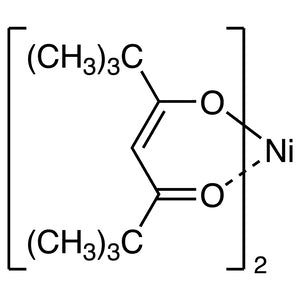
- TCI N1207 14481-08-4 Nickel(II) Bis(2,2,6,6-tetramethyl-3,5-heptanedionate)
- Precursor for thin-film deposition: β-diketonate complexes like this one are considered for chemical vapour deposition and atomic layer deposition because their metal-organic character suits non-aqueous, vapour-phase processes.
- Synthesis of lead-based materials: the compound supplies lead in a form that dissolves in organic solvents, which supports solution-based preparation of lead-containing functional and oxide materials.
- Coordination chemistry studies: as a well-defined lead(II) complex with two β-diketonate ligands, it is a useful model compound for studying ligand binding, structure, and reactivity at main-group metal centres.
- Stoichiometric lead source in research synthesis: its clearly defined composition lets researchers calculate exact amounts of lead for reactions where precise metal-to-ligand or metal-to-metal ratios matter.
- Comparison with inorganic lead salts: its bulky tert-butyl-substituted ligands set it apart from ordinary lead salts, making it useful for comparative studies of solubility and behaviour in non-aqueous systems.
| Brand | TCI (product code B6371) |
|---|---|
| CAS number | 21319-43-7 |
| Molecular formula | — |
| Purity | — |
| Category | Chemistry > Catalysis and Inorganic Chemistry > Main-group Elements |
| Pack sizes | see the available options on the product page or the manufacturer's label |
| Physical form | refer to the product label and manufacturer's data sheet |
| Storage | follow the storage conditions on the TCI label and safety data sheet |
Store this compound in its original tightly closed container, in a cool, dry, well-ventilated area away from moisture, heat sources, and incompatible materials, unless the manufacturer's label says otherwise. Keep the container clearly labelled and separate from food and drink. Because this is a lead compound, handle it as a toxic substance. Wear gloves, safety glasses, and a lab coat, and weigh or transfer it in a fume hood to avoid breathing in dust or vapour. Wash your hands thoroughly after use. Collect waste and contaminated materials as heavy-metal hazardous waste according to local regulations. Always read the manufacturer's safety data sheet before use.
—
Produk Terkait
-
Tris(2,2,6,6-tetramethyl-3,5-heptanedionato)manganese(III) TCI T4217
Regular price Rp 2.068.500,00Regular priceRp 1.445.850,00Sale price Rp 2.068.500,00 -
Tetrakis(2,2,6,6-tetramethyl-3,5-heptanedionato)zirconium(IV) TCI T4048
Regular price From Rp 1.538.250,00Regular priceRp 1.075.200,00Sale price From Rp 1.538.250,00 -
Tris(2,2,6,6-tetramethyl-3,5-heptanedionato)europium(III)[NMRShiftReagent] TCI T1265
Regular price From Rp 2.121.000,00Regular priceRp 1.498.350,00Sale price From Rp 2.121.000,00 -
Tris(2,2,6,6-tetramethyl-3,5-heptanedionato)praseodymium(III)[NMRShiftReagent] TCI T1264
Regular price Rp 2.013.900,00Regular priceRp 1.423.800,00Sale price Rp 2.013.900,00 -
Bis(2,2,6,6-tetramethyl-3,5-heptanedionato)copper(II) TCI B6318
Regular price From Rp 3.896.550,00Regular priceRp 2.724.750,00Sale price From Rp 3.896.550,00 -
Nickel(II)Bis(2,2,6,6-tetramethyl-3,5-heptanedionate) TCI N1207
Regular price From Rp 1.485.750,00Regular priceRp 1.038.450,00Sale price From Rp 1.485.750,00 -
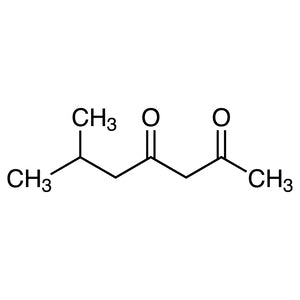
6-Methyl-2,4-heptanedione TCI M0597
Regular price Rp 1.353.450,00Regular priceRp 946.050,00Sale price Rp 1.353.450,00 -
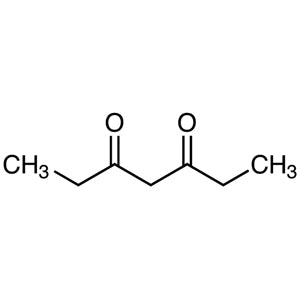
3,5-Heptanedione TCI H1395
Regular price From Rp 2.359.350,00Regular priceRp 1.649.550,00Sale price From Rp 2.359.350,00