

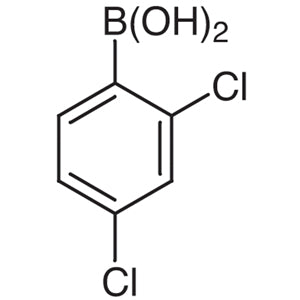
2,4-Dichlorophenylboronic Acid (TCI D2494) is a chemical compound widely used in organic reactions, particularly in the synthesis of boron-containing compounds. Its versatility makes it an essential reagent in modern chemical research, especially in the development of pharmaceuticals and organic materials. This compound is known for its ability to participate in various coupling reactions, such as the Suzuki-Miyaura reaction, which is crucial for the formation of complex organic structures and drug molecules. Its unique reactivity and compatibility with different ligands make it a valuable tool in molecular modification and functional group transformation.
The compound exhibits chemical stability under controlled conditions, though it is sensitive to moisture and oxidation. The presence of an anhydride in its composition enhances its stability during storage, although careful handling is still required. Its reactivity allows it to efficiently participate in complex chemical processes, making it a preferred choice for researchers aiming to achieve high yields and purity in their experiments. Its chemical properties and functional versatility make it a key component in many synthetic pathways.
In Indonesian laboratories, this compound is commonly used by chemists and pharmacologists for the synthesis and characterization of new compounds. Its availability in various packaging options ensures ease of use and convenience for both academic and industrial research settings. The compound plays a significant role in advancing chemical innovation and pharmaceutical development in the region.
TCI brochures (PDF)
- Suzuki-Miyaura Cross Coupling Reaction 2025-12-01 · p. 9
- Boron Compounds 2025-10-07 · p. 6
Related TCI products
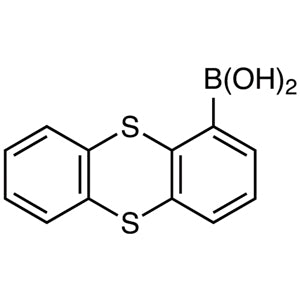
- TCI T3706 108847-76-3 1-Thianthrenylboronic Acid (contains varying amounts of Anhydride)
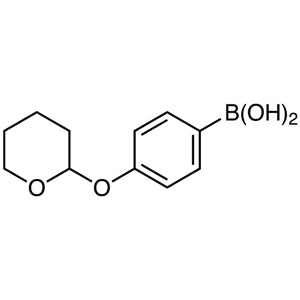
- TCI T3325 182281-01-2 4-(Tetrahydro-2H-pyran-2-yloxy)phenylboronic Acid (contains varying amounts of Anhydride)
- TCI T2621 160032-40-6 Thieno[3,2-b]thiophene-2-boronic Acid (contains varying amounts of Anhydride)
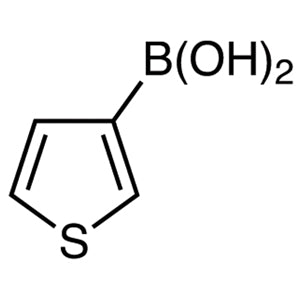
- TCI T1975 6165-69-1 3-Thiopheneboronic Acid (contains varying amounts of Anhydride)
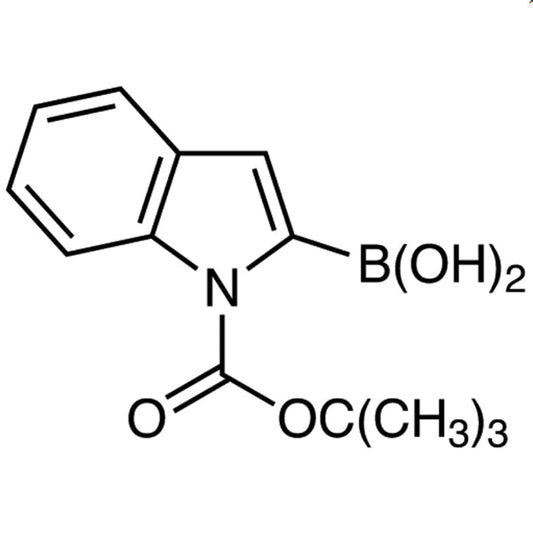
- TCI B5145 213318-44-6 1-(tert-Butoxycarbonyl)indole-2-boronic Acid (contains varying amounts of Anhydride)
- TCI B4774 113893-08-6 Benzo[b]thiophene-3-boronic Acid (contains varying amounts of Anhydride)
- Used in organic synthesis for the preparation of boronic acid derivatives, which are essential in the development of pharmaceutical compounds due to their reactivity and compatibility with various functional groups.
- Applied in Suzuki-Miyaura coupling reactions, which are widely used in the synthesis of heterocyclic compounds and pharmaceuticals, offering efficient and selective cross-coupling of aryl halides with boronic acids.
- Employed in the modification of molecular structures through boron-based reactions, allowing for the introduction of functional groups and the creation of complex organic molecules with desired properties.
- Utilized in the synthesis of bioactive compounds, where its reactivity and stability contribute to the formation of compounds with therapeutic potential in drug discovery processes.
- Integrated into research projects involving green chemistry, where its low toxicity and efficient reaction profiles support sustainable and environmentally friendly synthetic methods.
| Brand | TCI |
|---|---|
| CAS number | 68716-47-2 |
| Molecular formula | — |
| Purity | — |
| Category | Chemistry > Organometallic Reagents > Organoboron [Organometallic Reagents] |
| Pack sizes | Available in various packaging options to suit different laboratory needs |
| Physical form | Solid, typically in powder form |
| Storage | — |
This compound should be stored in a cool, dry place away from moisture and oxidizing agents to maintain its stability and reactivity. It is recommended to use airtight containers made of materials such as glass or polyethylene to prevent exposure to humidity. Due to its sensitivity to oxidation, it is important to avoid prolonged exposure to air and light. Proper labeling and storage conditions are essential to ensure safety and maintain the compound's effectiveness. Laboratory personnel should wear appropriate personal protective equipment when handling this material to minimize any potential risks. Regular monitoring of storage conditions is advised to ensure the integrity of the compound throughout its shelf life.
—
Produk Terkait
-
1-ThianthrenylboronicAcid(containsvaryingamountsofAnhydride) TCI T3706
Regular price From Rp 610.050,00Regular price -
4-(Tetrahydro-2H-pyran-2-yloxy)phenylboronicAcid(containsvaryingamountsofAnhydride) TCI T3325
Regular price From Rp 1.776.600,00Regular price -
Thieno[3,2-b]thiophene-2-boronicAcid(containsvaryingamountsofAnhydride) TCI T2621
Regular price Rp 5.830.650,00Regular price -
3-ThiopheneboronicAcid(containsvaryingamountsofAnhydride) TCI T1975
Regular price From Rp 823.200,00Regular price -
1-(tert-Butoxycarbonyl)indole-2-boronicAcid(containsvaryingamountsofAnhydride) TCI B5145
Regular price Rp 2.411.850,00Regular price -
Benzo[b]thiophene-3-boronicAcid(containsvaryingamountsofAnhydride) TCI B4774
Regular price From Rp 1.220.100,00Regular price -
1,4-Benzodioxane-6-boronicAcid(containsvaryingamountsofAnhydride) TCI B4181
Regular price Rp 3.551.100,00Regular price -
1-(tert-Butoxycarbonyl)-2-pyrroleboronicAcid(containsvaryingamountsofAnhydride) TCI B4063
Regular price From Rp 1.644.300,00Regular price

![160032-40-6 Thieno[3,2-b]thiophene-2-boronic Acid (contains varying amounts of Anhydride) - AMI Scientific](http://amiscientific.com/cdn/shop/files/TCI2510T2621.jpg?v=1768206488&width=533)

![113893-08-6 Benzo[b]thiophene-3-boronic Acid (contains varying amounts of Anhydride) - AMI Scientific](http://amiscientific.com/cdn/shop/files/TCI2510B4774_65b85fee-ce4d-45b9-ad87-4962d8f3452c.jpg?v=1767853515&width=533)

