1-(tert-Butoxycarbonyl)-2-pyrroleboronic Acid is a specialized chemical compound widely used in organic laboratory settings. This reagent plays a crucial role in various synthetic processes, particularly in the formation of heterocyclic compounds and boronic acid-based reactions. Its unique molecular structure combines a boronic acid group with a tert-butoxycarbonyl (Boc) protecting group, enabling it to participate in a range of chemical transformations. Due to its functional group versatility, it is highly valued in synthetic chemistry for its ability to form boron-oxygen bonds and engage in coupling reactions.
The compound’s stability and controlled reactivity make it a preferred choice for researchers working in advanced organic synthesis. The presence of the Boc group enhances its stability, allowing it to be stored and handled with greater ease compared to more reactive boronic acids. This stability ensures that the compound remains effective even under varying laboratory conditions. Additionally, its moderate reactivity allows for precise control during synthesis, reducing the risk of side reactions. These properties make it an essential tool for chemists seeking reliable and reproducible results in complex synthetic pathways.
In Indonesian laboratories, this compound is commonly used in academic and research institutions for the development of new organic compounds. Its application extends to the study of heterocyclic systems and the exploration of boron-based chemistry. The compound’s utility in both teaching and research environments highlights its importance in advancing chemical knowledge and innovation in the region.
TCI brochures (PDF)
- Suzuki-Miyaura Cross Coupling Reaction 2025-12-01 · p. 13
- Boron Compounds 2025-10-07 · p. 12
Related TCI products
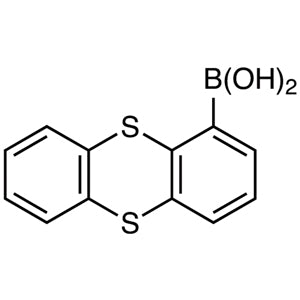
- TCI T3706 108847-76-3 1-Thianthrenylboronic Acid (contains varying amounts of Anhydride)
- TCI T2621 160032-40-6 Thieno[3,2-b]thiophene-2-boronic Acid (contains varying amounts of Anhydride)
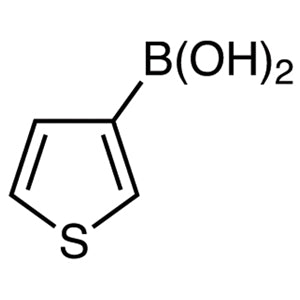
- TCI T1975 6165-69-1 3-Thiopheneboronic Acid (contains varying amounts of Anhydride)
- TCI B5145 213318-44-6 1-(tert-Butoxycarbonyl)indole-2-boronic Acid (contains varying amounts of Anhydride)
- TCI B4774 113893-08-6 Benzo[b]thiophene-3-boronic Acid (contains varying amounts of Anhydride)
- Organic synthesis of heterocyclic compounds due to its ability to form boron-oxygen bonds and participate in coupling reactions.
- Boronic acid-based reactions requiring a stable and controlled reagent with a protecting group for enhanced reactivity.
- Development of complex organic molecules in academic and research settings where precise chemical transformations are essential.
- Investigation of boron chemistry in Indonesian laboratories, supporting both educational and industrial research initiatives.
- Use in synthetic pathways that require the controlled introduction of boronic acid functionalities into organic frameworks.
| Brand | TCI |
|---|---|
| CAS number | 135884-31-0 |
| Molecular formula | — |
| Purity | — |
| Category | Chemistry > Organometallic Reagents > Organoboron [Organometallic Reagents] |
| Pack sizes | As available from supplier |
| Physical form | Solid (exact form may vary depending on supplier) |
| Storage | Store in a cool, dry place away from moisture and direct sunlight |
This compound should be stored in a cool, dry environment to maintain its stability and prevent degradation. It is recommended to keep it in a tightly sealed container to minimize exposure to moisture and air. Due to its chemical nature, it should be handled in a well-ventilated area, and appropriate personal protective equipment, such as gloves and safety goggles, should be worn. Avoid direct contact with skin and eyes, and ensure that spill containment measures are in place. The compound is generally stable under standard laboratory conditions but should be stored away from incompatible materials to ensure safety and effectiveness.
—
Produk Terkait
-
1-ThianthrenylboronicAcid(containsvaryingamountsofAnhydride) TCI T3706
Regular price From Rp 662.550,00Regular priceRp 478.800,00Sale price From Rp 662.550,00 -
Thieno[3,2-b]thiophene-2-boronicAcid(containsvaryingamountsofAnhydride) TCI T2621
Regular price Rp 5.883.150,00Regular priceRp 4.129.650,00Sale price Rp 5.883.150,00 -
3-ThiopheneboronicAcid(containsvaryingamountsofAnhydride) TCI T1975
Regular price From Rp 875.700,00Regular priceRp 627.900,00Sale price From Rp 875.700,00 -
1-(tert-Butoxycarbonyl)indole-2-boronicAcid(containsvaryingamountsofAnhydride) TCI B5145
Regular price Rp 2.464.350,00Regular priceRp 1.738.800,00Sale price Rp 2.464.350,00 -
Benzo[b]thiophene-3-boronicAcid(containsvaryingamountsofAnhydride) TCI B4774
Regular price From Rp 1.272.600,00Regular priceRp 905.100,00Sale price From Rp 1.272.600,00