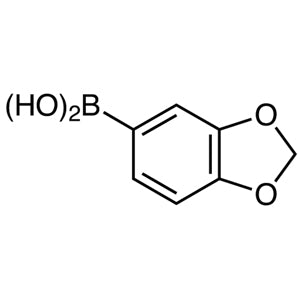
Benzofuran-2-boronic Acid is a chemical compound widely utilized in organic reactions, particularly in the synthesis of heterocyclic compounds and coupling reactions. This reagent plays a crucial role in modern synthetic chemistry due to its unique molecular structure, which combines a benzofuran ring with a boronic acid group. Its versatility makes it an essential component in various chemical processes, especially in the development of complex organic molecules with pharmaceutical and material applications. In laboratory settings, it is often employed as a key reagent in reactions requiring high precision and controlled conditions.
The compound is valued for its chemical stability under specific conditions and its ability to react with a range of reagents, including transition metals and strong bases. These properties make it suitable for advanced synthetic methodologies, such as the Suzuki-Miyaura and Kumada-Corriu cross-coupling reactions. Its reactivity and compatibility with various substrates ensure that it remains a preferred choice for researchers aiming to achieve high yields and selectivity in their experiments. Additionally, its availability in solid form and ease of handling contribute to its practicality in laboratory environments.
In Indonesian laboratories, Benzofuran-2-boronic Acid is commonly used in organic chemistry research, especially within the fields of pharmacy and materials science. Researchers at educational and research institutions frequently rely on this compound for its reliability and effectiveness in synthesizing complex molecules. Its role in academic and industrial research underscores its importance in advancing chemical innovation in the region.
TCI brochures (PDF)
- Suzuki-Miyaura Cross Coupling Reaction 2025-12-01 · p. 13
- Boron Compounds 2025-10-07 · p. 12
- Building Blocks for Organic Semiconductor 2026-03-24 · p. 23
Related TCI products
- TCI B4774 113893-08-6 Benzo[b]thiophene-3-boronic Acid (contains varying amounts of Anhydride)
- TCI B2893 98437-23-1 Benzo[b]thiophene-2-boronic Acid (contains varying amounts of Anhydride)
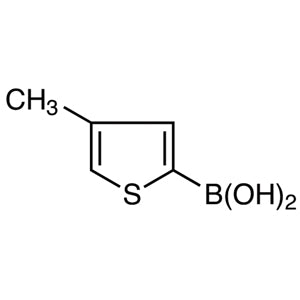
- TCI M2840 162607-15-0 4-Methyl-2-thiopheneboronic Acid (contains varying amounts of Anhydride)
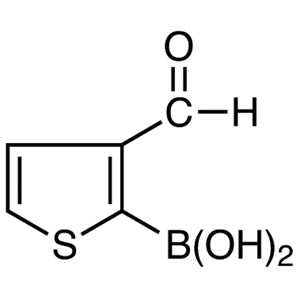
- TCI F0801 17303-83-2 3-Formyl-2-thiopheneboronic Acid (contains varying amounts of Anhydride)
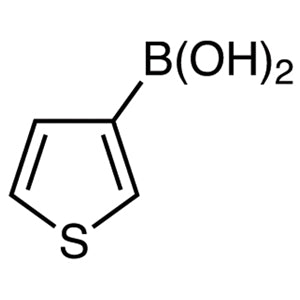
- TCI T1975 6165-69-1 3-Thiopheneboronic Acid (contains varying amounts of Anhydride)
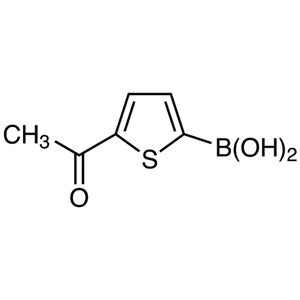
- TCI A2364 206551-43-1 5-Acetyl-2-thiopheneboronic Acid (contains varying amounts of Anhydride)
- Organic synthesis in pharmaceutical research due to its role in creating complex heterocyclic structures.
- Coupling reactions such as Suzuki-Miyaura and Kumada-Corriu for efficient bond formation between organic substrates.
- Development of new materials through controlled chemical reactions that require high precision and selectivity.
- Investigation of reactivity patterns with transition metals and strong bases in advanced synthetic methodologies.
- Support for academic research in chemistry and pharmacology by providing a reliable and versatile reagent.
| Brand | TCI |
|---|---|
| CAS number | 98437-24-2 |
| Molecular formula | — |
| Purity | — |
| Category | Chemistry > Organometallic Reagents > Organoboron [Organometallic Reagents] |
| Pack sizes | — |
| Physical form | Solid |
| Storage | Store in a cool, dry place away from moisture and direct sunlight |
Benzofuran-2-boronic Acid should be stored in a cool, dry environment to maintain its chemical stability and prevent degradation. It is recommended to keep the compound in a sealed container to minimize exposure to moisture and air, which can affect its reactivity. Due to its potential to react with strong bases and transition metals, it should be handled with appropriate laboratory precautions, such as using gloves and safety goggles. Storage in a well-ventilated area is also advised to ensure safe handling. The compound is best kept in airtight containers made of materials that are chemically inert to avoid any unwanted reactions. Regular monitoring of storage conditions is essential to maintain the integrity of the reagent for laboratory use.
—
Product Categories
- Biochemicals and ReagentsAntibioticsAntibiotics (Chemical Structure Class)
- Biochemicals and ReagentsEnzymes, Enzyme Inhibitors, Enzyme SubstratesEnzyme Inhibitors [Biochemicals and Reagents]
- MicrobiologyAntibioticsAntibiotics (Chemical Structure Class)
- Pharmaceutical Development and Drug Discovery ResearchAntibioticsAntibiotics (Chemical Structure Class)
Produk Terkait
-
Benzo[b]thiophene-3-boronicAcid(containsvaryingamountsofAnhydride) TCI B4774
Regular price From Rp 1.272.600,00Regular priceRp 905.100,00Sale price From Rp 1.272.600,00 -
Benzo[b]thiophene-2-boronicAcid(containsvaryingamountsofAnhydride) TCI B2893
Regular price From Rp 795.900,00Regular priceRp 572.250,00Sale price From Rp 795.900,00 -
4-Methyl-2-thiopheneboronicAcid(containsvaryingamountsofAnhydride) TCI M2840
Regular price From Rp 1.458.450,00Regular priceRp 1.035.300,00Sale price From Rp 1.458.450,00 -
3-Formyl-2-thiopheneboronicAcid(containsvaryingamountsofAnhydride) TCI F0801
Regular price From Rp 3.630.900,00Regular priceRp 2.554.650,00Sale price From Rp 3.630.900,00 -
3-ThiopheneboronicAcid(containsvaryingamountsofAnhydride) TCI T1975
Regular price From Rp 875.700,00Regular priceRp 627.900,00Sale price From Rp 875.700,00 -
5-Acetyl-2-thiopheneboronicAcid(containsvaryingamountsofAnhydride) TCI A2364
Regular price From Rp 4.240.950,00Regular priceRp 2.980.950,00Sale price From Rp 4.240.950,00 -
3,4-(Methylenedioxy)phenylboronicAcid(containsvaryingamountsofAnhydride) TCI M2035
Regular price From Rp 2.359.350,00Regular priceRp 1.665.300,00Sale price From Rp 2.359.350,00 -
5-Chloro-2-thiopheneboronicAcid(containsvaryingamountsofAnhydride) TCI C2066
Regular price From Rp 1.246.350,00Regular priceRp 887.250,00Sale price From Rp 1.246.350,00