


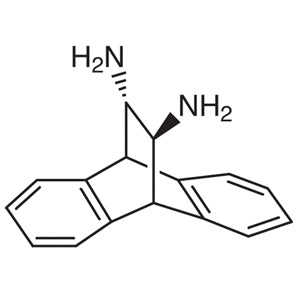
TCI D3444, (11R,12R)-9,10-dihydro-9,10-ethanoanthracene-11,12-diamine, is a chiral vicinal diamine built on a highly rigid bridged anthracene framework. Its two adjacent primary amine groups sit on the ethano bridge, locked into a fixed orientation by the surrounding tricyclic ring system. In the asymmetric synthesis laboratory, this compound serves as a foundational scaffold for preparing chiral ligands, organocatalysts, and enantiomer-differentiating reagents. Its role is important because successful chirality induction depends heavily on having a rigid, stereochemically well-defined framework available from the earliest stage of the work.
The characteristic that makes this diamine a preferred choice is conformational rigidity far exceeding that of open-chain diamines. Because the backbone cannot freely rotate, the chiral environment surrounding the active centre of a catalyst becomes far better defined, and the resulting enantiomeric selectivity tends to be both higher and more reproducible from run to run. The aromatic walls of the two benzene rings add directional steric hindrance while simultaneously opening the possibility of π interactions with the substrate. As a primary diamine, the compound is readily condensed with aldehydes to give salen-type or diimine ligands, and reacted with isothiocyanates to build further reagent classes.
In Indonesian laboratories, this material is typically used in university and institutional research groups working on asymmetric catalysis, chiral ligand design, and stereoselective methodology development. It is normally purchased in small research quantities for ligand synthesis and catalyst screening campaigns rather than for preparative-scale work. Groups publishing on enantioselective transformations, as well as laboratories developing chiral derivatizing reagents for analytical enantiomer discrimination, are the most common users.
TCI brochures (PDF)
- Asymmetric Synthesis 2026-03-18 · p. 6
Related TCI products
- TCI D3445 138517-66-5 (11S,12S)-9,10-Dihydro-9,10-ethanoanthracene-11,12-diamine
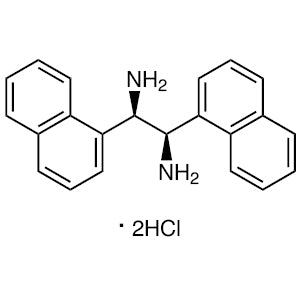
- TCI D5937 1055301-17-1 (1R,2R)-1,2-Di(naphthalen-1-yl)ethane-1,2-diamine Dihydrochloride
- TCI D3809 767291-67-8 (1S,2S)-N,N'-Dimethyl-N,N'-bis(3,3-dimethylbutyl)cyclohexane-1,2-diamine
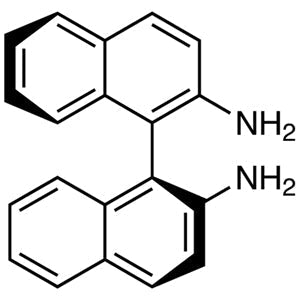
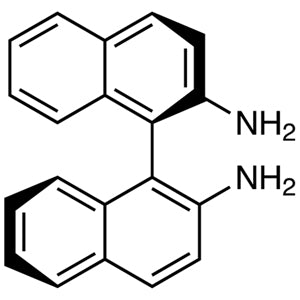
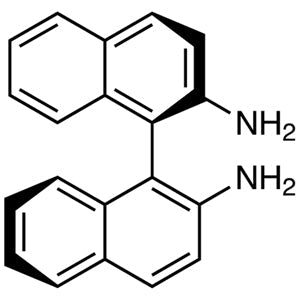
- TCI D3208 18531-95-8 (S)-(-)-1,1'-Binaphthyl-2,2'-diamine
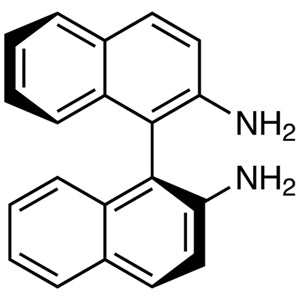
- TCI D3207 18741-85-0 (R)-(+)-1,1'-Binaphthyl-2,2'-diamine
- TCI M1402 175166-49-1 (-)-2,2'-Methylenebis[(3aS,8aR)-3a,8a-dihydro-8H-indeno[1,2-d]oxazole]
- Salen and diimine ligand synthesis: the two primary amines condense cleanly with aldehydes, and the rigid backbone fixes the resulting chelate geometry for reproducible metal coordination.
- Chiral organocatalyst preparation: the well-defined stereochemistry at C11 and C12 transfers directly into the catalyst's active site, giving a predictable and consistent asymmetric environment.
- Thiourea reagent construction: reaction with isothiocyanates converts the diamine into hydrogen-bond-donating scaffolds whose rigidity keeps the donor groups correctly oriented toward substrates.
- Enantiomer-differentiating reagent development: the fixed chiral framework and aromatic walls create distinguishable interactions with each enantiomer of an analyte under investigation.
- Asymmetric catalysis methodology studies: researchers screening ligand frameworks use this scaffold as a rigid benchmark against flexible open-chain diamines to probe selectivity origins.
| Brand | TCI (Tokyo Chemical Industry) |
|---|---|
| CAS number | 181139-49-1 |
| Molecular formula | — |
| Purity | — |
| Category | Chemistry > Asymmetric Synthesis > Chiral Catalysts, Chiral Ligands, Chiral Reagents |
| Pack sizes | available in standard TCI research-scale research packs; please confirm currently listed sizes when ordering |
| Physical form | — |
| Storage | keep tightly closed in a cool, dry place, protected from air and moisture |
- Chemical class: chiral vicinal primary diamine, bridged anthracene framework
Store the container tightly closed in a cool, dry place away from light, and keep it protected from air and moisture, since primary amines can absorb carbon dioxide and moisture on prolonged exposure to the atmosphere. Amber glass vials with well-sealing caps, or the original manufacturer container kept inside a desiccator, are suitable. Handle in a fume hood while wearing nitrile gloves, safety goggles, and a laboratory coat, and avoid contact with skin and eyes as well as inhalation of any dust. Weigh out portions quickly and reseal promptly to limit atmospheric exposure. Keep the material away from strong acids and strong oxidising agents, and always consult the manufacturer's safety data sheet before use.
—
Produk Terkait
-
(11S,12S)-9,10-Dihydro-9,10-ethanoanthracene-11,12-diamine TCI D3445
Regular price Rp 3.100.650,00Regular price -
(1R,2R)-1,2-Di(naphthalen-1-yl)ethane-1,2-diamineDihydrochloride TCI D5937
Regular price Rp 2.491.650,00Regular price -
(1S,2S)-N,N'-Dimethyl-N,N'-bis(3,3-dimethylbutyl)cyclohexane-1,2-diamine TCI D3809
Regular price Rp 4.028.850,00Regular price -
(S)-(-)-1,1'-Binaphthyl-2,2'-diamine TCI D3208
Regular price Rp 1.724.100,00Regular price -
(R)-(+)-1,1'-Binaphthyl-2,2'-diamine TCI D3207
Regular price Rp 1.538.250,00Regular price -
(-)-2,2'-Methylenebis[(3aS,8aR)-3a,8a-dihydro-8H-indeno[1,2-d]oxazole] TCI M1402
Regular price From Rp 955.500,00Regular price -
(+)-2,2'-Methylenebis[(3aR,8aS)-3a,8a-dihydro-8H-indeno[1,2-d]oxazole] TCI M1401
Regular price From Rp 1.008.000,00Regular price -
Triptycene-1,4-diamine TCI T4164
Regular price From Rp 2.174.550,00Regular price


![175166-49-1 (-)-2,2'-Methylenebis[(3aS,8aR)-3a,8a-dihydro-8H-indeno[1,2-d]oxazole] - AMI Scientific](http://amiscientific.com/cdn/shop/files/TCI2510M1402.jpg?v=1767124910&width=533)
![180186-94-1 (+)-2,2'-Methylenebis[(3aR,8aS)-3a,8a-dihydro-8H-indeno[1,2-d]oxazole] - AMI Scientific](http://amiscientific.com/cdn/shop/files/TCI2510M1401.jpg?v=1767124905&width=533)
