


TCI D3809, CAS number 767291-67-8, is (1S,2S)-N,N'-Dimethyl-N,N'-bis(3,3-dimethylbutyl)cyclohexane-1,2-diamine, a chiral diamine ligand that is the mirror image of the (1R,2R) variant. The compound binds transition metals through its two nitrogen atoms and forms an asymmetric coordination environment that directs the course of a catalytic reaction. Its role in the laboratory is that of a stereochemical controller: by selecting the S,S configuration, researchers can steer product formation toward the enantiomer opposite to the one obtained with its R,R counterpart, without altering any other part of the reaction system.
The property that makes this ligand attractive is its rigid trans-cyclohexane backbone, which effectively locks the relative positions of the two nitrogen atoms and makes the geometry of the resulting metal complex more predictable. The N-methyl groups, together with the 3,3-dimethylbutyl chains, introduce substantial steric hindrance around the metal center, and it is precisely this hindrance that translates the chiral information carried by the ligand into real selectivity in the product. The branched alkyl chains also improve solubility in organic solvents, so homogeneous catalyst solutions are easier to prepare and reactions proceed more smoothly.
In Indonesian laboratories, this ligand is typically used in university and institutional research groups working on asymmetric synthesis, as well as in R&D laboratories that need access to a single, defined enantiomer of a target molecule. It is generally handled on a small scale in method development and screening work, where the S,S and R,R forms are compared side by side to establish which configuration delivers the desired stereochemical outcome before a route is scaled up.
TCI brochures (PDF)
- Chiral Ligands 2024-12-13 · p. 2
- Asymmetric Synthesis 2026-03-18 · p. 6
- Ligands 2025-12-01 · p. 3
Related TCI products
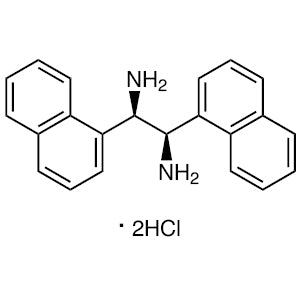
- TCI D5937 1055301-17-1 (1R,2R)-1,2-Di(naphthalen-1-yl)ethane-1,2-diamine Dihydrochloride
- TCI D6240 N1-[3',5'-Di-tert-butyl-[1,1'-biphenyl]-2-yl]-N2-[2-(3,5-di-tert-butylphenyl)naphthalen-1-yl]benzene-1,2-diamine
- TCI D5643 134030-21-0 N1,N2-Dimesitylethane-1,2-diamine
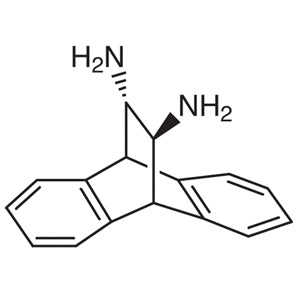
- TCI D3445 138517-66-5 (11S,12S)-9,10-Dihydro-9,10-ethanoanthracene-11,12-diamine
- TCI D3444 181139-49-1 (11R,12R)-9,10-Dihydro-9,10-ethanoanthracene-11,12-diamine
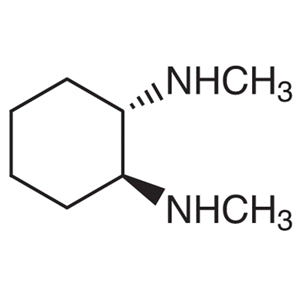
- TCI D2460 87583-89-9 (1S,2S)-(+)-N,N'-Dimethylcyclohexane-1,2-diamine
- Asymmetric catalysis with transition metals: the two nitrogen donor atoms form a defined chiral pocket around the metal center, so the catalytic step proceeds through a preferred stereochemical pathway rather than a random one.
- Enantioselective route development: choosing the S,S configuration lets researchers invert the product enantiomer relative to the R,R ligand while keeping the substrate, metal precursor, and solvent system completely unchanged.
- Chiral ligand screening studies: because it is the direct mirror image of the (1R,2R) variant, it serves as the natural counterpart in matched experiments that map how ligand configuration governs selectivity.
- Homogeneous catalyst preparation: the branched 3,3-dimethylbutyl chains raise solubility in organic solvents, which makes it straightforward to prepare clear, well-mixed catalyst solutions for reproducible reaction runs.
- Stereochemical control in fine chemical research: the rigid trans-cyclohexane framework holds the coordination geometry predictable, supporting work where a single defined enantiomer of the product is required.
| Brand | TCI |
|---|---|
| CAS number | 767291-67-8 |
| Molecular formula | — |
| Purity | — |
| Category | Chemistry > Asymmetric Synthesis > Chiral Catalysts, Chiral Ligands, Chiral Reagents |
| Pack sizes | available in research-scale packaging as offered by the manufacturer; please confirm the current size options when ordering |
| Physical form | — |
| Storage | keep in the tightly closed original container as indicated on the manufacturer's label |
- Chemical name: (1S,2S)-N,N'-Dimethyl-N,N'-bis(3,3-dimethylbutyl)cyclohexane-1,2-diamine
Store the container tightly closed in a cool, dry, and well-ventilated area, away from heat, direct sunlight, and incompatible chemicals, and follow the storage conditions stated on the manufacturer's label. Keep the material in its original container or in a chemically compatible sealed vessel, since amine ligands of this type are best protected from prolonged exposure to air and moisture. Handle the compound in a fume hood using safety glasses, gloves, and a laboratory coat, and avoid contact with skin, eyes, and clothing as well as inhalation of any vapor. Transfer only the quantity needed for the experiment, reseal the container promptly afterward, and consult the manufacturer's safety data sheet before use and for waste disposal.
—
Produk Terkait
-
(1R,2R)-1,2-Di(naphthalen-1-yl)ethane-1,2-diamineDihydrochloride TCI D5937
Regular price Rp 2.491.650,00Regular price -
N1-[3',5'-Di-tert-butyl-[1,1'-biphenyl]-2-yl]-N2-[2-(3,5-di-tert-butylphenyl)naphthalen-1-yl]benzene-1,2-diamine TCI D6240
Regular price From Rp 2.411.850,00Regular price -
N1,N2-Dimesitylethane-1,2-diamine TCI D5643
Regular price Rp 3.232.950,00Regular price -
(11S,12S)-9,10-Dihydro-9,10-ethanoanthracene-11,12-diamine TCI D3445
Regular price Rp 3.100.650,00Regular price -
(11R,12R)-9,10-Dihydro-9,10-ethanoanthracene-11,12-diamine TCI D3444
Regular price From Rp 2.995.650,00Regular price -
(1S,2S)-(+)-N,N'-Dimethylcyclohexane-1,2-diamine TCI D2460
Regular price From Rp 584.850,00Regular price -
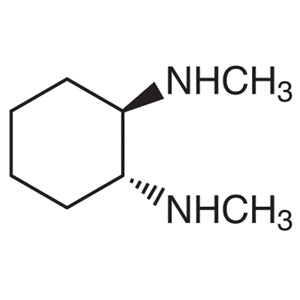
(1R,2R)-(-)-N,N'-Dimethylcyclohexane-1,2-diamine TCI D2459
Regular price From Rp 637.350,00Regular price -
N1-([1,1'-Biphenyl]-2-yl)-N2-(2-phenylnaphthalen-1-yl)benzene-1,2-diamine TCI B6606
Regular price From Rp 2.041.200,00Regular price
![N1-[3',5'-Di-tert-butyl-[1,1'-biphenyl]-2-yl]-N2-[2-(3,5-di-tert-butylphenyl)naphthalen-1-yl]benzene-1,2-diamine (CAS 2897657-05-3) - TCI D6240 - AMI Scientific](http://amiscientific.com/cdn/shop/files/TCI2510D6240.jpg?v=1767109945&width=533)



![N1-([1,1'-Biphenyl]-2-yl)-N2-(2-phenylnaphthalen-1-yl)benzene-1,2-diamine (CAS 2897656-97-0) - TCI B6606 - AMI Scientific](http://amiscientific.com/cdn/shop/files/TCI2510B6606.jpg?v=1767094008&width=533)