

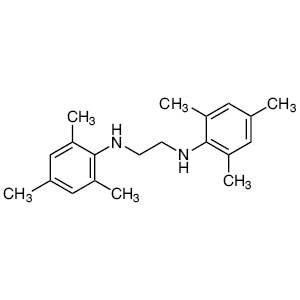
TCI D5643 N1,N2-Dimesitylethane-1,2-diamine is a vicinal diamine in which both nitrogen atoms carry mesityl groups, that is, aromatic rings bearing three methyl substituents. The compound is classified as a nitrogen-donor ligand for catalysis applications and serves as an important precursor in the preparation of imidazolinium salts and saturated N-heterocyclic carbenes. In organometallic chemistry laboratories, this material acts as the starting point for constructing ligands that are subsequently coordinated to transition metals such as ruthenium, palladium, or copper in order to generate catalysts with high activity and stability.
The principal value of this compound lies in the mesityl groups, which impose substantial steric hindrance around the nitrogen atoms. Once the compound has been converted into an N-heterocyclic carbene, this steric bulk shields the metal centre from decomposition pathways while simultaneously controlling the selectivity of the catalytic reaction. The saturated ethylenediamine backbone yields a five-membered ring that is flexible yet robust, giving it a different character from its unsaturated analogue, and the strong electron-donating character of the nitrogen atoms produces a tight metal–ligand bond. This combination of strong electron donation and steric shielding is what makes the ligand framework attractive to catalysis chemists.
In Indonesian laboratories, this material is typically found in university and institutional research groups working on organometallic synthesis, homogeneous catalysis, and ligand design. It is generally handled in synthetic organic chemistry laboratories equipped with fume hoods and inert-atmosphere apparatus, where researchers convert it into imidazolinium salts and carbene precursors as part of catalyst development programmes. Postgraduate research projects and publication-oriented studies that require well-defined, reproducible ligand starting materials are the usual context for its use.
TCI brochures (PDF)
- Ligands 2025-12-01 · p. 9
Related TCI products
- TCI D6240 N1-[3',5'-Di-tert-butyl-[1,1'-biphenyl]-2-yl]-N2-[2-(3,5-di-tert-butylphenyl)naphthalen-1-yl]benzene-1,2-diamine
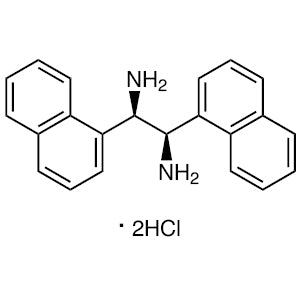
- TCI D5937 1055301-17-1 (1R,2R)-1,2-Di(naphthalen-1-yl)ethane-1,2-diamine Dihydrochloride
- TCI D3809 767291-67-8 (1S,2S)-N,N'-Dimethyl-N,N'-bis(3,3-dimethylbutyl)cyclohexane-1,2-diamine
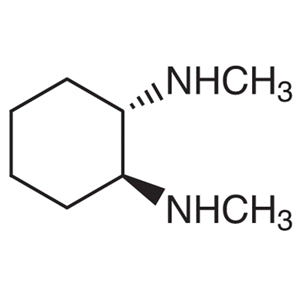
- TCI D2460 87583-89-9 (1S,2S)-(+)-N,N'-Dimethylcyclohexane-1,2-diamine
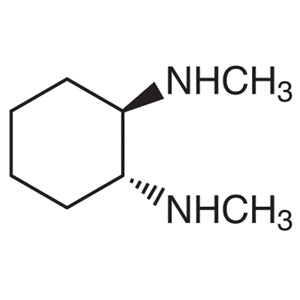
- TCI D2459 68737-65-5 (1R,2R)-(-)-N,N'-Dimethylcyclohexane-1,2-diamine
- TCI B6606 2897656-97-0 N1-([1,1'-Biphenyl]-2-yl)-N2-(2-phenylnaphthalen-1-yl)benzene-1,2-diamine
- Synthesis of imidazolinium salts: the vicinal diamine framework cyclises readily to form the five-membered saturated heterocycle that serves as the direct precursor to carbene ligands.
- Preparation of saturated N-heterocyclic carbenes: the compound supplies both nitrogen donors already bearing the bulky mesityl substituents required for a sterically protected carbene centre.
- Ruthenium catalyst development: the resulting carbene ligands bind tightly to ruthenium and shield the metal centre against decomposition pathways during catalytic turnover.
- Palladium complex preparation: strong nitrogen electron donation produces a close metal–ligand bond, giving palladium catalysts improved activity and thermal stability in coupling chemistry.
- Copper coordination chemistry studies: the well-defined steric profile of the mesityl groups allows researchers to examine how ligand bulk governs selectivity in copper-mediated transformations.
| Brand | TCI |
|---|---|
| CAS number | 134030-21-0 |
| Molecular formula | — |
| Purity | — |
| Category | Chemistry > Catalysis and Inorganic Chemistry > Nitrogen-Donor Ligands [Catalysis] |
| Pack sizes | available in the standard TCI research-scale packaging; please confirm the size required when ordering |
| Physical form | — |
| Storage | keep in the tightly closed original container as recommended by the manufacturer |
- Product code: D5643
- Chemical name: N1,N2-Dimesitylethane-1,2-diamine
Store the container tightly closed in a cool, dry, well-ventilated place, away from heat sources, direct sunlight, and incompatible materials such as strong acids and oxidising agents. Amine compounds are best kept in their original manufacturer packaging, and transfers should be made into clean, dry, chemically compatible containers that are clearly labelled. Handle the material inside a fume hood while wearing safety glasses, chemically resistant gloves, and a laboratory coat, and avoid inhaling dust or generating aerosols. Where the compound is to be used in inert-atmosphere synthesis, keep the container closed under a dry atmosphere and minimise exposure to air and moisture during weighing. Always consult the manufacturer's safety data sheet before use and follow institutional waste disposal procedures.
—
Produk Terkait
-
N1-[3',5'-Di-tert-butyl-[1,1'-biphenyl]-2-yl]-N2-[2-(3,5-di-tert-butylphenyl)naphthalen-1-yl]benzene-1,2-diamine TCI D6240
Regular price From Rp 2.411.850,00Regular price -
(1R,2R)-1,2-Di(naphthalen-1-yl)ethane-1,2-diamineDihydrochloride TCI D5937
Regular price Rp 2.491.650,00Regular price -
(1S,2S)-N,N'-Dimethyl-N,N'-bis(3,3-dimethylbutyl)cyclohexane-1,2-diamine TCI D3809
Regular price Rp 4.028.850,00Regular price -
(1S,2S)-(+)-N,N'-Dimethylcyclohexane-1,2-diamine TCI D2460
Regular price From Rp 584.850,00Regular price -
(1R,2R)-(-)-N,N'-Dimethylcyclohexane-1,2-diamine TCI D2459
Regular price From Rp 637.350,00Regular price -
N1-([1,1'-Biphenyl]-2-yl)-N2-(2-phenylnaphthalen-1-yl)benzene-1,2-diamine TCI B6606
Regular price From Rp 2.041.200,00Regular price -
(1R,2R)-N1,N2-Dibenzylcyclohexane-1,2-diamineDihydrochloride TCI B6393
Regular price From Rp 3.605.700,00Regular price -
(1S,2S)-N~1~,N~2~-Dibenzylcyclohexane-1,2-diamineDihydrochloride TCI B6390
Regular price From Rp 3.605.700,00Regular price
![N1-[3',5'-Di-tert-butyl-[1,1'-biphenyl]-2-yl]-N2-[2-(3,5-di-tert-butylphenyl)naphthalen-1-yl]benzene-1,2-diamine (CAS 2897657-05-3) - TCI D6240 - AMI Scientific](http://amiscientific.com/cdn/shop/files/TCI2510D6240.jpg?v=1767109945&width=533)

![N1-([1,1'-Biphenyl]-2-yl)-N2-(2-phenylnaphthalen-1-yl)benzene-1,2-diamine (CAS 2897656-97-0) - TCI B6606 - AMI Scientific](http://amiscientific.com/cdn/shop/files/TCI2510B6606.jpg?v=1767094008&width=533)

