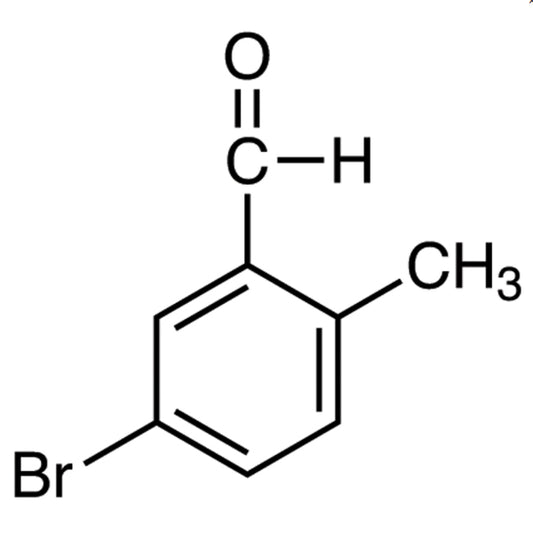
TCI D3463 2,3-Dimethylbenzaldehyde is an aromatic aldehyde that serves as a versatile non-heterocyclic building block in organic synthesis laboratories. Its molecule consists of a benzene ring carrying an aldehyde group together with two adjacent methyl groups at positions 2 and 3. The aldehyde group is one of the most productive functional groups in organic chemistry, because it can be directed into dozens of different transformations, ranging from condensation reactions through to nucleophilic addition. For this reason, the compound is often a practical entry point when researchers need to introduce a dimethyl-substituted aryl fragment into a larger molecular framework.
The characteristics that make it a preferred choice are the high yet still controllable reactivity of the aldehydic carbonyl group, combined with the distinctive steric influence of the methyl group in the ortho position. The ortho methyl group slightly twists and shields the carbonyl, so the selectivity of certain reactions can be steered in interesting ways that differ from unsubstituted benzaldehyde. Both methyl groups are also electron-donating, enriching the aromatic ring, while at the same time providing benzylic positions available for radical halogenation or further oxidation. This combination of electronic and steric features gives synthetic chemists a genuinely flexible starting material.
In Indonesian laboratories, this building block is typically used in university and institutional research groups working on organic synthesis, medicinal chemistry scaffolds, and materials precursors, as well as in industrial R&D units developing new molecules. It is generally handled at bench scale for method development, route scouting, and small-scale preparation of intermediates, where a well-characterised aromatic aldehyde from an established reagent brand supports reproducible results across repeated experiments and student projects.
- Aldol and Knoevenagel condensations: the reactive aldehydic carbonyl readily couples with active methylene compounds, making it a dependable aryl aldehyde component for building extended conjugated frameworks.
- Reductive amination and imine formation: reaction with primary or secondary amines gives Schiff bases and amine products that carry the dimethylaryl fragment into target structures.
- Nucleophilic addition chemistry: organometallic and other nucleophiles add cleanly to the carbonyl, giving substituted benzylic alcohols useful as intermediates in multi-step synthetic routes.
- Benzylic functionalisation studies: the two methyl groups provide benzylic positions suitable for radical halogenation or further oxidation, opening additional routes to diversify the aromatic core.
- Steric and selectivity investigations: the ortho methyl group twists and shields the carbonyl, so the compound is valuable for comparative studies of substituent effects against plain benzaldehyde.
| Brand | TCI (Tokyo Chemical Industry) |
|---|---|
| CAS number | 5779-93-1 |
| Molecular formula | — |
| Purity | — |
| Category | Chemistry > Building Blocks > Non-Heterocyclic Building Blocks |
| Pack sizes | available in standard laboratory research pack sizes; please confirm the currently offered options when ordering |
| Physical form | — |
| Storage | store in a closed original container under the conditions stated on the product label and safety data sheet |
- Product code: D3463
- Chemical class: substituted aromatic aldehyde (non-heterocyclic building block)
Keep the product in its tightly closed original container, stored in a cool, dry, well-ventilated area away from heat, direct sunlight, and ignition sources. Aromatic aldehydes are generally sensitive to air and prolonged light exposure, so containers should be resealed promptly after each use and kept away from strong oxidising agents, strong bases, and amines. Handle in a fume hood using safety glasses, chemical-resistant gloves, and a laboratory coat, and avoid inhaling vapours or allowing contact with skin and eyes. Use clean, dry glassware or otherwise compatible labware when transferring material, label all secondary containers clearly, and always follow the manufacturer's safety data sheet together with your institution's chemical waste disposal procedures.
—
Produk Terkait
-
4-Hydroxy-3,5-dimethylbenzaldehyde TCI H1023
Regular price From Rp 637.350,00Regular price -
2,6-Dimethylbenzaldehyde TCI D3681
Regular price From Rp 1.696.800,00Regular price -
3,5-Dimethylbenzaldehyde TCI D3498
Regular price From Rp 1.618.050,00Regular price -
3,4-Dimethylbenzaldehyde TCI D3334
Regular price From Rp 928.200,00Regular price -
2,4-Dimethylbenzaldehyde TCI D2392
Regular price From Rp 743.400,00Regular price -
2,4,5-Trimethylbenzaldehyde TCI T1411
Regular price Rp 1.961.400,00Regular price -
2,4,6-Trimethylbenzaldehyde TCI T1368
Regular price Rp 2.147.250,00Regular price -
5-Bromo-2-methylbenzaldehyde TCI B5036
Regular price From Rp 2.677.500,00Regular price