TCI D3668 2,6-Dichlorophenyl Isocyanate is a non-heterocyclic building block that carries an aromatic isocyanate group with two chlorine atoms positioned ortho to the reactive centre. Isocyanate groups are among the most versatile electrophiles in organic synthesis because they react rapidly with nucleophiles containing active hydrogen. Reaction with amines gives substituted ureas, reaction with alcohols or phenols gives carbamates, and reaction with water produces the corresponding amine together with carbon dioxide gas. In the laboratory, the material therefore serves as a coupling reagent for attaching the 2,6-dichlorophenyl fragment onto target molecules.
The property that makes this compound a preferred choice is the combination of the high reactivity of the isocyanate group with the steric and electronic influence of the two chlorine substituents flanking both sides of the ring. Chlorine atoms are electron-withdrawing, so they maintain the electrophilic character of the isocyanate centre, while their flanking positions introduce steric hindrance that can improve selectivity in certain reactions and influence the conformation of the urea or carbamate products that are formed. This balance of reactivity and controlled hindrance is what distinguishes it from simpler aryl isocyanates.
In Indonesian laboratories, this building block is used in medicinal chemistry research, agrochemical research, and in research-scale polymer and coating development. It is typically handled at the bench under dry conditions by synthetic chemists who need to install a defined dichlorinated aromatic fragment into a target scaffold, whether during exploratory route development, analogue preparation, or small-scale material studies where the resulting urea and carbamate linkages are of interest.
Related TCI products
- Urea synthesis: reaction with primary or secondary amines cleanly delivers substituted ureas bearing the 2,6-dichlorophenyl group, a linkage widely explored in structure-activity studies.
- Carbamate formation: reaction with alcohols or phenols produces carbamates, allowing researchers to convert hydroxyl-containing substrates into stable carbamate derivatives under straightforward conditions.
- Medicinal chemistry research: the reagent installs a defined dichlorinated aromatic fragment onto candidate scaffolds, supporting the preparation of analogue series for exploratory biological evaluation.
- Agrochemical research: the 2,6-dichlorophenyl motif is introduced into target molecules during discovery work, where the electron-withdrawing chlorines influence the properties of the resulting derivatives.
- Polymer and coating development at research scale: the isocyanate functionality participates in reactions with active-hydrogen nucleophiles, enabling the preparation of small quantities of modified materials for study.
| Brand | TCI |
|---|---|
| CAS number | 39920-37-1 |
| Molecular formula | — |
| Purity | — |
| Category | Chemistry > Building Blocks > Non-Heterocyclic Building Blocks |
| Pack sizes | available in standard TCI research laboratory pack sizes; please confirm the required size when ordering. |
| Physical form | — |
| Storage | keep tightly closed under dry conditions, protected from moisture. |
- Product code: D3668
Store the container tightly closed in a cool, dry, well-ventilated area, away from moisture, since isocyanates react with water to release carbon dioxide and can generate pressure inside a sealed vessel. Keep the material in its original tightly sealed container or in a suitable dry, chemically compatible container, and consider handling under an inert atmosphere when transferring. Work in a fume hood, avoid inhalation of vapours and contact with skin or eyes, and use gloves, safety goggles, and a laboratory coat. Keep away from amines, alcohols, and other active-hydrogen nucleophiles during storage, and always consult the manufacturer's safety data sheet before use.
—
Produk Terkait
-
2,4-DichlorophenylIsocyanate TCI I0555
Regular price From Rp 823.200,00Regular price -
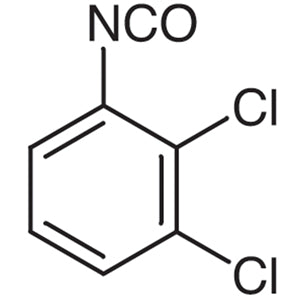
2,3-DichlorophenylIsocyanate TCI I0499
Regular price From Rp 557.550,00Regular price -
3,5-DichlorophenylIsocyanate TCI I0302
Regular price Rp 4.213.650,00Regular price -
3,4-DichlorophenylIsocyanate TCI I0092
Regular price Rp 2.199.750,00Regular price -
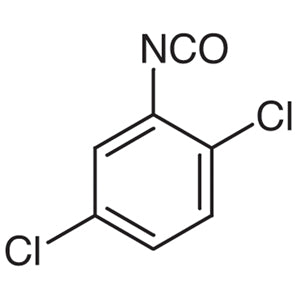
2,5-DichlorophenylIsocyanate TCI D0397
Regular price Rp 4.161.150,00Regular price -
4-ButylphenylIsocyanate TCI B3205
Regular price From Rp 1.087.800,00Regular price -
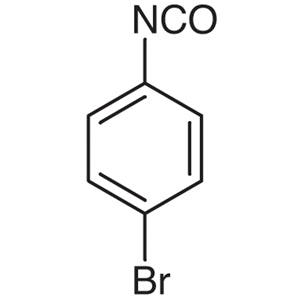
4-BromophenylIsocyanate TCI B0636
Regular price From Rp 2.279.550,00Regular price -
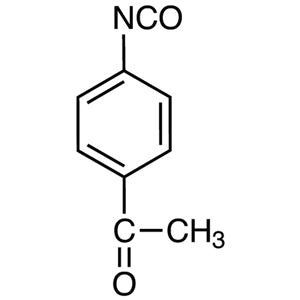
4-AcetylphenylIsocyanate TCI A2933
Regular price From Rp 2.094.750,00Regular price