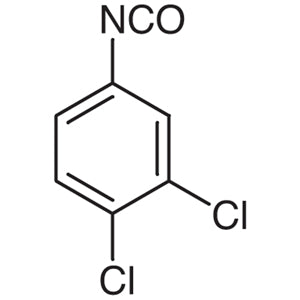
3,4-Dichlorophenyl Isocyanate is a chemical compound widely used in laboratory settings for the synthesis of complex organic molecules. As a building block in chemical reactions, it plays a crucial role in the development of pharmaceuticals, industrial chemicals, and polymer precursors. Its reactive isocyanate group enables the formation of new chemical bonds, making it a versatile reagent in synthetic pathways. This compound is particularly valuable for its ability to participate in various functional group reactions, such as those involving hydroxyl, amine, or carbonyl groups.
The compound's reactivity and structural versatility make it a preferred choice for chemists working on advanced organic synthesis. Its stability under controlled conditions allows for safe handling and storage, which is essential in laboratory environments. The presence of chlorine atoms in its aromatic ring further enhances its reactivity, enabling it to be used in a wide range of chemical transformations. These properties make it an essential component in the synthesis of heterocyclic compounds and complex molecular structures.
In Indonesian laboratories, 3,4-Dichlorophenyl Isocyanate is commonly used in research related to organic chemistry, especially in pharmaceutical and industrial chemical development. Local researchers frequently utilize this compound to create new molecules with potential applications in medicine and materials science. Its availability and reliability make it a key reagent in academic and industrial chemical research in Indonesia.
Related TCI products
- Organic synthesis is a primary application where this compound is used to build complex molecular structures due to its reactive isocyanate group.
- Pharmaceutical research benefits from its ability to form new bonds, aiding in the development of drug molecules and active pharmaceutical ingredients.
- Industrial chemical production utilizes this compound as a precursor for various chemical intermediates and specialty chemicals.
- Polymer synthesis applications take advantage of its reactivity to create polymeric materials through cross-linking reactions.
- Research in heterocyclic compounds leverages its structural properties to synthesize a wide range of ring-based molecules.
| Brand | TCI |
|---|---|
| CAS number | 102-36-3 |
| Molecular formula | — |
| Purity | — |
| Category | Chemistry > Building Blocks > Non-Heterocyclic Building Blocks |
| Pack sizes | Available in various quantities as per standard laboratory supply |
| Physical form | Liquid |
| Storage | Store in a cool, dry place away from moisture and direct sunlight |
This compound should be stored in a cool, dry environment, away from moisture and direct sunlight. It is recommended to use sealed containers made of materials compatible with organic solvents to prevent evaporation and contamination. Due to its reactivity, it should be handled with appropriate personal protective equipment, including gloves and safety goggles. Proper ventilation is essential when working with this compound to minimize exposure. It is important to avoid contact with incompatible substances such as strong acids or bases. Regular monitoring of storage conditions ensures the compound remains stable and safe for use in laboratory settings.
—
Produk Terkait
-
2,4-DichlorophenylIsocyanate TCI I0555
Regular price From Rp 823.200,00Regular price -
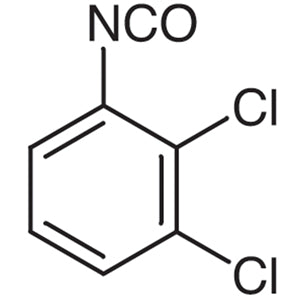
2,3-DichlorophenylIsocyanate TCI I0499
Regular price From Rp 557.550,00Regular price -
3,5-DichlorophenylIsocyanate TCI I0302
Regular price Rp 4.213.650,00Regular price -
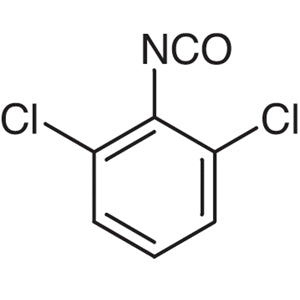
2,6-DichlorophenylIsocyanate TCI D3668
Regular price Rp 1.538.250,00Regular price -
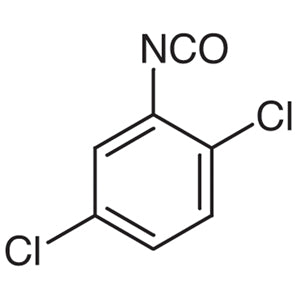
2,5-DichlorophenylIsocyanate TCI D0397
Regular price Rp 4.161.150,00Regular price -
4-ButylphenylIsocyanate TCI B3205
Regular price From Rp 1.087.800,00Regular price -
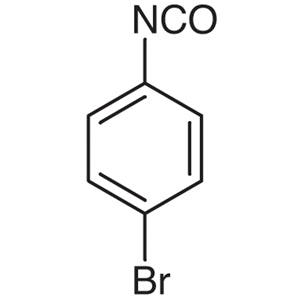
4-BromophenylIsocyanate TCI B0636
Regular price From Rp 2.279.550,00Regular price -
4-AcetylphenylIsocyanate TCI A2933
Regular price From Rp 2.094.750,00Regular price