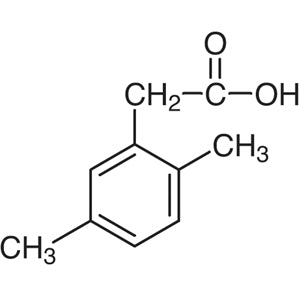
TCI D3779 2,5-Dimethylphenylacetic Acid, with CAS number 13612-34-5, is an arylacetic acid whose aromatic ring carries methyl groups at the 2- and 5-positions. The compound belongs to the family of non-heterocyclic building blocks and is widely used as a starting material in organic synthesis. The carboxylic acid group on the side chain provides a highly flexible reaction point, covering amide and ester formation, reduction to the corresponding alcohol, and conversion into the acid chloride as an activated intermediate for subsequent coupling steps within a synthetic route.
The characteristic that makes this compound a preferred choice lies in the substitution pattern of its two methyl groups. Methyl groups act as weak electron donors, so they raise the electron density of the aromatic ring, while the methyl group in the ortho position introduces a degree of steric hindrance that can direct the selectivity of further substitution reactions. The presence of two methyl groups also increases the lipophilicity of the molecule, a parameter frequently tuned in the design of bioactive compounds and agrochemical materials. As a solid carboxylic acid, the compound is stable under ordinary storage, easy to weigh accurately, and can be purified by recrystallisation using methods routine in the laboratory.
In Indonesian laboratories, this building block is typically used in university and institutional organic synthesis work, in research groups preparing derivative libraries, and in development laboratories exploring candidate structures for bioactive or agrochemical applications. Because it is a weighable solid that tolerates normal storage, it suits multi-step bench-scale routes where an intermediate is prepared, purified by recrystallisation, and then carried forward into a coupling or functional-group conversion step.
Related TCI products
- TCI B4307 32857-63-9 4-tert-Butylphenylacetic Acid
- TCI C2812 3894-09-5 alpha-Cyclohexylphenylacetic Acid
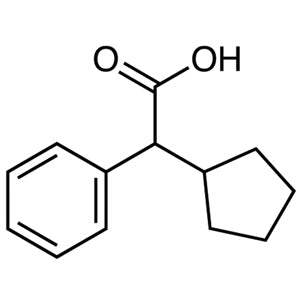
- TCI C0808 3900-93-4 alpha-Cyclopentylphenylacetic Acid
- TCI B2357 2496-21-1 4-(4-Butylphenylazo)phenol
- TCI D4271 16213-85-7 2,5-Dimethylphenylacetonitrile
- TCI B5935 3288-99-1 4-tert-Butylphenylacetonitrile
- Amide bond formation — the side-chain carboxylic acid is a direct handle for coupling with amines, making this compound a convenient acyl fragment in derivative synthesis.
- Ester synthesis — the acid group esterifies under standard laboratory conditions, allowing the dimethyl-substituted aryl fragment to be introduced into larger ester-containing target molecules.
- Reduction to alcohol — the carboxylic acid can be reduced to the corresponding alcohol, giving access to a hydroxyl-functionalised building block for further transformation steps.
- Acid chloride preparation — conversion to the acid chloride activates the molecule for subsequent coupling stages, a common activation step in multi-step organic synthesis routes.
- Bioactive and agrochemical structure exploration — the two methyl groups raise molecular lipophilicity, a property routinely adjusted when designing candidate bioactive compounds and agrochemical materials.
| Brand | TCI |
|---|---|
| CAS number | 13612-34-5 |
| Molecular formula | — |
| Purity | — |
| Category | Chemistry > Building Blocks > Non-Heterocyclic Building Blocks |
| Pack sizes | available in the standard TCI catalogue pack sizes for this product code (D3779); please confirm the required size when ordering |
| Physical form | solid carboxylic acid |
| Storage | stable under ordinary storage conditions for laboratory chemicals |
Store the container tightly closed in a cool, dry, and well-ventilated place, away from moisture and from incompatible materials such as strong bases and strong oxidising agents. The original supplier container is the most suitable primary packaging; if the material is transferred, use a clean, dry, chemically compatible container that is clearly labelled with the compound name and CAS number. Handle the solid in a fume hood or a well-ventilated area to limit dust exposure, and wear standard laboratory personal protective equipment including safety goggles, chemical-resistant gloves, and a laboratory coat. Weigh carefully to avoid generating airborne dust, close the container promptly after use, and dispose of residues and contaminated materials in accordance with applicable laboratory chemical waste procedures.
—
Produk Terkait
-
4-tert-ButylphenylaceticAcid TCI B4307
Regular price From Rp 1.908.900,00Regular price -
alpha-CyclohexylphenylaceticAcid TCI C2812
Regular price From Rp 664.650,00Regular price -
alpha-CyclopentylphenylaceticAcid TCI C0808
Regular price Rp 2.757.300,00Regular price -
4-(4-Butylphenylazo)phenol TCI B2357
Regular price From Rp 2.677.500,00Regular price -
2,5-Dimethylphenylacetonitrile TCI D4271
Regular price From Rp 1.749.300,00Regular price -
4-tert-Butylphenylacetonitrile TCI B5935
Regular price Rp 1.670.550,00Regular price -
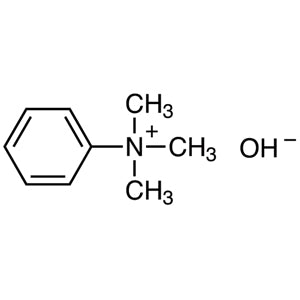
TrimethylphenylammoniumHydroxide(ca.8.5%inMethanol) TCI T3610
Regular price From Rp 1.035.300,00Regular price -
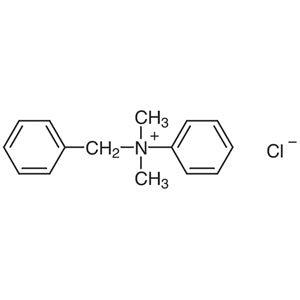
BenzyldimethylphenylammoniumChloride TCI B0416
Regular price Rp 3.207.750,00Regular price