TCI D4271, with CAS number 16213-85-7, is 2,5-Dimethylphenylacetonitrile, an arylacetonitrile compound belonging to the family of non-heterocyclic building blocks. Its molecule consists of a benzene ring bearing methyl substituents at the 2- and 5-positions, connected to an acetonitrile group through a single methylene bridge. In synthetic laboratories, arylacetonitriles are among the most versatile starting materials available, because the nitrile group can be converted into carboxylic acids, amides, esters, aldehydes, tetrazoles, or primary amines, allowing a single reagent to lead researchers toward many different classes of compounds.
The property that makes this material particularly valuable is the relative acidity of the proton on the benzylic carbon adjacent to the nitrile. That proton is readily removed by a suitable base to generate a stabilised carbanion, and this carbanion can then be alkylated, acylated, or condensed with electrophiles. In this way researchers can construct branched side chains in a controlled manner within a single step. In addition, the nitrile group is compact yet rich in transformation possibilities, while the two methyl groups on the ring provide a specific aromatic substitution pattern that is useful when a defined molecular framework is required.
In Indonesian laboratories, a building block of this kind is typically used in organic synthesis and medicinal chemistry research groups at universities and research institutes, as well as in the development and preparation of reference materials. It is commonly handled at bench scale, where a small quantity of a well-defined arylacetonitrile is elaborated through successive transformations, and where the ability to reach several compound classes from one starting material helps laboratories keep their reagent inventory efficient.
Related TCI products
- Nitrile functional group transformation studies: the nitrile can be converted into carboxylic acids, amides, esters, aldehydes, tetrazoles, or primary amines, giving access to several compound classes from one starting material.
- Benzylic alkylation reactions: the acidic proton next to the nitrile is easily deprotonated to a stabilised carbanion, which can be alkylated to build branched side chains in a controlled single step.
- Acylation and condensation chemistry: the same stabilised carbanion reacts with a range of electrophiles, allowing researchers to extend the carbon skeleton or introduce carbonyl-containing fragments onto the benzylic position.
- Medicinal chemistry intermediate preparation: as a non-heterocyclic building block, it supplies a defined dimethyl-substituted aromatic fragment that can be carried through multi-step routes toward target molecules of interest.
- Reference and comparison material in method development: the specific 2,5-dimethyl aromatic substitution pattern makes it useful when a precisely defined molecular framework is needed for synthetic or analytical comparison work.
| Brand | TCI (Tokyo Chemical Industry) |
|---|---|
| CAS number | 16213-85-7 |
| Molecular formula | — |
| Purity | — |
| Category | Chemistry > Building Blocks > Non-Heterocyclic Building Blocks |
| Pack sizes | available in standard TCI catalogue research-scale packaging; please confirm the pack size options when ordering |
| Physical form | — |
| Storage | store according to the conditions stated on the manufacturer's label and Safety Data Sheet |
- Chemical name: 2,5-Dimethylphenylacetonitrile
- Product code: TCI D4271
Store the container tightly closed in a cool, dry, and well-ventilated area, away from direct sunlight, heat sources, ignition sources, and incompatible materials such as strong oxidising agents, strong acids, and strong bases. Keep the material in its original manufacturer container whenever possible, or in a chemically compatible, clearly labelled, tightly sealed container. Handle the product inside a fume hood using appropriate personal protective equipment, including safety goggles, chemically resistant gloves, and a laboratory coat, and avoid inhalation of vapours as well as contact with skin and eyes. As with other nitriles, avoid contact with acids, which may release hazardous gases. Always consult the manufacturer's Safety Data Sheet before use, and follow your institution's procedures for waste collection and chemical disposal.
—
Produk Terkait
-
Phenylacetonitrile TCI P0128
Regular price From Rp 477.750,00Regular price -
4-tert-Butylphenylacetonitrile TCI B5935
Regular price Rp 1.670.550,00Regular price -
3,4,5-Trimethoxyphenylacetonitrile TCI T1927
Regular price From Rp 1.590.750,00Regular price -
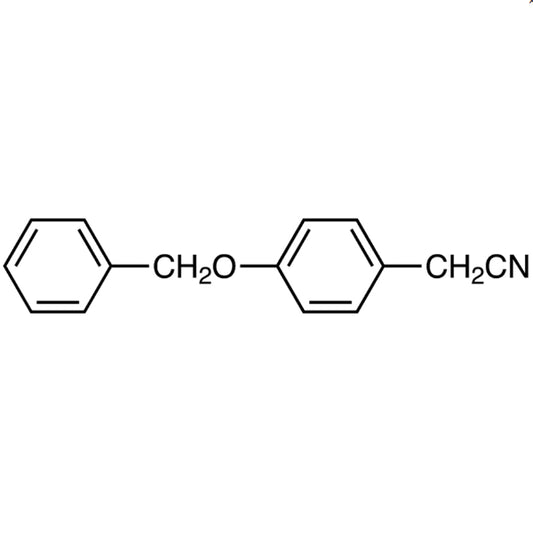
4-Benzyloxyphenylacetonitrile TCI B4734
Regular price From Rp 1.115.100,00Regular price -
3-Benzyloxyphenylacetonitrile TCI B4229
Regular price Rp 7.154.700,00Regular price -
4-Biphenylacetonitrile TCI B1545
Regular price From Rp 3.446.100,00Regular price -
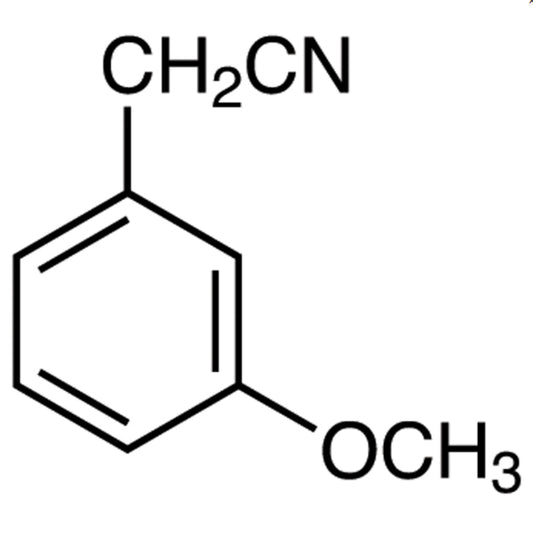
3-Methoxyphenylacetonitrile TCI M2331
Regular price From Rp 717.150,00Regular price -
4-Methoxyphenylacetonitrile TCI M0856
Regular price From Rp 823.200,00Regular price