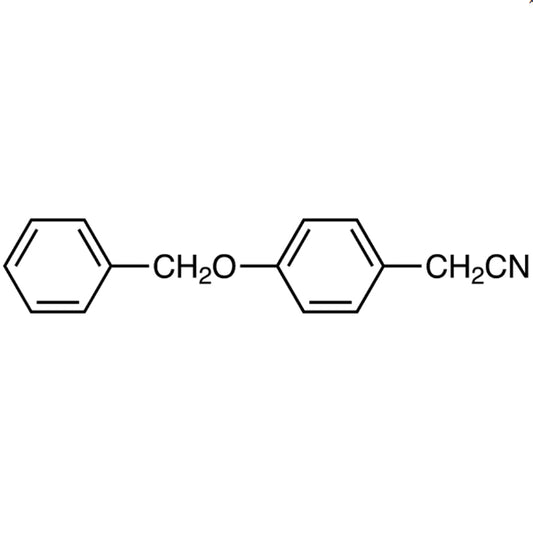
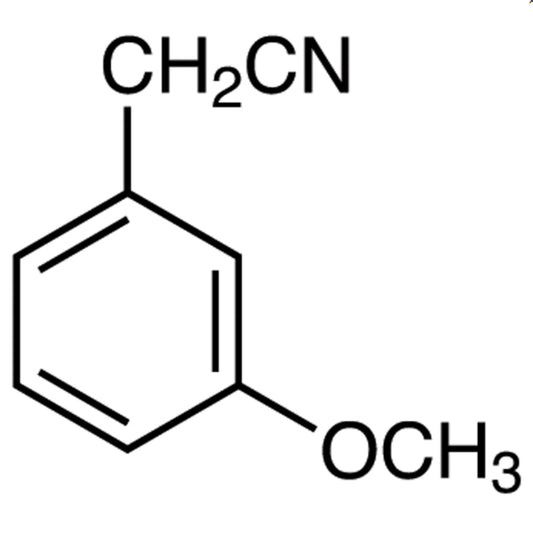
3-Benzyloxyphenylacetonitrile is a chemical compound widely used as a building block in the synthesis of complex molecules. It plays a crucial role in organic chemistry laboratories, where it serves as a versatile intermediate for creating various functional groups and aromatic structures. This compound is particularly valuable for its ability to participate in multiple reaction types, including nucleophilic substitution and electrophilic addition, making it indispensable in synthetic pathways. Its presence in laboratory workflows supports the development of new compounds with tailored properties for pharmaceutical and material science applications.
One of the key attributes of 3-Benzyloxyphenylacetonitrile is its high reactivity and complex molecular structure, which allows it to be a preferred choice for chemists. It exhibits good solubility in organic solvents, facilitating efficient processing and reaction conditions. This solubility, combined with its stability under controlled laboratory conditions, ensures reliable performance in a wide range of chemical processes. Its ability to undergo various functional group transformations makes it a flexible tool for synthetic chemists aiming to design and synthesize novel compounds.
In Indonesian laboratories, 3-Benzyloxyphenylacetonitrile is commonly utilized in organic chemistry research, especially in pharmaceutical and materials science projects. Researchers rely on this compound to develop new drugs and advanced materials, leveraging its chemical versatility and reactivity. Its widespread use in academic and industrial settings highlights its importance as a fundamental reagent in modern chemical synthesis.
- Synthesis of heterocyclic compounds for the development of new pharmaceuticals due to its ability to form stable intermediates in ring-forming reactions.
- Nucleophilic substitution reactions where its nitrile group serves as a reactive site for functional group modification.
- Organic synthesis of complex molecules requiring aromatic structures and nitrile functionalities for structural diversity.
- Research in material science for the creation of polymers and advanced materials through controlled chemical modifications.
- Development of novel drug candidates through iterative synthetic strategies involving multiple reaction steps and functional group transformations.
| Brand | TCI |
|---|---|
| CAS number | 20967-96-8 |
| Molecular formula | — |
| Purity | — |
| Category | Chemistry > Building Blocks > Non-Heterocyclic Building Blocks |
| Pack sizes | Available in various quantities as per standard laboratory supply specifications |
| Physical form | Liquid |
| Storage | Store in a cool, dry place away from light and incompatible substances |
3-Benzyloxyphenylacetonitrile should be stored in a cool, dry environment, away from direct sunlight and sources of heat. It is recommended to keep the compound in a tightly sealed container to prevent evaporation and contamination. Due to its reactivity, it should be stored separately from strong bases, reducing agents, and other incompatible chemicals. In laboratory settings, proper ventilation is essential when handling this compound to minimize exposure. Always use appropriate personal protective equipment, such as gloves and safety goggles, when working with this material to ensure safe handling and compliance with standard laboratory safety protocols.
—
Product Categories
Produk Terkait
-
4-Benzyloxyphenylacetonitrile TCI B4734
Regular price From Rp 1.167.600,00Regular priceRp 831.600,00Sale price From Rp 1.167.600,00 -
Phenylacetonitrile TCI P0128
Regular price From Rp 477.750,00Regular priceRp 333.900,00Sale price From Rp 477.750,00 -
3-Methoxyphenylacetonitrile TCI M2331
Regular price From Rp 769.650,00Regular priceRp 553.350,00Sale price From Rp 769.650,00 -
4-Methoxyphenylacetonitrile TCI M0856
Regular price From Rp 875.700,00Regular priceRp 627.900,00Sale price From Rp 875.700,00 -
2-Methoxyphenylacetonitrile TCI M0855
Regular price Rp 928.200,00Regular priceRp 664.650,00Sale price Rp 928.200,00 -
3,5-Dimethoxyphenylacetonitrile TCI D5186
Regular price From Rp 1.246.350,00Regular priceRp 887.250,00Sale price From Rp 1.246.350,00 -
4-Biphenylacetonitrile TCI B1545
Regular price From Rp 3.498.600,00Regular priceRp 2.462.250,00Sale price From Rp 3.498.600,00 -
2,5-Dimethylphenylacetonitrile TCI D4271
Regular price From Rp 1.801.800,00Regular priceRp 1.275.750,00Sale price From Rp 1.801.800,00