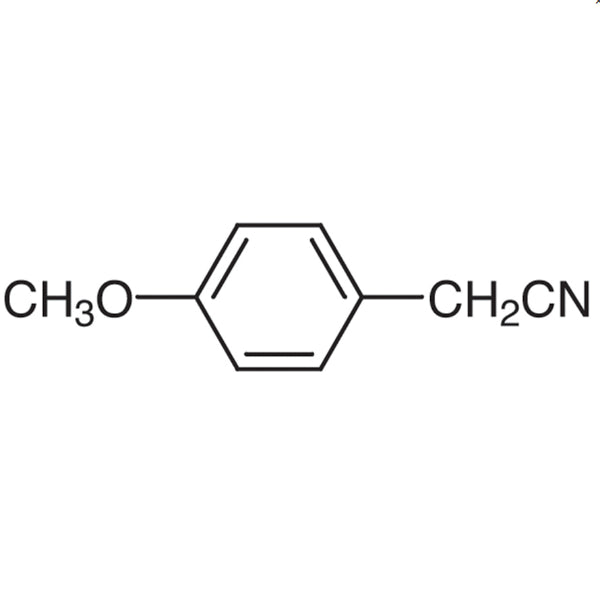
4-Methoxyphenylacetonitrile is a chemical compound widely used as a building block in the synthesis of complex organic compounds. Its simple molecular structure provides a versatile foundation for various chemical reactions, making it a valuable resource in laboratory settings. This compound is commonly utilized in organic chemistry research to develop new compounds with specific biological activities, including pharmaceutical applications. Its role as a precursor in synthetic pathways is critical for the creation of active pharmaceutical ingredients and other functional molecules.
The unique reactivity of 4-Methoxyphenylacetonitrile stems from the presence of both a methoxy group and a nitrile group, which contribute to its chemical versatility. These functional groups allow it to participate in nucleophilic, electrophilic, and substitution reactions, enhancing its utility in synthetic chemistry. Additionally, its solubility in organic solvents such as ethyl acetate and acetone makes it easy to handle and integrate into different reaction conditions. These properties make it a preferred choice for researchers aiming to design and synthesize novel compounds.
In Indonesian laboratories, 4-Methoxyphenylacetonitrile is frequently used in scientific research, particularly in the fields of organic chemistry and pharmaceutical development. It is a key component in projects aimed at creating new compounds with medical applications or industrial relevance. Its availability and chemical properties make it an essential material for academic and industrial research in the region.
Related TCI products
- Organic synthesis projects benefit from 4-Methoxyphenylacetonitrile due to its reactivity and versatility in forming complex molecular structures.
- Pharmaceutical research utilizes this compound to develop new drugs and active pharmaceutical ingredients through synthetic pathways.
- Chemical modification studies leverage its functional groups for creating derivatives with enhanced biological activity.
- Analytical chemistry applications use it as a standard for testing reaction mechanisms and synthetic efficiency.
- Industrial research employs it as a building block for the production of specialty chemicals and fine chemicals.
| Brand | TCI |
|---|---|
| CAS number | 104-47-2 |
| Molecular formula | — |
| Purity | — |
| Category | Chemistry > Building Blocks > Non-Heterocyclic Building Blocks |
| Pack sizes | Available in various quantities as per supplier specifications |
| Physical form | Liquid |
| Storage | Store in a cool, dry place away from direct sunlight |
4-Methoxyphenylacetonitrile should be stored in a cool, dry environment, away from direct sunlight and sources of heat. It is recommended to keep the compound in a tightly sealed container to prevent exposure to air and moisture. Due to its chemical nature, it should be handled in a well-ventilated area, and appropriate personal protective equipment such as gloves and safety goggles should be worn. Avoid contact with skin and eyes, and ensure that spillage is contained and cleaned up promptly. Proper storage and handling practices help maintain the compound's stability and ensure safe laboratory operations.
—
Produk Terkait
-
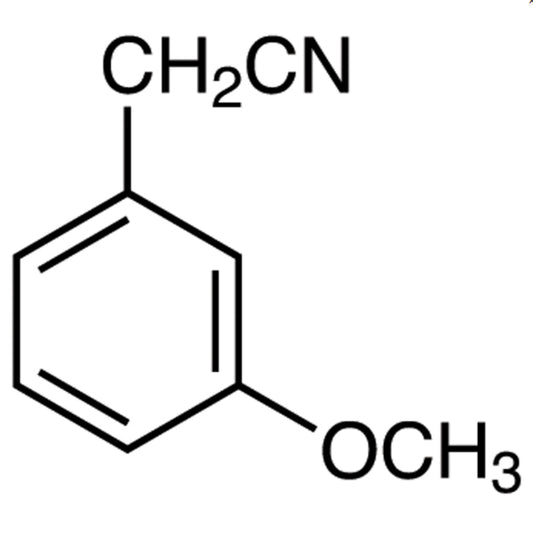
3-Methoxyphenylacetonitrile TCI M2331
Regular price From Rp 717.150,00Regular price -
2-Methoxyphenylacetonitrile TCI M0855
Regular price Rp 875.700,00Regular price -
3,4,5-Trimethoxyphenylacetonitrile TCI T1927
Regular price From Rp 1.590.750,00Regular price -
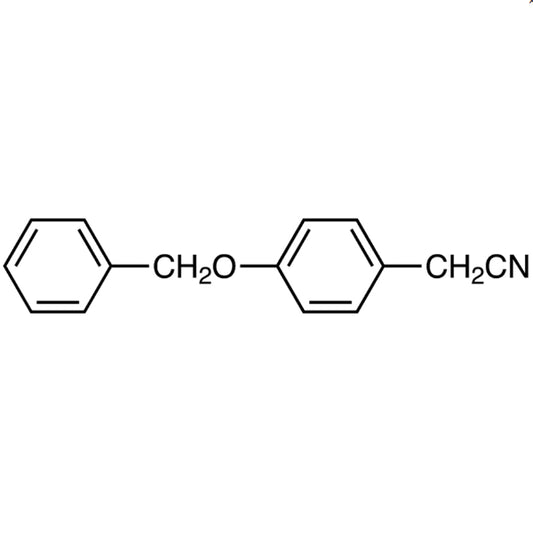
4-Benzyloxyphenylacetonitrile TCI B4734
Regular price From Rp 1.115.100,00Regular price -
3-Benzyloxyphenylacetonitrile TCI B4229
Regular price Rp 7.154.700,00Regular price -
Phenylacetonitrile TCI P0128
Regular price From Rp 477.750,00Regular price -
3,5-Dimethoxyphenylacetonitrile TCI D5186
Regular price From Rp 1.193.850,00Regular price -
4-Biphenylacetonitrile TCI B1545
Regular price From Rp 3.446.100,00Regular price