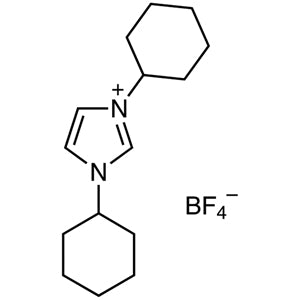
1,3-Dicyclohexylimidazolium Tetrafluoroborate from TCI with CAS number 286014-38-8 is an imidazolium salt bearing two cyclohexyl groups on the nitrogen atoms and a tetrafluoroborate anion as the counter ion. The compound belongs to the carbon-donor ligand category and serves in the laboratory as a precursor to N-heterocyclic carbenes, or NHCs. When treated with a suitable base, the proton at the position between the two nitrogen atoms is removed and a free carbene is generated, ready to coordinate strongly with transition metals to give stable and active catalysts and organometallic complexes.
The property that makes this material a preferred choice is the ease with which it can be handled. As a solid salt, the compound is far more stable in air than the free carbene or many phosphine ligands, so storage and weighing become practical operations that do not demand specialized inert-atmosphere technique at every step. The two cyclohexyl groups provide intermediate steric bulk together with electron-donating character, a combination that helps stabilize the metal center while still allowing product release during the catalytic cycle. The tetrafluoroborate anion is weakly coordinating and therefore does not interfere with the active site of the metal. NHC ligands also form strong metal–carbon bonds, which imparts durability to the resulting complexes.
In Indonesian laboratories, this salt is typically used in university and institutional research groups working on homogeneous catalysis, organometallic synthesis, and organic methodology development. It is weighed out as the ligand precursor, deprotonated in situ, and combined with a transition metal source to build the catalyst required for a coupling or transformation study. Because it is a bench-stable solid, it fits well into shared laboratory settings where reagents are stored for extended periods and used across several research projects.
Related TCI products
- TCI D3882 181422-72-0 1,3-Dicyclohexylimidazolium Chloride
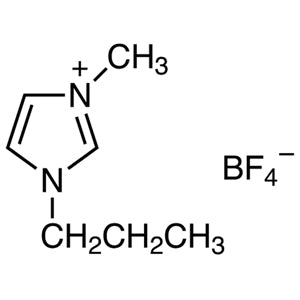
- TCI M3036 244193-48-4 1-Methyl-3-propylimidazolium Tetrafluoroborate
- TCI D5655 1671098-46-6 1-(2,6-Diethylphenyl)-2,2,4-trimethyl-4-phenyl-3,4-dihydro-2H-pyrrol-1-ium Tetrafluoroborate
- TCI D4624 862095-91-8 6,7-Dihydro-2-pentafluorophenyl-5H-pyrrolo[2,1-c][1,2,4]triazolium Tetrafluoroborate
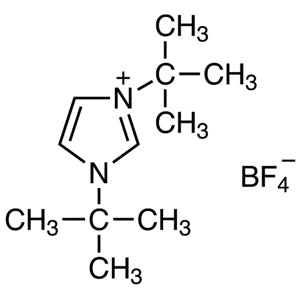
- TCI D3711 263163-17-3 1,3-Di-tert-butylimidazolium Tetrafluoroborate
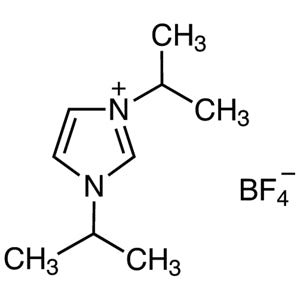
- TCI D3623 286014-34-4 1,3-Diisopropylimidazolium Tetrafluoroborate
- N-Heterocyclic carbene generation: the imidazolium proton is removed with a suitable base to release a free carbene, making this salt a direct and convenient entry point to NHC chemistry.
- Transition metal catalyst preparation: the carbene formed from this salt coordinates strongly with transition metals, allowing researchers to assemble catalysts that remain stable and active under working conditions.
- Organometallic complex synthesis: the strong metal–carbon bond characteristic of NHC ligands gives the resulting complexes durability, which suits systematic studies of structure and reactivity in organometallic research.
- Homogeneous catalysis method development: the intermediate steric bulk of the two cyclohexyl groups stabilizes the metal center while still permitting product release, supporting ligand screening across catalytic cycles.
- Ligand comparison studies against phosphines: because this solid salt is far more stable in air than many phosphine ligands, it is well suited to side-by-side evaluations of ligand class and handling behavior.
| Brand | TCI |
|---|---|
| CAS number | 286014-38-8 |
| Molecular formula | — |
| Purity | — |
| Category | Chemistry > Catalysis and Inorganic Chemistry > Carbon-Donor Ligands [Catalysis] |
| Pack sizes | available in standard TCI catalog packaging; please confirm the size required when ordering |
| Physical form | solid salt |
| Storage | keep in a closed container in a dry place, away from moisture and bases |
Store the material in its original tightly closed container in a cool, dry, and well-ventilated place, protected from moisture. Glass or other chemically compatible containers with secure closures are appropriate, and the container should be resealed promptly after each weighing so that atmospheric humidity is not drawn into the solid. Weigh and transfer the salt in a fume hood or a well-ventilated work area, wearing safety glasses, gloves, and a laboratory coat. Avoid contact with skin and eyes and avoid generating or inhaling dust. Keep it separate from bases, since deprotonation is exactly the reaction that generates the reactive free carbene. Consult the manufacturer's safety data sheet before use and follow institutional waste disposal procedures.
—
Product Categories
- Catalysis and Inorganic ChemistryCarbon-Donor Ligands [Catalysis]Imidazolinium Salts, Cyclic Alkyl Amino Carbene (CAAC) Pecursors [Carbon-Donor Ligands]
- Catalysis and Inorganic ChemistryCross-coupling Reaction using Transition Metal Catalysts [C-C Bond Formation]N-Heterocyclic Carbene (NHC) Ligands [Cross-coupling Reaction using Transition Metal Catalysts]
- Synthetic ReagentsC-C Bond Formation [Synthetic Reagents]Cross-coupling Reaction using Transition Metal Catalysts [C-C Bond Formation]
Produk Terkait
-
1,3-DicyclohexylimidazoliumChloride TCI D3882
Regular price From Rp 1.856.400,00Regular price -
1-Methyl-3-propylimidazoliumTetrafluoroborate TCI M3036
Regular price From Rp 1.115.100,00Regular price -
1-(2,6-Diethylphenyl)-2,2,4-trimethyl-4-phenyl-3,4-dihydro-2H-pyrrol-1-iumTetrafluoroborate TCI D5655
Regular price From Rp 5.565.000,00Regular price -
6,7-Dihydro-2-pentafluorophenyl-5H-pyrrolo[2,1-c][1,2,4]triazoliumTetrafluoroborate TCI D4624
Regular price Rp 7.209.300,00Regular price -
1,3-Di-tert-butylimidazoliumTetrafluoroborate TCI D3711
Regular price From Rp 1.273.650,00Regular price -
1,3-DiisopropylimidazoliumTetrafluoroborate TCI D3623
Regular price Rp 1.749.300,00Regular price -
1,3-DiisopropylimidazoliniumTetrafluoroborate TCI D3622
Regular price Rp 3.312.750,00Regular price -
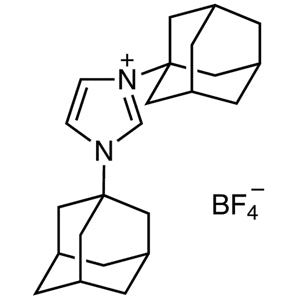
1,3-Di(1-adamantyl)imidazoliumTetrafluoroborate TCI D3621
Regular price Rp 3.683.400,00Regular price


![6,7-Dihydro-2-pentafluorophenyl-5H-pyrrolo[2,1-c][1,2,4]triazolium Tetrafluoroborate (CAS 862095-91-8) - TCI D4624 - AMI Scientific](http://amiscientific.com/cdn/shop/files/TCI2510D4624.jpg?v=1767107769&width=533)