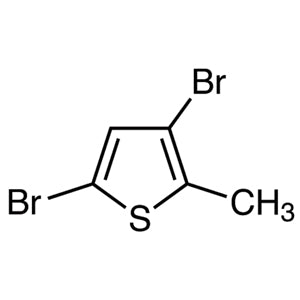
TCI D3999 3,5-Dibromo-2-methylthiophene (CAS 29421-73-6) is a thiophene derivative carrying two bromine atoms at the 3- and 5-positions and a single methyl group at the 2-position. As a heterocyclic building block, this compound plays an important role in organic synthesis and materials chemistry laboratories, particularly in the construction of thiophene-based conjugated molecules. The two bromine atoms provide entry points for transition-metal-catalysed cross-coupling reactions, while the methyl group contributes electronic and steric effects that influence reaction direction as well as the solubility of the final product.
The property that makes this material especially attractive is the difference in reactivity between the bromine positions on the thiophene ring. Bromine at the alpha position, adjacent to the sulfur atom, generally participates in coupling reactions more readily than bromine at the beta position, allowing researchers to design stepwise functionalisation starting from a single substrate. The thiophene framework itself is well known as an excellent electron-carrying unit in organic semiconductor materials because of its efficient pi-electron delocalisation. The additional methyl group helps improve solubility in non-polar organic solvents, which facilitates homogeneous reaction processing.
In Indonesian laboratories, this building block is typically used in university research groups, materials chemistry laboratories, and synthesis facilities working on conjugated polymers and small-molecule semiconductors. It is normally handled on a small research scale, weighed out inside a fume hood, and combined with palladium or nickel catalyst systems under inert atmosphere. Researchers usually order it as a catalogue building block for method development, thesis work, and exploratory synthesis rather than for production-scale operations.
Related TCI products
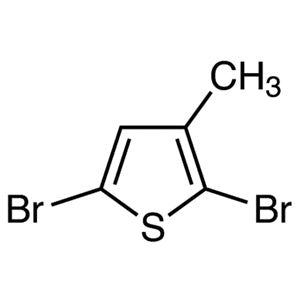
- TCI D4304 13191-36-1 2,5-Dibromo-3-methylthiophene
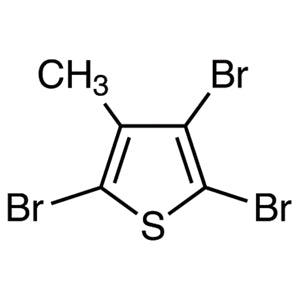
- TCI T1682 67869-13-0 2,3,5-Tribromo-4-methylthiophene
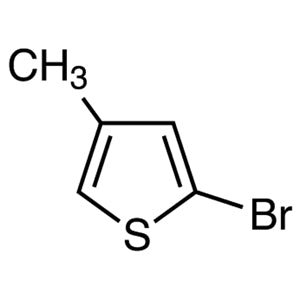
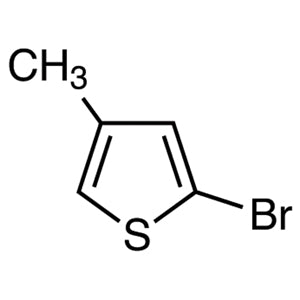
- TCI B4273 53119-60-1 2-Bromo-4-methylthiophene
- TCI B3385 29421-92-9 4-Bromo-2-methylthiophene
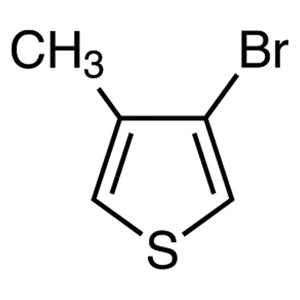
- TCI B1541 30318-99-1 3-Bromo-4-methylthiophene
- TCI B1540 765-58-2 2-Bromo-5-methylthiophene (stabilized with Copper chip + NaHCO3)
- Cross-coupling reaction substrate: the two carbon–bromine bonds serve as reliable handles for transition-metal-catalysed couplings, letting researchers install aryl, heteroaryl, or alkenyl fragments onto the thiophene core.
- Stepwise selective functionalisation: the differing reactivity of the alpha and beta bromine positions allows one bromine to react first, so a single substrate can be elaborated into unsymmetrical products in controlled sequence.
- Conjugated polymer synthesis: as a dibrominated thiophene monomer, it can be incorporated into polymerisation routes that build extended pi-conjugated backbones for organic electronic materials research.
- Organic semiconductor development: the efficient pi-electron delocalisation of the thiophene framework makes this building block suitable for preparing small molecules studied as charge-transporting or light-absorbing materials.
- Methodology and catalyst screening: the defined dibromo substitution pattern gives a consistent, well-behaved test substrate for evaluating new catalyst systems, ligands, solvents, and reaction conditions in coupling chemistry.
| Brand | TCI (Tokyo Chemical Industry) |
|---|---|
| CAS number | 29421-73-6 |
| Molecular formula | — |
| Purity | — |
| Category | Chemistry > Building Blocks > Heterocyclic Building Blocks |
| Pack sizes | research-scale catalogue packs; available sizes confirmed at the time of order |
| Physical form | — |
| Storage | store in a cool, dry place in a tightly closed container, following the manufacturer's label |
- Catalogue Code: D3999
Store the container in a cool, dry, and well-ventilated area away from direct sunlight, heat sources, ignition sources, and strong oxidising agents. Keep the material tightly closed in its original amber or opaque glass container to limit exposure to light and moisture, and reseal immediately after each use. Weighing and transfer should be carried out inside a fume hood using clean, dry spatulas. Wear safety glasses, chemical-resistant gloves, and a laboratory coat when handling the compound. Where reactions require it, work under an inert atmosphere. Always consult the manufacturer's safety data sheet before use, and dispose of residues and contaminated materials through halogenated organic waste channels in accordance with applicable laboratory waste regulations.
—
Produk Terkait
-
2,5-Dibromo-3-methylthiophene TCI D4304
Regular price From Rp 1.670.550,00Regular price -
2,3,5-Tribromo-4-methylthiophene TCI T1682
Regular price Rp 2.704.800,00Regular price -
2-Bromo-4-methylthiophene TCI B4273
Regular price Rp 4.718.700,00Regular price -
4-Bromo-2-methylthiophene TCI B3385
Regular price From Rp 1.829.100,00Regular price -
3-Bromo-4-methylthiophene TCI B1541
Regular price From Rp 1.829.100,00Regular price -
2-Bromo-5-methylthiophene(stabilizedwithCopperchip+NaHCO3) TCI B1540
Regular price From Rp 1.538.250,00Regular price -
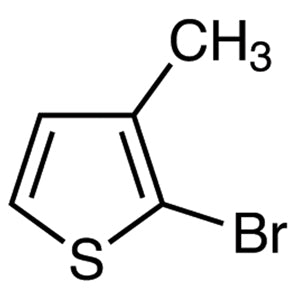
2-Bromo-3-methylthiophene TCI B1025
Regular price From Rp 637.350,00Regular price -
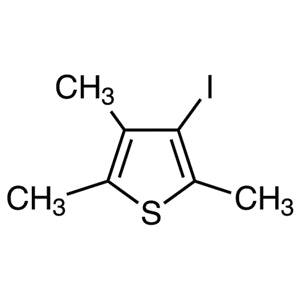
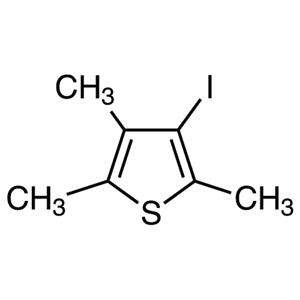
3-Iodo-2,4,5-trimethylthiophene(stabilizedwithCopperchip) TCI I0445
Regular price Rp 2.677.500,00Regular price