TCI D4149 4,4-Dimethylcyclohexanone is a six-membered cyclic ketone bearing two methyl groups at the 4-position, supplied as a non-heterocyclic building block for organic synthesis. In the laboratory it serves as a ready-made starting scaffold that can be modified further through reactions at its carbonyl group, allowing researchers to construct more complex molecules without having to prepare a substituted cyclohexanone framework themselves. Having it available on the reagent shelf makes synthetic route planning more concise, particularly in research that calls for a rigid aliphatic skeleton with a substitution pattern that is fixed from the outset.
The characteristic that makes this compound a frequent choice is the combination of a reactive carbonyl group with two geminal methyl groups that act as a steric barrier while also contributing lipophilic character. The carbonyl group opens the way to nucleophilic addition, reduction to the corresponding alcohol, reductive amination, olefination, and enolate formation, while the substitution at the 4-position locks the ring conformation and reduces the likelihood of side reactions at that site. This pattern yields derivatives with a more predictable geometry, which is valuable when a defined three-dimensional shape is part of the design objective.
In Indonesian laboratories, materials of this type are typically used in university and institutional research groups working on organic synthesis, medicinal chemistry, and materials development, as well as in industrial R&D units that prepare intermediates on a small scale. It is commonly ordered in modest quantities suited to method development and repeated trial reactions, then stored alongside other building blocks in a dedicated organic reagent area so that the synthetic team can access it quickly when a route is being optimised.
Related TCI products
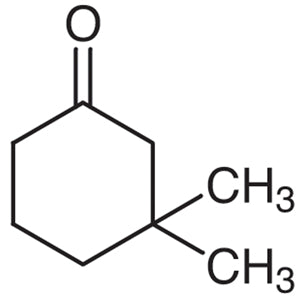
- TCI D3495 2979-19-3 3,3-Dimethylcyclohexanone
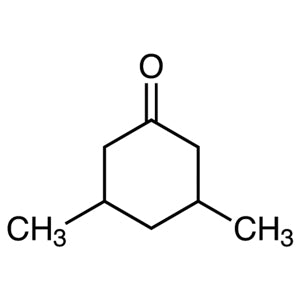
- TCI D1282 2320-30-1 3,5-Dimethylcyclohexanone (mixture of isomers)
- TCI D1281 5465-09-8 3,4-Dimethylcyclohexanone (mixture of isomers)
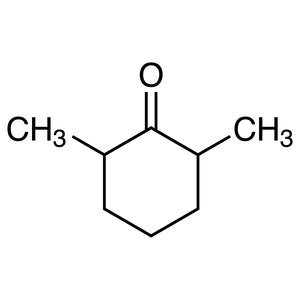
- TCI D1280 2816-57-1 2,6-Dimethylcyclohexanone (mixture of isomers)
- TCI D1279 932-51-4 2,5-Dimethylcyclohexanone (mixture of isomers)
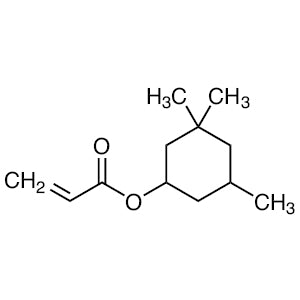
- TCI T3984 86178-38-3 3,3,5-Trimethylcyclohexyl Acrylate (cis- and trans- mixture) (stabilized with MEHQ)
- Organic synthesis intermediate — the carbonyl group provides a single, well-defined reactive handle, so the ring can be elaborated step by step into larger target molecules along a planned route.
- Medicinal chemistry scaffold preparation — the gem-dimethyl substitution adds lipophilic character and conformational rigidity, features frequently sought when building saturated ring fragments for structure–activity studies.
- Reductive amination substrate — the ketone converts cleanly to secondary or tertiary amines, giving access to substituted cyclohexylamine derivatives without additional protecting-group manipulation on the ring.
- Alcohol synthesis by carbonyl reduction — reduction delivers the corresponding cyclohexanol with the 4,4-dimethyl pattern already installed, shortening routes toward rigid aliphatic alcohol intermediates.
- Enolate and olefination chemistry — the compound forms enolates and undergoes olefination reactions, allowing carbon–carbon bond formation at positions adjacent to or directly at the carbonyl carbon.
| Brand | TCI |
|---|---|
| CAS number | 4255-62-3 |
| Molecular formula | — |
| Purity | — |
| Category | Chemistry > Building Blocks > Non-Heterocyclic Building Blocks |
| Pack sizes | available in standard research-scale catalogue packs; please confirm the size required when ordering. |
| Physical form | — |
| Storage | keep in a tightly closed original container in a cool, dry, well-ventilated place away from ignition sources. |
- Product code: D4149
Store the container tightly closed in a cool, dry, well-ventilated area, away from heat, open flame, and other ignition sources, and separated from strong oxidising agents. Keep the material in its original supplier packaging or in a chemically compatible sealed glass bottle, clearly labelled and held within secondary containment on the shelf. Handle inside a fume hood, wearing safety goggles, chemical-resistant gloves, and a laboratory coat, and avoid inhaling vapours or allowing contact with skin and eyes. Close the container promptly after dispensing to limit vapour release, and consult the manufacturer's Safety Data Sheet before first use and before disposal of any residues.
—
Produk Terkait
-
3,3-Dimethylcyclohexanone TCI D3495
Regular price From Rp 1.008.000,00Regular price -
3,5-Dimethylcyclohexanone(mixtureofisomers) TCI D1282
Regular price From Rp 3.340.050,00Regular price -
3,4-Dimethylcyclohexanone(mixtureofisomers) TCI D1281
Regular price Rp 4.743.900,00Regular price -
2,6-Dimethylcyclohexanone(mixtureofisomers) TCI D1280
Regular price From Rp 2.518.950,00Regular price -
2,5-Dimethylcyclohexanone(mixtureofisomers) TCI D1279
Regular price From Rp 4.240.950,00Regular price -
3,3,5-TrimethylcyclohexylAcrylate(cis-andtrans-mixture)(stabilizedwithMEHQ) TCI T3984
Regular price From Rp 1.510.950,00Regular price -
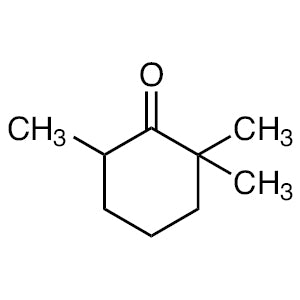
2,2,6-Trimethylcyclohexanone TCI T3944
Regular price From Rp 2.174.550,00Regular price -
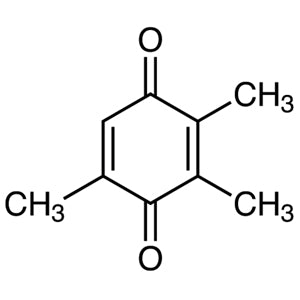
2,3,5-Trimethylcyclohexa-2,5-diene-1,4-dione TCI T3768
Regular price Rp 3.949.050,00Regular price