TCI D1281 3,4-Dimethylcyclohexanone (mixture of isomers) is an alicyclic ketone bearing two adjacent methyl groups at positions 3 and 4 of the cyclohexanone ring, supplied as a mixture of isomers. The compound belongs to the non-heterocyclic building block family, serving as a foundational carbon skeleton for constructing target molecules in organic synthesis laboratories. Unlike isomers substituted at the alpha position, the placement of methyl groups at the beta and gamma positions leaves the carbonyl group comparatively more accessible, making this material a frequent choice when researchers need high carbonyl reactivity accompanied by remote steric influence over the reaction outcome.
The property that makes this compound particularly attractive is the presence of two adjacent stereogenic centres, which give rise to a pair of cis and trans isomers exhibiting distinctly different conformational behaviour. This characteristic makes it a valuable material for conformational analysis studies of the cyclohexane ring, for determining equatorial versus axial positional preferences, and for discussions of ring strain energy in physical organic chemistry lectures and research. Its physical form is an organic liquid that is straightforward to transfer and measure, and it dissolves in common organic solvents such as ether, dichloromethane, and alcohols, making it compatible with standard synthetic workflows.
In Indonesian laboratories, this building block is typically used in university and institutional organic synthesis groups where cyclohexanone derivatives serve as starting scaffolds for multi-step routes. It also appears in physical organic chemistry teaching and research settings, where the cis/trans isomer pair supports practical demonstrations of ring conformation and substituent positional preference. Its liquid form and solubility in routine organic solvents make it easy to integrate into existing bench procedures without requiring specialised handling equipment.
Related TCI products
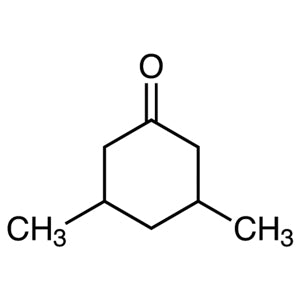
- TCI D1282 2320-30-1 3,5-Dimethylcyclohexanone (mixture of isomers)
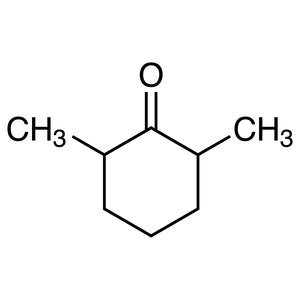
- TCI D1280 2816-57-1 2,6-Dimethylcyclohexanone (mixture of isomers)
- TCI D1279 932-51-4 2,5-Dimethylcyclohexanone (mixture of isomers)
- TCI T4002 42594-17-2 Tricyclo[5210~2,6~]decanedimethanol Diacrylate (mixture of isomers) (stabilized with MEHQ)
- TCI T2701 6809-52-5 Teprenone [mixture of (5E,9E,13E)- and (5Z,9E,13E)- isomers]
- TCI B3371 14765-30-1 2-sec-Butylcyclohexanone (mixture of isomers)
- Organic synthesis scaffold construction — the ketone functions as a non-heterocyclic building block providing a ready-made carbon skeleton for designing and assembling target molecules in multi-step routes.
- Carbonyl addition and condensation chemistry — the relatively unhindered carbonyl at the beta and gamma substitution pattern supports high reactivity where alpha-substituted isomers would be sterically blocked.
- Conformational analysis of cyclohexane rings — the two adjacent stereogenic centres generate cis and trans isomers with different conformational behaviour, ideal for systematic ring conformation studies.
- Equatorial versus axial preference determination — the adjacent methyl substituents allow researchers to probe and quantify substituent positional preference around the cyclohexanone ring framework.
- Physical organic chemistry teaching and research — ring strain energy discussions in university lectures and research projects benefit from this isomer mixture as a practical, tangible working example.
| Brand | TCI |
|---|---|
| CAS number | 5465-09-8 |
| Molecular formula | — |
| Purity | — |
| Category | Chemistry > Building Blocks > Non-Heterocyclic Building Blocks |
| Pack sizes | please refer to the available packaging options for this catalogue item |
| Physical form | organic liquid, easy to transfer and measure |
| Storage | store in a tightly closed container, away from heat and ignition sources |
- Composition: supplied as a mixture of isomers (cis and trans)
- Solubility: soluble in common organic solvents including ether, dichloromethane, and alcohols
Store this material in its original tightly closed container in a cool, well-ventilated area, away from heat, open flame, and ignition sources. Use containers compatible with organic liquids and keep them sealed when not in use to limit evaporation and moisture uptake. Handle the compound inside a fume hood, wearing safety goggles, chemical-resistant gloves, and a laboratory coat. Transfer using clean glass or otherwise compatible labware, and avoid contact with skin, eyes, and inhalation of vapours. Segregate from strong oxidising agents during storage, label all secondary containers clearly, and consult the manufacturer's safety data sheet before first use and for disposal guidance.
—
Produk Terkait
-
3,5-Dimethylcyclohexanone(mixtureofisomers) TCI D1282
Regular price From Rp 3.340.050,00Regular price -
2,6-Dimethylcyclohexanone(mixtureofisomers) TCI D1280
Regular price From Rp 2.518.950,00Regular price -
2,5-Dimethylcyclohexanone(mixtureofisomers) TCI D1279
Regular price From Rp 4.240.950,00Regular price -
Tricyclo[5210~2,6~]decanedimethanolDiacrylate(mixtureofisomers)(stabilizedwithMEHQ) TCI T4002
Regular price From Rp 1.273.650,00Regular price -
Teprenone[mixtureof(5E,9E,13E)-and(5Z,9E,13E)-isomers] TCI T2701
Regular price From Rp 2.147.250,00Regular price -
2-sec-Butylcyclohexanone(mixtureofisomers) TCI B3371
Regular price Rp 1.060.500,00Regular price -
DiisononylAdipate(mixtureofbranchedchainisomers) TCI A1387
Regular price From Rp 584.850,00Regular price -
TetrapropenylsuccinicAnhydride(mixtureofbranchedchainisomers) TCI T0170
Regular price From Rp 505.050,00Regular price

![42594-17-2 Tricyclo[5.2.1.0~2,6~]decanedimethanol Diacrylate (mixture of isomers) (stabilized with MEHQ) - AMI Scientific](http://amiscientific.com/cdn/shop/files/TCI2510T4002.jpg?v=1767144579&width=533)
![6809-52-5 Teprenone [mixture of (5E,9E,13E)- and (5Z,9E,13E)- isomers] - AMI Scientific](http://amiscientific.com/cdn/shop/files/TCI2510T2701.jpg?v=1767143256&width=533)