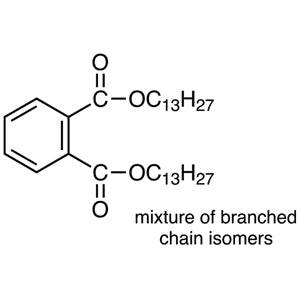
Diisononyl Adipate (mixture of branched chain isomers), with CAS number 33703-08-1, is a chemical compound widely used as a building block in organic chemistry research. It serves as a precursor in the synthesis of complex molecules, including polymers, esters, and other structurally diverse compounds. Its versatility makes it a valuable resource for chemists seeking to modify molecular structures through various chemical reactions. This compound is commonly found in laboratory settings where the development of new materials and pharmaceuticals is a priority.
The compound is known for its chemical stability and resistance to degradation, making it suitable for use under a range of reaction conditions. Its solubility in organic solvents further enhances its utility, as it facilitates mixing and reaction processes without interfering with the desired chemical outcomes. These properties make Diisononyl Adipate a preferred choice for researchers aiming for reliable and consistent results in their experiments.
In Indonesian laboratories, Diisononyl Adipate is extensively used in scientific research, particularly in the fields of organic chemistry, material science, and pharmaceutical development. Its availability and effectiveness in supporting the synthesis of complex compounds have made it a staple in many research labs. Researchers rely on its predictable behavior and compatibility with various reaction conditions to advance their work in developing new compounds and materials.
TCI brochures (PDF)
- Polymer Additives 2026-04-16 · p. 3
Related TCI products
- TCI P0307 75359-31-8 Ditridecyl Phthalate (mixture of branched chain isomers)
- TCI A0163 103-23-1 Bis(2-ethylhexyl) Adipate
- TCI B2716 141-18-4 Bis(2-butoxyethyl) Adipate
- TCI A0931 106-19-4 Dipropyl Adipate
- TCI A0654 6938-94-9 Diisopropyl Adipate
- TCI P0273 1330-78-5 Tricresyl Phosphate (mixture of isomers)
- Organic synthesis applications benefit from Diisononyl Adipate due to its ability to participate in esterification and polymerization reactions, enabling the creation of complex molecular structures.
- Material science research utilizes this compound to develop new polymers and coatings, leveraging its structural flexibility and chemical stability for enhanced material properties.
- Pharmaceutical research incorporates Diisononyl Adipate as a building block in the synthesis of drug-related compounds, contributing to the development of new therapeutic agents.
- Analytical chemistry laboratories use it as a standard reference material for calibrating instruments and validating chemical processes.
- Industrial chemical processes employ Diisononyl Adipate for the production of specialty chemicals, taking advantage of its reactivity and compatibility with various reaction conditions.
| Brand | TCI |
|---|---|
| CAS number | 33703-08-1 |
| Molecular formula | — |
| Purity | — |
| Category | Chemistry > Building Blocks > Non-Heterocyclic Building Blocks |
| Pack sizes | Available in various quantities as per supplier specifications |
| Physical form | Liquid |
| Storage | Store in a cool, dry place away from direct sunlight and incompatible materials |
Diisononyl Adipate should be stored in a cool, dry environment, away from direct sunlight and sources of heat. It is recommended to keep the compound in a sealed container to prevent exposure to air and moisture, which could affect its stability. Suitable storage containers include glass or high-density polyethylene (HDPE) bottles, which are resistant to chemical interactions. In laboratory settings, it is important to handle the compound with care, using appropriate personal protective equipment such as gloves and safety goggles. Proper ventilation should be maintained when working with this material to minimize inhalation risks. Regular inspection of storage conditions ensures the compound remains in optimal condition for use in research applications.
—
Produk Terkait
-
DitridecylPhthalate(mixtureofbranchedchainisomers) TCI P0307
Regular price Rp 477.750,00Regular priceRp 333.900,00Sale price Rp 477.750,00 -
Bis(2-ethylhexyl)Adipate TCI A0163
Regular price Rp 452.550,00Regular priceRp 316.050,00Sale price Rp 452.550,00 -
Bis(2-butoxyethyl)Adipate TCI B2716
Regular price From Rp 717.150,00Regular priceRp 500.850,00Sale price From Rp 717.150,00 -
DipropylAdipate TCI A0931
Regular price Rp 1.008.000,00Regular priceRp 704.550,00Sale price Rp 1.008.000,00 -
DiisopropylAdipate TCI A0654
Regular price From Rp 903.000,00Regular priceRp 631.050,00Sale price From Rp 903.000,00 -
TricresylPhosphate(mixtureofisomers) TCI P0273
Regular price Rp 530.250,00Regular priceRp 386.400,00Sale price Rp 530.250,00 -
BenzylIsononylPhthalate(mixtureofbranchedchainisomers) TCI B2715
Regular price Rp 955.500,00Regular priceRp 667.800,00Sale price Rp 955.500,00 -
TetrapropenylsuccinicAnhydride(mixtureofbranchedchainisomers) TCI T0170
Regular price From Rp 557.550,00Regular priceRp 405.300,00Sale price From Rp 557.550,00