Ditridecyl phthalate, a mixture of branched chain isomers, is a chemical compound widely used as a building block in laboratory reactions. It belongs to the category of non-heterocyclic building blocks, offering a simple yet versatile molecular structure that supports the synthesis of more complex compounds. This compound is commonly utilized as a solvent or auxiliary material in organic synthesis processes, making it an essential component in many chemical experiments. Its stability and compatibility with various reagents make it a reliable choice for researchers working in controlled laboratory environments.
One of the key properties that make Ditridecyl phthalate a preferred choice is its chemical stability. It resists unwanted reactions with other chemicals, ensuring consistent results in laboratory experiments. Additionally, it exhibits good solubility in organic solvents, which enhances its utility in applications requiring dispersion or mixing of chemical substances. These characteristics make it particularly suitable for use in environments where chemical stability and solubility are critical.
In Indonesian laboratories, Ditridecyl phthalate is frequently employed in chemical research and pharmaceutical development. It plays a vital role in the synthesis of new compounds, material testing, and environmental studies. Due to its stability and adaptability, it is a favored material among research institutions and industrial laboratories in Indonesia, supporting a wide range of scientific investigations.
- Chemical synthesis: Used in the preparation of complex organic compounds due to its stable structure and solubility in organic solvents.
- Pharmaceutical development: Serves as a building block in the formulation of new drug compounds and active pharmaceutical ingredients.
- Material testing: Applied in the analysis of polymer properties and the evaluation of chemical resistance in various materials.
- Environmental research: Utilized in studies involving the behavior of organic compounds in different environmental matrices.
- Solvent applications: Acts as a versatile solvent in reactions where compatibility and stability are essential.
| Brand | TCI |
|---|---|
| CAS number | 75359-31-8 |
| Molecular formula | — |
| Purity | — |
| Category | Chemistry > Building Blocks > Non-Heterocyclic Building Blocks |
| Pack sizes | Available in standard laboratory quantities as per supplier specifications |
| Physical form | Liquid |
| Storage | Store in a cool, dry place away from direct sunlight and incompatible materials |
Ditridecyl phthalate should be stored in a cool, dry environment to maintain its chemical stability. It is recommended to keep it in a sealed container to prevent exposure to air and moisture. The compound should be stored away from incompatible substances such as strong oxidizing agents to avoid any potential chemical interactions. In laboratory settings, it is important to handle the material with appropriate personal protective equipment, including gloves and safety goggles. Regular monitoring of storage conditions ensures the material remains in optimal condition for use. Proper labeling of containers is also essential for safe handling and to prevent accidental misuse.
—
Produk Terkait
-
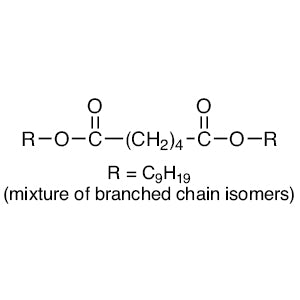
DiisononylAdipate(mixtureofbranchedchainisomers) TCI A1387
Regular price From Rp 584.850,00Regular price -
DipropylPhthalate TCI P0306
Regular price From Rp 1.590.750,00Regular price -
DimethylPhthalate TCI P0302
Regular price From Rp 505.050,00Regular price -
DiisopropylPhthalate TCI P0301
Regular price From Rp 2.227.050,00Regular price -
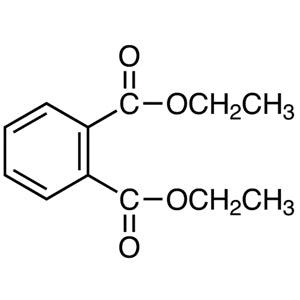
DiethylPhthalate TCI P0296
Regular price From Rp 477.750,00Regular price -
DibutylPhthalate TCI P0292
Regular price From Rp 477.750,00Regular price -
DiundecylPhthalate TCI D6050
Regular price From Rp 2.147.250,00Regular price -
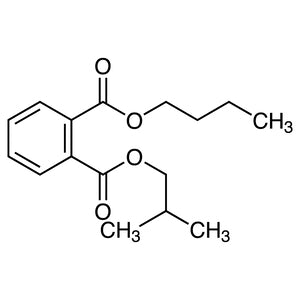
ButylIsobutylPhthalate TCI B6634
Regular price Rp 4.347.000,00Regular price