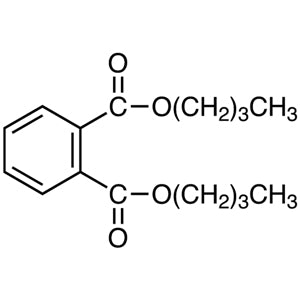
Dibutyl phthalate is a chemical compound widely used in laboratory experiments for various purposes. It belongs to the category of chemical building blocks, specifically non-heterocyclic building blocks, and is commonly utilized in the synthesis of complex compounds. This material serves as a versatile solvent or auxiliary in chemical reactions, making it an essential component in many laboratory workflows. Its stability and chemical inertness make it suitable for a wide range of experimental conditions.
The properties of dibutyl phthalate make it a preferred choice in laboratory settings. It is a colorless liquid with good solubility in organic solvents, which enhances its utility as a solvent in various chemical processes. Its high boiling point and low electrical conductivity contribute to its stability during experiments. Additionally, dibutyl phthalate is considered relatively safe for use in laboratories due to its non-toxic nature in small doses. These characteristics ensure reliable performance in both research and industrial applications.
In Indonesian laboratories, dibutyl phthalate is frequently used in chemical research and pharmaceutical industries. It is a popular choice for experiments requiring a stable and non-reactive solvent. Its consistent performance and reliability make it a favored material among researchers and practitioners in the field of chemistry. The compound’s ability to maintain its properties under various experimental conditions ensures its continued relevance in laboratory work.
TCI brochures (PDF)
- Polymer Additives 2026-04-16 · p. 2
- Chemical synthesis applications benefit from dibutyl phthalate’s stability and solubility, allowing for consistent reaction outcomes.
- Pharmaceutical research utilizes this compound as a solvent due to its inert nature and compatibility with various organic compounds.
- Analytical chemistry processes often require a non-reactive solvent, making dibutyl phthalate an ideal choice for sample preparation.
- Polymer science experiments use dibutyl phthalate for its ability to maintain chemical integrity during reaction cycles.
- Industrial process development relies on its high boiling point and low volatility for controlled reaction environments.
| Brand | TCI |
|---|---|
| CAS number | 84-74-2 |
| Molecular formula | — |
| Purity | — |
| Category | Chemistry > Building Blocks > Non-Heterocyclic Building Blocks |
| Pack sizes | Available in various sizes as per standard laboratory requirements |
| Physical form | Colorless liquid |
| Storage | Store in a cool, dry place away from direct sunlight |
Dibutyl phthalate should be stored in a cool, dry place away from direct sunlight to maintain its chemical stability. It is recommended to use appropriate containers that are resistant to chemical reactions, such as glass or stainless steel vessels. Laboratory personnel should handle the compound with care, using proper safety equipment like gloves and goggles to prevent exposure. Due to its non-toxic nature in small doses, it is considered relatively safe, but general laboratory precautions should still be followed. The compound should be kept in a well-ventilated area to ensure safe handling and minimize any potential risks associated with its use.
—
Produk Terkait
-
DibutylSebacate TCI S0023
Regular price From Rp 530.250,00Regular priceRp 386.400,00Sale price From Rp 530.250,00 -
DibutylMaleate TCI M0009
Regular price From Rp 530.250,00Regular priceRp 386.400,00Sale price From Rp 530.250,00 -
DitridecylPhthalate(mixtureofbranchedchainisomers) TCI P0307
Regular price Rp 477.750,00Regular priceRp 333.900,00Sale price Rp 477.750,00 -
DipropylPhthalate TCI P0306
Regular price From Rp 1.590.750,00Regular priceRp 1.111.950,00Sale price From Rp 1.590.750,00 -
DimethylPhthalate TCI P0302
Regular price From Rp 505.050,00Regular priceRp 352.800,00Sale price From Rp 505.050,00 -
DiisopropylPhthalate TCI P0301
Regular price From Rp 2.227.050,00Regular priceRp 1.557.150,00Sale price From Rp 2.227.050,00 -
DiethylPhthalate TCI P0296
Regular price From Rp 477.750,00Regular priceRp 333.900,00Sale price From Rp 477.750,00 -
DiundecylPhthalate TCI D6050
Regular price From Rp 2.147.250,00Regular priceRp 1.501.500,00Sale price From Rp 2.147.250,00