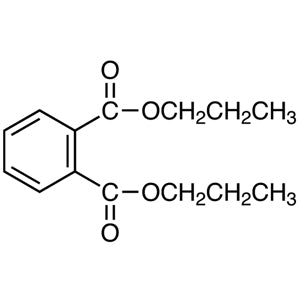
Dipropyl Phthalate is a chemical compound widely utilized in laboratory settings, particularly in organic synthesis applications. It serves as a versatile building block in chemical reactions, offering stability and reactivity that make it suitable for various experimental processes. This compound is commonly found in research environments where controlled chemical transformations are required, supporting both academic and industrial chemical investigations. Its chemical structure, derived from phthalic acid with two propyl groups, contributes to its functional versatility in synthetic pathways.
The properties of Dipropyl Phthalate make it a preferred choice for laboratory use. It exhibits low volatility and a relatively high boiling point, ensuring stability during thermal processes. These characteristics allow it to remain effective in reactions that require prolonged heating or high-temperature conditions. Additionally, its non-toxic nature at standard usage levels enhances its safety profile, making it a reliable option for routine laboratory work. The compound’s resistance to chemical degradation also contributes to its long-term usability in controlled environments.
In Indonesian laboratories, Dipropyl Phthalate is a relevant material for chemical research, especially in pharmaceutical and organic chemistry fields. It is frequently used by researchers and students in both academic and industrial settings to support a wide range of chemical experiments. Its availability and chemical properties make it a practical choice for those engaged in synthetic chemistry and related disciplines.
- Organic synthesis reactions benefit from Dipropyl Phthalate due to its stability and reactivity in esterification processes.
- It is suitable for pharmaceutical research as it supports the development of complex organic compounds.
- In academic laboratories, it is used for teaching and experimental purposes in chemistry courses.
- The compound is ideal for solvent applications where thermal stability and chemical resistance are required.
- It is commonly employed in the preparation of heterocyclic compounds, aiding in the synthesis of various functional materials.
| Brand | TCI |
|---|---|
| CAS number | 131-16-8 |
| Molecular formula | — |
| Purity | — |
| Category | Chemistry > Building Blocks > Non-Heterocyclic Building Blocks |
| Pack sizes | Available in various quantities as per supplier specifications |
| Physical form | Liquid |
| Storage | Store in a cool, dry place away from direct sunlight |
Dipropyl Phthalate should be stored in a cool, dry environment to maintain its chemical integrity. It is recommended to keep it in tightly sealed containers to prevent evaporation and contamination. Due to its low volatility, it does not require refrigeration but should be protected from direct sunlight and heat sources. In laboratory settings, it is important to handle the compound with care, using appropriate personal protective equipment. While it is considered non-toxic at standard usage levels, proper ventilation should be maintained during handling to ensure a safe working environment.
—
Produk Terkait
-
DipropylAdipate TCI A0931
Regular price Rp 1.008.000,00Regular price -
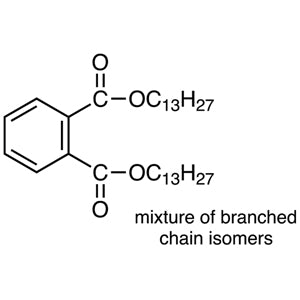
DitridecylPhthalate(mixtureofbranchedchainisomers) TCI P0307
Regular price Rp 477.750,00Regular price -
DimethylPhthalate TCI P0302
Regular price From Rp 505.050,00Regular price -
DiisopropylPhthalate TCI P0301
Regular price From Rp 2.227.050,00Regular price -
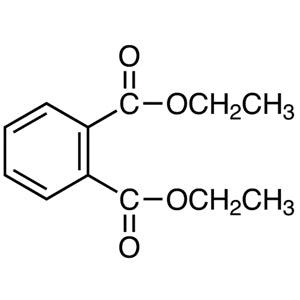
DiethylPhthalate TCI P0296
Regular price From Rp 477.750,00Regular price -
DibutylPhthalate TCI P0292
Regular price From Rp 477.750,00Regular price -
DiundecylPhthalate TCI D6050
Regular price From Rp 2.147.250,00Regular price -
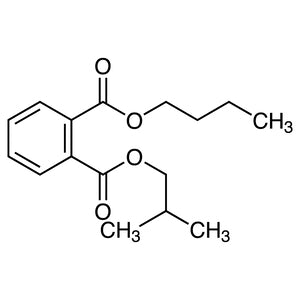
ButylIsobutylPhthalate TCI B6634
Regular price Rp 4.347.000,00Regular price