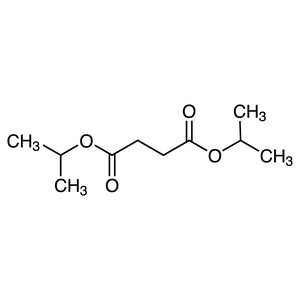
Diisopropyl Adipate is a chemical compound widely used as a building block in various chemical reactions, particularly in the synthesis of complex molecules. It serves as a versatile intermediate in organic chemistry, enabling the formation of ester groups through esterification reactions. Its molecular structure provides stability and reactivity, making it a valuable tool for researchers aiming to construct larger molecular frameworks. In laboratory settings, this compound is often employed as a reagent or solvent, supporting a wide range of synthetic processes.
One of the key properties that make Diisopropyl Adipate a preferred choice is its chemical stability and resistance to spontaneous reactions. This characteristic ensures safe handling and prolonged shelf life under appropriate storage conditions. Additionally, its relatively high boiling and melting points facilitate efficient separation and isolation during purification processes. The liquid form of the compound also enhances its usability, allowing for easy mixing with other reagents and solvents. These attributes collectively contribute to its reliability in both academic and industrial research environments.
In Indonesian laboratories, Diisopropyl Adipate is commonly used in organic chemistry research, particularly in higher education institutions and research centers. It plays a crucial role in the development of new compounds and in supporting experiments that require stable and accessible chemical intermediates. Its presence in laboratory workflows underscores its importance in advancing chemical synthesis and analytical techniques within the region.
TCI brochures (PDF)
- Polymer Additives 2026-04-16 · p. 3
- Used in organic synthesis for building complex molecular structures due to its reactivity and stability.
- Applied in esterification reactions to produce ester derivatives for pharmaceutical and industrial applications.
- Utilized in research settings for developing new chemical compounds and testing reaction mechanisms.
- Employed in analytical chemistry for solvent-based extraction and purification processes.
- Integrated into teaching laboratories to provide hands-on experience with intermediate chemical compounds.
| Brand | TCI |
|---|---|
| CAS number | 6938-94-9 |
| Molecular formula | — |
| Purity | — |
| Category | Chemistry > Building Blocks > Non-Heterocyclic Building Blocks |
| Pack sizes | Available in various quantities as per standard laboratory supply formats |
| Physical form | Liquid |
| Storage | Store in a cool, dry place away from direct sunlight and incompatible materials |
Diisopropyl Adipate should be stored in a cool, dry environment to maintain its chemical stability. It is recommended to keep the compound in a sealed container made of materials compatible with organic solvents, such as glass or high-density polyethylene. Avoid exposure to heat, light, and air to prevent degradation. In laboratory settings, it is essential to handle the compound with appropriate personal protective equipment, including gloves and safety goggles. Ensure proper ventilation when working with the substance to minimize inhalation risks. Regular monitoring of storage conditions helps maintain the integrity and usability of the compound over time.
—
Produk Terkait
-
DiisopropylPhthalate TCI P0301
Regular price From Rp 2.227.050,00Regular priceRp 1.557.150,00Sale price From Rp 2.227.050,00 -
Bis(2-ethylhexyl)Adipate TCI A0163
Regular price Rp 452.550,00Regular priceRp 316.050,00Sale price Rp 452.550,00 -
Bis(2-butoxyethyl)Adipate TCI B2716
Regular price From Rp 717.150,00Regular priceRp 500.850,00Sale price From Rp 717.150,00 -
DiisononylAdipate(mixtureofbranchedchainisomers) TCI A1387
Regular price From Rp 584.850,00Regular priceRp 408.450,00Sale price From Rp 584.850,00 -
DipropylAdipate TCI A0931
Regular price Rp 1.008.000,00Regular priceRp 704.550,00Sale price Rp 1.008.000,00 -
DiisopropylSuccinate TCI S0269
Regular price From Rp 1.326.150,00Regular priceRp 942.900,00Sale price From Rp 1.326.150,00 -
DiisopropylMalonate TCI M0648
Regular price From Rp 795.900,00Regular priceRp 572.250,00Sale price From Rp 795.900,00 -
DiisopropylDecanedioate TCI D6183
Regular price From Rp 2.677.500,00Regular priceRp 1.887.900,00Sale price From Rp 2.677.500,00