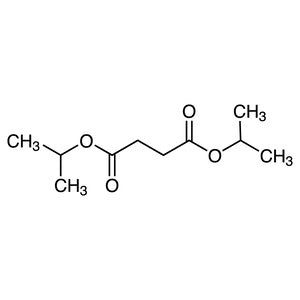
Diisopropyl Succinate is a chemical compound widely used in laboratory settings for the synthesis of complex organic compounds. As a building block in chemical reactions, it serves as a key reagent in esterification and substitution reactions. Its role is critical in the development of new organic molecules, where it acts as a substrate or reactive component. This compound is commonly found in the category of non-heterocyclic building blocks, making it a versatile tool for synthetic chemists.
The chemical stability and controlled reactivity of Diisopropyl Succinate make it a preferred choice for laboratory applications. These properties ensure that it can be used in a variety of reaction conditions without causing unwanted side reactions. Its well-defined boiling and melting points further enhance its usability, allowing it to be employed in both low- and high-temperature reactions. This reliability contributes to its popularity among researchers.
In Indonesian laboratories, Diisopropyl Succinate is frequently used in both pure and applied chemical research. It is particularly relevant for academic institutions, research centers, and industries involved in the synthesis of new compounds or the modification of existing ones. Its availability in the local market ensures easy access for scientists and researchers working on organic chemistry projects.
- Organic synthesis applications benefit from Diisopropyl Succinate due to its role as a stable and reactive building block in esterification and substitution reactions.
- It is ideal for research in pharmaceutical development, where the synthesis of complex organic molecules is essential.
- In academic laboratories, it supports teaching and research in organic chemistry, providing students and researchers with a reliable reagent.
- Industrial chemical processes often require high-purity reagents, making Diisopropyl Succinate suitable for large-scale synthesis projects.
- It is also used in analytical chemistry for the preparation of standard solutions and calibration of instruments.
| Brand | TCI |
|---|---|
| CAS number | 924-88-9 |
| Molecular formula | — |
| Purity | — |
| Category | Chemistry > Building Blocks > Non-Heterocyclic Building Blocks |
| Pack sizes | Available in various quantities to meet different research needs |
| Physical form | Solid or liquid, depending on the specific product variant |
| Storage | — |
Diisopropyl Succinate should be stored in a cool, dry, and well-ventilated area away from direct sunlight. It is recommended to keep the compound in a sealed container to prevent moisture absorption and contamination. Suitable storage containers include glass or high-density polyethylene (HDPE) bottles, which are resistant to chemical reactions. In laboratory settings, it is important to handle the compound with appropriate personal protective equipment (PPE) such as gloves and safety goggles. Proper labeling of storage containers is essential to ensure safe handling and prevent accidental exposure. Regular inspection of storage conditions is advised to maintain the integrity and stability of the compound.
—
Produk Terkait
-
DiisopropylAdipate TCI A0654
Regular price From Rp 903.000,00Regular price -
DiisopropylPhthalate TCI P0301
Regular price From Rp 2.227.050,00Regular price -
DiisopropylMalonate TCI M0648
Regular price From Rp 743.400,00Regular price -
DiisopropylDecanedioate TCI D6183
Regular price From Rp 2.625.000,00Regular price -
DiisopropylFumarate TCI D3916
Regular price From Rp 505.050,00Regular price -
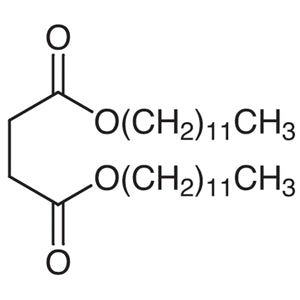
DidodecylSuccinate TCI S0255
Regular price Rp 1.193.850,00Regular price -
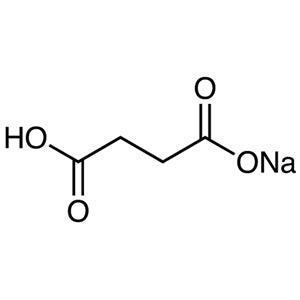
MonosodiumSuccinate TCI S0106
Regular price From Rp 955.500,00Regular price -
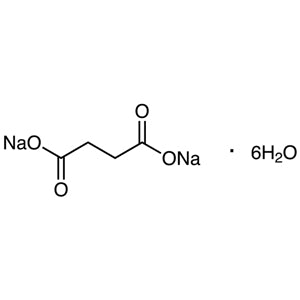
DisodiumSuccinateHexahydrate TCI S0105
Regular price From Rp 477.750,00Regular price