Benzyl Isononyl Phthalate (mixture of branched chain isomers), with CAS number 126198-74-1, is a chemical compound widely used in scientific and industrial applications. This material is categorized under Polymer/Macromolecule Reagents and serves as a polymer additive in laboratory settings. It is commonly employed to modify the properties of polymers, enhancing flexibility, durability, and mechanical performance. Its chemical stability and solubility in organic solvents make it a versatile component in polymer formulation and synthesis processes.
The compound’s molecular structure allows for interaction with various types of polymers, making it an ideal choice for material research. Its ability to integrate into polymer matrices contributes to improved material performance in both research and industrial applications. The stability of Benzyl Isononyl Phthalate ensures consistent results in experiments, making it a reliable reagent for laboratories focused on polymer science.
In Indonesian laboratories, Benzyl Isononyl Phthalate is frequently used in polymer-related research, including the development of new materials and the testing of existing ones. Its compatibility with different polymer systems and its chemical stability make it a preferred choice for researchers and industries working on advanced material formulations. The compound’s reliability and effectiveness in enhancing polymer properties support its widespread use in both academic and industrial settings.
TCI brochures (PDF)
- Polymer Additives 2026-04-16 · p. 2
Related TCI products
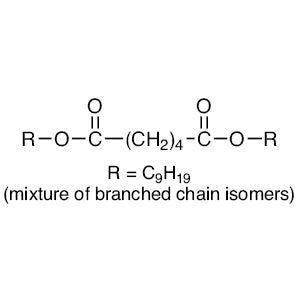
- TCI A1387 33703-08-1 Diisononyl Adipate (mixture of branched chain isomers)
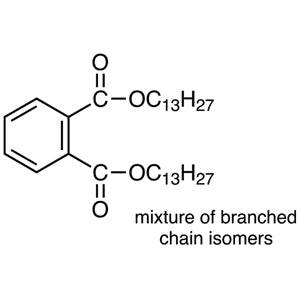
- TCI P0307 75359-31-8 Ditridecyl Phthalate (mixture of branched chain isomers)
- TCI P0300 28553-12-0 Diisononyl Phthalate (mixture of branched chain isomers)
- TCI P0299 26761-40-0 Diisodecyl Phthalate (mixture of branched chain isomers)
- TCI P0288 85-68-7 Benzyl Butyl Phthalate
- TCI D3754 508181-38-2 Diisononyl Cyclohexanedicarboxylate (mixture of branched chain isomers)
- Polymer Modification: Used to enhance the flexibility and mechanical properties of polymer materials, making it ideal for developing new composite materials.
- Formulation Development: Serves as an additive in polymer formulation processes, helping to tailor the final properties of the material for specific applications.
- Material Testing: Applied in testing the performance of existing polymer materials, providing insights into their behavior under different conditions.
- Industrial Research: Utilized in research projects aimed at improving the durability and functionality of polymer-based products.
- Chemical Compatibility Studies: Used to study how different polymers interact with various chemical additives, aiding in the design of more effective material systems.
| Brand | TCI |
|---|---|
| CAS number | 126198-74-1 |
| Molecular formula | — |
| Purity | — |
| Category | Materials Science > Polymer/Macromolecule Reagents > Polymer Additives |
| Pack sizes | Available in standard laboratory quantities as per supplier specifications |
| Physical form | Liquid |
| Storage | Store in a cool, dry place away from direct sunlight and incompatible materials |
Benzyl Isononyl Phthalate should be stored in a cool, dry environment, away from direct sunlight and sources of heat. It is recommended to keep the material in a tightly sealed container to prevent contamination and evaporation. Due to its chemical nature, it should be stored separately from strong oxidizers and incompatible substances to avoid any potential reactions. In laboratory settings, it is important to handle the compound with appropriate personal protective equipment, such as gloves and safety goggles, to ensure safety. Proper ventilation should be maintained when working with the material to minimize exposure. Regular inspection of storage conditions is advised to maintain the integrity and stability of the compound.
—
Produk Terkait
-
DiisononylAdipate(mixtureofbranchedchainisomers) TCI A1387
Regular price From Rp 584.850,00Regular priceRp 408.450,00Sale price From Rp 584.850,00 -
DitridecylPhthalate(mixtureofbranchedchainisomers) TCI P0307
Regular price Rp 477.750,00Regular priceRp 333.900,00Sale price Rp 477.750,00 -
DiisononylPhthalate(mixtureofbranchedchainisomers) TCI P0300
Regular price Rp 769.650,00Regular priceRp 537.600,00Sale price Rp 769.650,00 -
DiisodecylPhthalate(mixtureofbranchedchainisomers) TCI P0299
Regular price From Rp 477.750,00Regular priceRp 333.900,00Sale price From Rp 477.750,00 -
BenzylButylPhthalate TCI P0288
Regular price From Rp 505.050,00Regular priceRp 352.800,00Sale price From Rp 505.050,00 -
DiisononylCyclohexanedicarboxylate(mixtureofbranchedchainisomers) TCI D3754
Regular price From Rp 637.350,00Regular priceRp 445.200,00Sale price From Rp 637.350,00 -
TricresylPhosphate(mixtureofisomers) TCI P0273
Regular price Rp 530.250,00Regular priceRp 386.400,00Sale price Rp 530.250,00 -
DihexylPhthalate TCI P1344
Regular price From Rp 1.565.550,00Regular priceRp 1.094.100,00Sale price From Rp 1.565.550,00