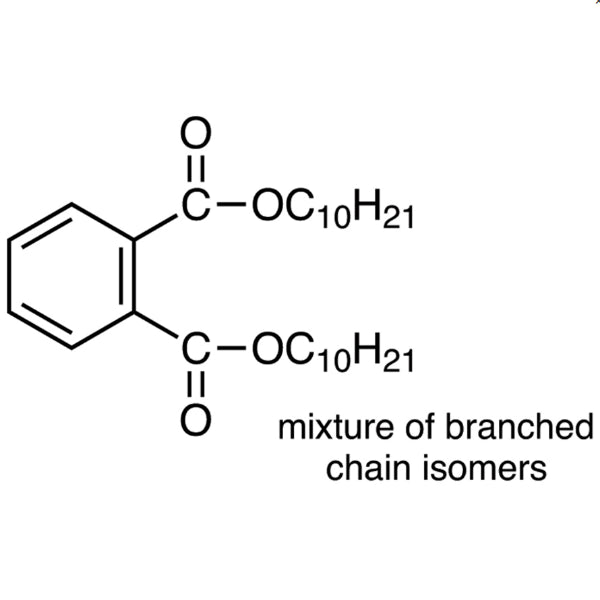
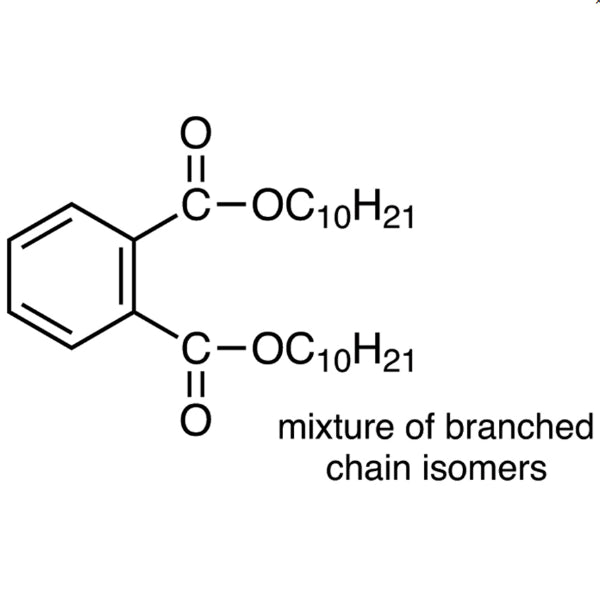
Diisodecyl Phthalate (mixture of branched chain isomers), with CAS number 26761-40-0, is a chemical compound widely used in laboratory settings related to polymer and macromolecule research. As a plasticizer, it enhances the flexibility and tensile strength of polymeric materials, particularly polyvinyl chloride (PVC). This compound plays a crucial role in the formulation of composite materials and polymers with desirable mechanical properties. Its presence in laboratory workflows supports the development of various industrial products, including cables, packaging, and construction materials.
The chemical stability and good solubility in organic solvents make Diisodecyl Phthalate a preferred choice for chemical reactions and polymer formulations. Its high viscosity ensures consistent application in processes requiring controlled flow and uniformity. These properties contribute to its effectiveness in both academic and industrial research environments. The compound’s compatibility with a wide range of solvents and its ability to maintain structural integrity under various conditions further enhance its utility in laboratory applications.
In Indonesian laboratories, Diisodecyl Phthalate is commonly used in polymer research and development. It is a key component in the creation of flexible and durable materials, supporting both academic studies and local industry initiatives. Its availability in the local market ensures accessibility for researchers and manufacturers, facilitating innovation in polymer-based products. The compound’s versatility and performance make it an essential material in the chemical and materials science sectors in Indonesia.
Related TCI products
- TCI B2715 126198-74-1 Benzyl Isononyl Phthalate (mixture of branched chain isomers)
- TCI A1387 33703-08-1 Diisononyl Adipate (mixture of branched chain isomers)
- TCI P0307 75359-31-8 Ditridecyl Phthalate (mixture of branched chain isomers)
- TCI P0300 28553-12-0 Diisononyl Phthalate (mixture of branched chain isomers)
- TCI D3754 508181-38-2 Diisononyl Cyclohexanedicarboxylate (mixture of branched chain isomers)
- TCI P0273 1330-78-5 Tricresyl Phosphate (mixture of isomers)
- Polymer formulation for flexible PVC products due to its ability to enhance tensile strength and flexibility.
- Composite material development where mechanical properties and durability are critical factors.
- Chemical reaction support in polymer synthesis and modification processes.
- Industrial research for the production of packaging materials requiring high flexibility and resilience.
- Formulation of construction materials that require both structural integrity and adaptability in different environmental conditions.
| Brand | TCI |
|---|---|
| CAS number | 26761-40-0 |
| Molecular formula | — |
| Purity | — |
| Category | Materials Science > Polymer/Macromolecule Reagents > Polymer Additives |
| Pack sizes | Available in various quantities as per standard laboratory requirements |
| Physical form | Liquid |
| Storage | Store in a cool, dark place away from heat and direct sunlight |
Diisodecyl Phthalate should be stored in a cool, dark environment to maintain its chemical stability and prevent degradation. It is recommended to use sealed containers made of materials compatible with organic solvents to avoid contamination and evaporation. Due to its high viscosity, it should be handled with care to prevent spills and ensure safe application. In laboratory settings, it is important to use appropriate personal protective equipment, such as gloves and safety goggles, when handling the compound. Proper ventilation should be maintained to minimize exposure to vapors. Regular monitoring of storage conditions ensures the material remains in optimal condition for use in polymer and macromolecule research.
—
Produk Terkait
-
BenzylIsononylPhthalate(mixtureofbranchedchainisomers) TCI B2715
Regular price Rp 955.500,00Regular price -
DiisononylAdipate(mixtureofbranchedchainisomers) TCI A1387
Regular price From Rp 584.850,00Regular price -
DitridecylPhthalate(mixtureofbranchedchainisomers) TCI P0307
Regular price Rp 477.750,00Regular price -
DiisononylPhthalate(mixtureofbranchedchainisomers) TCI P0300
Regular price Rp 769.650,00Regular price -
DiisononylCyclohexanedicarboxylate(mixtureofbranchedchainisomers) TCI D3754
Regular price From Rp 637.350,00Regular price -
TricresylPhosphate(mixtureofisomers) TCI P0273
Regular price Rp 477.750,00Regular price -
DiisodecylAdipate TCI A0164
Regular price From Rp 903.000,00Regular price -
DihexylPhthalate TCI P1344
Regular price From Rp 1.565.550,00Regular price