TCI D4706 3,5-Dimethylisoxazole-4-carbonyl Chloride is an acyl chloride compound built around an isoxazole ring bearing two methyl substituents at the 3- and 5-positions, with a carbonyl chloride group attached at the 4-position. The material belongs to the heterocyclic building block group — the class of starting materials that chemists use to construct larger molecular frameworks step by step. In the organic synthesis laboratory its role is very specific: it acts as a carrier for the dimethylisoxazole fragment, ready to be attached to another molecule through an acylation reaction, so that researchers do not need to build that heterocyclic ring from scratch.
The main characteristic that makes this material a preferred choice is the high reactivity of its acyl chloride group toward nucleophiles such as amines, alcohols, and thiols. Amide and ester formation reactions generally proceed under relatively mild conditions, requiring only an acid-scavenging base such as triethylamine or pyridine in a dry aprotic solvent. The 3,5-dimethylisoxazole core itself is well known as an attractive fragment in medicinal chemistry because of its electronic properties and its ability to act as a bioisosteric replacement group. The combination of controllable reactivity and a synthetically useful heterocyclic core is what places this reagent in the working reagent set rather than in the specialty archive.
In Indonesian laboratories, materials of this type are typically used in university and institutional organic synthesis groups, in medicinal chemistry and drug discovery research, and in R&D units that prepare compound libraries or reference substances. It is normally handled at the bench scale, in small quantities weighed out per reaction, within a fume hood using dry glassware. Because it is an acyl chloride, laboratories usually plan its use around the availability of anhydrous solvents and inert-atmosphere technique, so that the reagent is opened and dispensed only when the reaction is ready to run.
Related TCI products
- TCI B4637 39827-11-7 Benzo[b]thiophene-2-carbonyl Chloride
- TCI M2996 16883-16-2 5-Methyl-3-phenylisoxazole-4-carbonyl Chloride
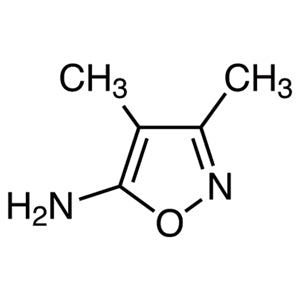
- TCI A3179 19947-75-2 5-Amino-3,4-dimethylisoxazole
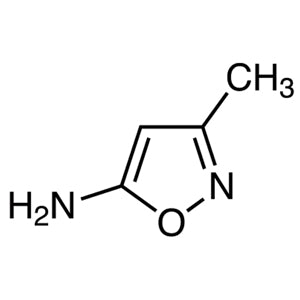
- TCI A2867 14678-02-5 5-Amino-3-methylisoxazole
- TCI A0980 1072-67-9 3-Amino-5-methylisoxazole
- TCI M2953 4857-42-5 3-Methylisoxazole-5-carboxylic Acid
- Amide bond formation — reaction with primary or secondary amines installs the dimethylisoxazole-4-carboxamide motif directly, which is one of the most common ways this reagent is consumed in synthesis.
- Ester synthesis — coupling with alcohols and phenols in the presence of an acid scavenger produces the corresponding esters, giving access to derivatives that would be slower to obtain from the free acid.
- Medicinal chemistry analogue preparation — the 3,5-dimethylisoxazole unit serves as a bioisosteric replacement group, so this reagent lets chemists introduce that fragment into an existing lead structure quickly.
- Heterocyclic scaffold elaboration — as a heterocyclic building block it shortens synthetic routes by supplying the pre-formed isoxazole ring, removing the need to construct the heterocycle in-house.
- Compound library and derivative screening — the predictable acylation chemistry makes it suitable for preparing sets of related amides and esters in parallel for structure–activity studies.
| Brand | TCI |
|---|---|
| CAS number | 31301-45-8 |
| Molecular formula | — |
| Purity | — |
| Category | Chemistry > Building Blocks > Heterocyclic Building Blocks |
| Pack sizes | available in standard TCI research-scale packaging; please confirm the pack size when ordering |
| Physical form | — |
| Storage | keep tightly closed in a cool, dry place, protected from moisture |
- Catalogue code: D4706
Store the container tightly closed in a cool, dry, well-ventilated area, away from moisture, water, and incompatible materials such as bases, alcohols, and amines. Keep the reagent in its original tightly sealed bottle, and for repeated use consider a septum-capped vessel so that material can be withdrawn by syringe without exposing the bulk to atmospheric humidity. Because acyl chlorides react with moisture and can release corrosive hydrogen chloride, handle and dispense the compound inside a fume hood while wearing safety glasses, chemically resistant gloves, and a laboratory coat. Use dry glassware and anhydrous solvents, avoid inhaling vapours, and follow the manufacturer's Safety Data Sheet together with local institutional waste-disposal procedures.
—
Produk Terkait
-
Benzo[b]thiophene-2-carbonylChloride TCI B4637
Regular price From Rp 1.167.600,00Regular price -
5-Methyl-3-phenylisoxazole-4-carbonylChloride TCI M2996
Regular price From Rp 769.650,00Regular price -
5-Amino-3,4-dimethylisoxazole TCI A3179
Regular price From Rp 1.193.850,00Regular price -
5-Amino-3-methylisoxazole TCI A2867
Regular price From Rp 1.008.000,00Regular price -
3-Amino-5-methylisoxazole TCI A0980
Regular price Rp 2.518.950,00Regular price -
3-Methylisoxazole-5-carboxylicAcid TCI M2953
Regular price Rp 2.916.900,00Regular price -
5-Methylisoxazole-3-carboxylicAcid TCI M2405
Regular price From Rp 1.298.850,00Regular price -
5-Methylisoxazole-4-carboxylicAcid TCI M1740
Regular price From Rp 769.650,00Regular price
![39827-11-7 Benzo[b]thiophene-2-carbonyl Chloride - AMI Scientific](http://amiscientific.com/cdn/shop/files/TCI2510B4637_9d4e67db-4d59-4414-9881-fc1acfc72b84.jpg?v=1767437371&width=533)