5-Methyl-3-phenylisoxazole-4-carbonyl Chloride is a chemical compound widely used as a building block in the synthesis of heterocyclic compounds. This versatile reagent plays a crucial role in organic chemistry laboratories, where it is employed to create complex molecular structures through various chemical reactions. Its unique molecular structure enables it to participate in nucleophilic and electrophilic reactions, making it an essential tool for researchers aiming to develop new compounds with specific chemical or biological properties.
The compound is valued for its stable chemical structure and predictable reactivity, which allow for controlled and reproducible chemical transformations. It dissolves well in organic solvents, facilitating its use in a wide range of laboratory conditions. These properties make it a preferred choice for synthetic chemists who require reliable and efficient reagents for their experiments. Its consistent performance and compatibility with various reaction conditions further enhance its appeal in both academic and industrial research settings.
In Indonesian laboratories, this compound is commonly used in organic chemistry research, particularly in pharmaceutical and materials science applications. Local researchers rely on it to develop new compounds with potential medical or industrial applications. With support from AMI Scientific, this compound is readily available for use in a variety of research projects, contributing to the advancement of scientific knowledge in the region.
Related TCI products
- TCI B4637 39827-11-7 Benzo[b]thiophene-2-carbonyl Chloride
- TCI D4706 31301-45-8 3,5-Dimethylisoxazole-4-carbonyl Chloride
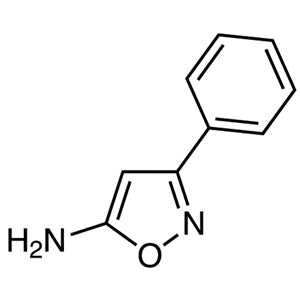
- TCI A2437 4369-55-5 5-Amino-3-phenylisoxazole
- TCI P2390 14442-12-7 3-Phenylisoxazole-5-carboxylic Acid
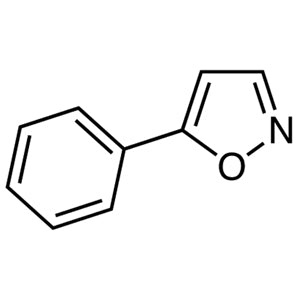
- TCI P2309 1006-67-3 5-Phenylisoxazole
- TCI P2020 14441-90-8 5-Phenylisoxazole-3-carboxylic Acid
- Organic synthesis of heterocyclic compounds due to its reactive functional groups and structural versatility.
- Development of pharmaceutical compounds as a key intermediate in drug molecule construction.
- Material science research for creating new polymers and functional materials with specific properties.
- Analytical chemistry applications for testing the reactivity and stability of chemical compounds.
- Educational purposes in teaching advanced organic chemistry concepts and reaction mechanisms.
| Brand | TCI |
|---|---|
| CAS number | 16883-16-2 |
| Molecular formula | — |
| Purity | — |
| Category | Chemistry > Building Blocks > Heterocyclic Building Blocks |
| Pack sizes | Available in standard laboratory quantities as per supplier specifications |
| Physical form | Solid powder or crystalline form, depending on packaging |
| Storage | Store in a cool, dry place away from moisture and direct sunlight |
This compound should be stored in a cool, dry environment to maintain its chemical stability. It is recommended to keep it in a sealed container to prevent exposure to moisture and air. Suitable containers include glass or high-density polyethylene vessels that are resistant to chemical reactions. General laboratory precautions involve handling it in a well-ventilated area and wearing appropriate personal protective equipment. Avoid contact with skin and eyes, and ensure proper disposal following local regulations. The compound is not classified as hazardous under standard laboratory conditions, but standard safety protocols should still be followed to ensure safe handling and storage.
—
Product Categories
Produk Terkait
-
Benzo[b]thiophene-2-carbonylChloride TCI B4637
Regular price From Rp 1.167.600,00Regular price -
3,5-Dimethylisoxazole-4-carbonylChloride TCI D4706
Regular price From Rp 1.035.300,00Regular price -
5-Amino-3-phenylisoxazole TCI A2437
Regular price Rp 2.306.850,00Regular price -
3-Phenylisoxazole-5-carboxylicAcid TCI P2390
Regular price From Rp 2.332.050,00Regular price -
5-Phenylisoxazole TCI P2309
Regular price From Rp 1.565.550,00Regular price -
5-Phenylisoxazole-3-carboxylicAcid TCI P2020
Regular price From Rp 2.016.000,00Regular price -
(5-Phenylisoxazol-3-yl)methanol TCI P2386
Regular price From Rp 3.683.400,00Regular price -
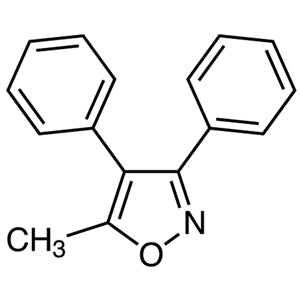
5-Methyl-3,4-diphenylisoxazole TCI M2830
Regular price From Rp 848.400,00Regular price
![39827-11-7 Benzo[b]thiophene-2-carbonyl Chloride - AMI Scientific](http://amiscientific.com/cdn/shop/files/TCI2510B4637_9d4e67db-4d59-4414-9881-fc1acfc72b84.jpg?v=1767437371&width=533)