5-Amino-3-phenylisoxazole is a chemical compound widely used as a building block in the synthesis of heterocyclic compounds. It plays a crucial role in laboratory settings where complex molecular structures are being developed, particularly in the field of medicinal chemistry. This compound is valued for its ability to participate in various chemical reactions, making it a versatile tool for researchers aiming to create bioactive molecules. Its presence in synthetic pathways is essential for the development of pharmaceuticals and other specialized chemical products.
The compound is known for its stable molecular structure and controlled reactivity, which allows it to be manipulated under specific reaction conditions. These characteristics make it a preferred choice for applications requiring precision and consistency in organic synthesis. Its ability to interact with a variety of functional groups enhances its adaptability across different chemical processes. This flexibility ensures that it remains a key component in the toolkit of many chemists working in both academic and industrial laboratories.
In Indonesian laboratories, 5-Amino-3-phenylisoxazole is commonly used in organic chemistry research, especially in pharmacological studies and the synthesis of bioactive compounds. Its availability in the local market supports local research efforts, reducing the need for imports and ensuring that scientists have access to essential materials for their experiments. This accessibility contributes to the growth of scientific innovation in the region.
Related TCI products
- TCI P2390 14442-12-7 3-Phenylisoxazole-5-carboxylic Acid
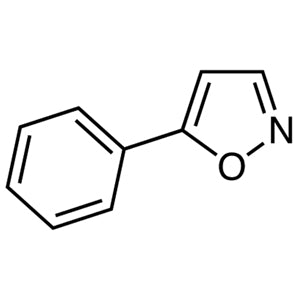
- TCI P2309 1006-67-3 5-Phenylisoxazole
- TCI P2020 14441-90-8 5-Phenylisoxazole-3-carboxylic Acid
- TCI M2996 16883-16-2 5-Methyl-3-phenylisoxazole-4-carbonyl Chloride
- TCI P2386 1619-37-0 (5-Phenylisoxazol-3-yl)methanol
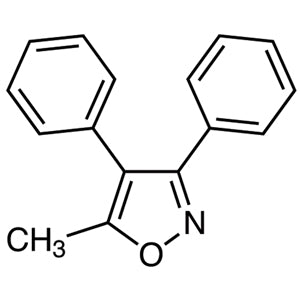
- TCI M2830 37928-17-9 5-Methyl-3,4-diphenylisoxazole
- Heterocyclic Compound Synthesis: This compound is ideal for creating complex ring structures, which are fundamental in drug development and organic chemistry research.
- Pharmaceutical Research: Its role in synthesizing bioactive molecules makes it a valuable asset in the development of new therapeutic agents.
- Organic Chemistry Experiments: It is frequently used in laboratory settings to explore reaction mechanisms and functional group transformations.
- Bioactive Molecule Development: Its reactivity and structural versatility support the creation of compounds with potential medicinal applications.
- Academic Research: It is widely used in university and research institutions for teaching and experimental studies in synthetic chemistry.
| Brand | TCI |
|---|---|
| CAS number | 4369-55-5 |
| Molecular formula | — |
| Purity | — |
| Category | Chemistry > Building Blocks > Heterocyclic Building Blocks |
| Pack sizes | Available in various quantities as per supplier specifications |
| Physical form | Solid (as per standard product description) |
| Storage | Store in a cool, dry place away from light and moisture |
This compound should be stored in a cool, dry environment to maintain its stability and prevent degradation. It is recommended to use airtight containers to protect it from moisture and air exposure. Due to its chemical nature, it should be handled in a well-ventilated area, and appropriate personal protective equipment should be worn when working with it. Avoid contact with incompatible substances to ensure safety in the laboratory. Proper storage conditions help preserve its reactivity and ensure its effectiveness in chemical synthesis processes.
—
Produk Terkait
-
3-Phenylisoxazole-5-carboxylicAcid TCI P2390
Regular price From Rp 2.384.550,00Regular priceRp 1.683.150,00Sale price From Rp 2.384.550,00 -
5-Phenylisoxazole TCI P2309
Regular price From Rp 1.618.050,00Regular priceRp 1.146.600,00Sale price From Rp 1.618.050,00 -
5-Phenylisoxazole-3-carboxylicAcid TCI P2020
Regular price From Rp 2.068.500,00Regular priceRp 1.461.600,00Sale price From Rp 2.068.500,00 -
5-Methyl-3-phenylisoxazole-4-carbonylChloride TCI M2996
Regular price From Rp 822.150,00Regular priceRp 590.100,00Sale price From Rp 822.150,00 -
(5-Phenylisoxazol-3-yl)methanol TCI P2386
Regular price From Rp 3.735.900,00Regular priceRp 2.628.150,00Sale price From Rp 3.735.900,00 -
5-Methyl-3,4-diphenylisoxazole TCI M2830
Regular price From Rp 900.900,00Regular priceRp 645.750,00Sale price From Rp 900.900,00 -
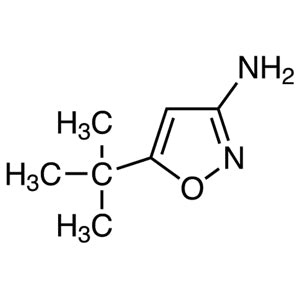
3-Amino-5-tert-butylisoxazole TCI A2341
Regular price Rp 2.093.700,00Regular priceRp 1.479.450,00Sale price Rp 2.093.700,00 -
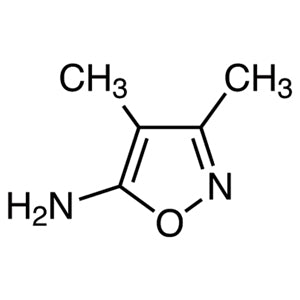
5-Amino-3,4-dimethylisoxazole TCI A3179
Regular price From Rp 1.246.350,00Regular priceRp 887.250,00Sale price From Rp 1.246.350,00