
![6,7-Dihydro-4-benzo[b]thiophenone (CAS 13414-95-4) - TCI D5714 - AMI Scientific](http://amiscientific.com/cdn/shop/files/TCI2510D5714.jpg?v=1767109116&width=1946)
![6,7-Dihydro-4-benzo[b]thiophenone (CAS 13414-95-4) - TCI D5714 - AMI Scientific](http://amiscientific.com/cdn/shop/files/TCI2510D5714.jpg?v=1767109116&width=1445)
TCI D5714 6,7-Dihydro-4-benzo[b]thiophenone is a heterocyclic building block that combines a thiophene core with a fused cyclohexenone ring. This bicyclic structure carries a highly reactive ketone group alongside an electron-rich thiophene ring, providing two entry points at once for the construction of more elaborate molecules. In everyday laboratory practice, a compound of this kind serves as an efficient starting scaffold, because researchers do not need to build the fused ring system from scratch — they simply modify the functional groups already present on that framework.
The property that makes this compound a frequent choice is the versatility of its reactivity. The carbonyl group can undergo reduction, aldol condensation, reductive amination, enamine and enol ether formation, and Grignard reactions, while the position alpha to the ketone is readily functionalized through alkylation or halogenation. The thiophene ring itself is open to electrophilic substitution and, once halogenated, to cross-coupling reactions, so the framework can be directed toward a wide range of derivatives. The half-unsaturated fused system also allows further aromatization, making it an entry point toward benzothiophene skeletons.
In Indonesian laboratories, this building block is typically used in synthetic and medicinal chemistry research groups at universities and research institutes, as well as in R&D units developing new heterocyclic compounds. It fits multi-step synthesis routes on a bench scale, where a ready-made fused ring system saves considerable preparation time. Analytical and method-development work also draws on such scaffolds when reference derivatives are needed for structural or spectroscopic comparison.
Related TCI products
- TCI D3511 1003-04-9 4,5-Dihydro-3(2H)-thiophenone
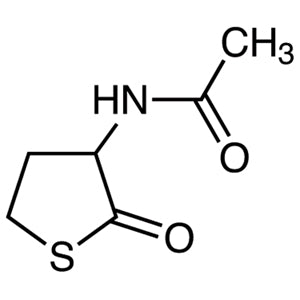
- TCI A2144 1195-16-0 3-Acetamidotetrahydro-2-thiophenone
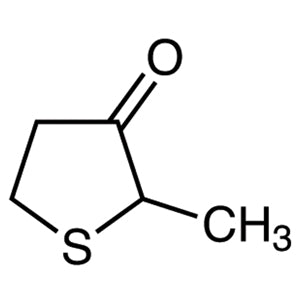
- TCI M1839 13679-85-1 2-Methyl-3-tetrahydrothiophenone
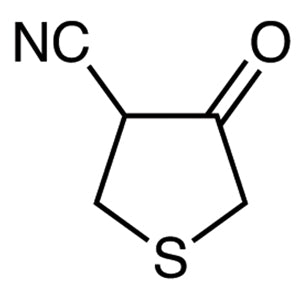
- TCI C1164 16563-14-7 4-Cyano-3-tetrahydrothiophenone
- TCI C3181 31251-41-9 8-Chloro-5,6-dihydro-11H-benzo[5,6]cyclohepta[1,2-b]pyridin-11-one
- TCI T4294 63666-10-4 3-(1,1,2-Trimethyl-1H-benzo[e]indol-3-ium-3-yl)propane-1-sulfonate
- Medicinal chemistry scaffold construction — the ketone and thiophene ring together give two independent handles for building analogue libraries around a single fused core.
- Heterocyclic synthesis toward benzothiophene systems — the half-unsaturated fused ring can be carried forward through aromatization to reach fully aromatic benzothiophene skeletons.
- Carbonyl derivatization studies — the reactive ketone supports reduction, aldol condensation, reductive amination, and Grignard addition for preparing alcohols, amines, and extended carbon chains.
- Cross-coupling substrate preparation — after halogenation of the thiophene ring, the framework serves as a partner in palladium-catalyzed cross-coupling to install aryl and heteroaryl groups.
- Alpha-functionalization and enolate chemistry — the position alpha to the ketone is easily alkylated or halogenated, and enamine and enol ether intermediates are readily formed for further transformation.
| Brand | TCI (Tokyo Chemical Industry) |
|---|---|
| CAS number | 13414-95-4 |
| Molecular formula | — |
| Purity | — |
| Category | Chemistry > Building Blocks > Heterocyclic Building Blocks |
| Pack sizes | available in standard TCI research-scale packaging; please confirm the pack size when ordering |
| Physical form | — |
| Storage | keep in a tightly closed original container in a cool, dry, well-ventilated place, away from light and oxidizing agents |
- Catalogue number: D5714
Store the material in its tightly closed original container in a cool, dry, and well-ventilated area, protected from direct sunlight and separated from strong oxidizing agents. Amber glass or the supplier's original packaging is suitable; transfer only what is needed and reseal promptly to limit exposure to air and moisture. Handle in a fume hood using safety glasses, chemical-resistant gloves, and a laboratory coat. Avoid inhalation of dust or vapour and contact with skin and eyes. Keep containers clearly labelled, and consult the manufacturer's Safety Data Sheet before use, handling, and disposal.
—
Produk Terkait
-
4,5-Dihydro-3(2H)-thiophenone TCI D3511
Regular price From Rp 875.700,00Regular price -
3-Acetamidotetrahydro-2-thiophenone TCI A2144
Regular price From Rp 1.167.600,00Regular price -
2-Methyl-3-tetrahydrothiophenone TCI M1839
Regular price From Rp 1.565.550,00Regular price -
4-Cyano-3-tetrahydrothiophenone TCI C1164
Regular price From Rp 1.115.100,00Regular price -
8-Chloro-5,6-dihydro-11H-benzo[5,6]cyclohepta[1,2-b]pyridin-11-one TCI C3181
Regular price From Rp 1.829.100,00Regular price -
3-(1,1,2-Trimethyl-1H-benzo[e]indol-3-ium-3-yl)propane-1-sulfonate TCI T4294
Regular price From Rp 505.050,00Regular price -
AcidMonohydrate TCI T4293
Regular price From Rp 1.696.800,00Regular price -
4-(1,1,2-Trimethyl-1H-benzo[e]indol-3-ium-3-yl)butane-1-sulfonate TCI T4291
Regular price From Rp 505.050,00Regular price

![8-Chloro-5,6-dihydro-11H-benzo[5,6]cyclohepta[1,2-b]pyridin-11-one (CAS 31251-41-9) - TCI C3181 - AMI Scientific](http://amiscientific.com/cdn/shop/files/TCI2510C3181.jpg?v=1768817042&width=533)
![63666-10-4 3-(1,1,2-Trimethyl-1H-benzo[e]indol-3-ium-3-yl)propane-1-sulfonate - AMI Scientific](http://amiscientific.com/cdn/shop/files/TCI2510T4294.jpg?v=1767145030&width=533)
![1,1,2-Trimethyl-1H-benzo[e]indole-7-sulfonic Acid Monohydrate - AMI Scientific](http://amiscientific.com/cdn/shop/files/TCI2510T4293.jpg?v=1767145027&width=533)
![63149-24-6 4-(1,1,2-Trimethyl-1H-benzo[e]indol-3-ium-3-yl)butane-1-sulfonate - AMI Scientific](http://amiscientific.com/cdn/shop/files/TCI2510T4291.jpg?v=1767145022&width=533)