

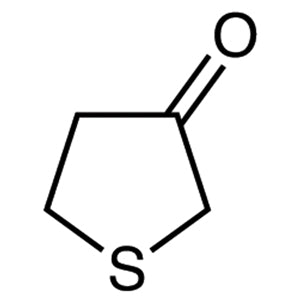
TCI D3511 4,5-Dihydro-3(2H)-thiophenone is a saturated heterocyclic building block built around a five-membered sulfur-containing ring that carries a ketone group inside the ring itself. It is also known as tetrahydrothiophen-3-one. In organic synthesis laboratories, cyclic sulfur compounds of this kind matter because the sulfur atom confers electronic character, conformational behaviour, and solubility that differ from those of the corresponding oxygen- or nitrogen-containing rings. Its principal role is as a starting framework for constructing saturated and unsaturated thiophene derivatives, including cyclic sulfur-containing amines, cyclic alcohols, and fused-ring compounds that are difficult to assemble from other starting materials.
The property that makes this compound a preferred choice is the reactivity of its ketone group within a ring environment. The in-ring carbonyl can undergo nucleophilic addition by organometallic reagents, reduction to the corresponding alcohol, and reductive amination to give cyclic amines. It also forms enolates, which opens a route to alkylation at the alpha position and to aldol condensation reactions. The moderately strained ring framework means these transformations proceed with stereochemical selectivity that is interesting to study in its own right. In addition, the sulfur atom can be oxidised stepwise to the sulfoxide and then the sulfone, allowing the polarity of the scaffold to be tuned deliberately.
In Indonesian laboratories, a building block of this type is typically used in university and institutional organic synthesis groups, in medicinal chemistry and heterocyclic chemistry research, and in method development work where a sulfur-containing saturated ring is needed as a scaffold. Because it is supplied as a catalogue reagent from TCI, it suits research groups that require a defined heterocyclic starting material for multi-step synthetic routes rather than bulk process work.
Related TCI products
- TCI D5714 13414-95-4 6,7-Dihydro-4-benzo[b]thiophenone
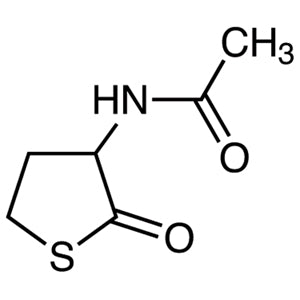
- TCI A2144 1195-16-0 3-Acetamidotetrahydro-2-thiophenone
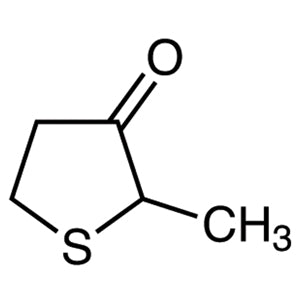
- TCI M1839 13679-85-1 2-Methyl-3-tetrahydrothiophenone
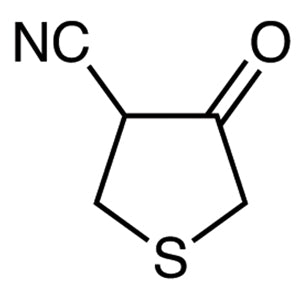
- TCI C1164 16563-14-7 4-Cyano-3-tetrahydrothiophenone
- TCI B1512 7426-75-7 1,4-Bis(4,5-dihydro-2-oxazolyl)benzene
- TCI B1511 34052-90-9 1,3-Bis(4,5-dihydro-2-oxazolyl)benzene
- Synthesis of saturated thiophene derivatives, where the intact sulfur-containing ring is carried through the route and only the carbonyl group is elaborated further.
- Preparation of cyclic sulfur-containing amines by reductive amination of the in-ring ketone, giving amine scaffolds that are hard to reach from other commercially available starting materials.
- Preparation of cyclic alcohols through reduction of the ring carbonyl, providing hydroxylated sulfur heterocycles for use as intermediates or as substrates in subsequent functionalisation.
- Alpha-functionalisation studies via enolate formation, which allows alkylation adjacent to the carbonyl and aldol condensation chemistry on a constrained five-membered ring system.
- Sulfoxide and sulfone preparation by stepwise oxidation of the ring sulfur atom, letting researchers adjust the polarity and electronic properties of the resulting scaffold.
| Brand | TCI (Tokyo Chemical Industry) |
|---|---|
| CAS number | 1003-04-9 |
| Molecular formula | — |
| Purity | — |
| Category | Chemistry > Building Blocks > Heterocyclic Building Blocks |
| Pack sizes | available in standard TCI catalogue research pack sizes; please confirm the required size when ordering |
| Physical form | — |
| Storage | keep in the tightly closed original container as indicated on the manufacturer label |
- Catalogue code: D3511
Store the material in its tightly closed original container in a cool, dry, well-ventilated place, away from heat, ignition sources, oxidising agents, and direct sunlight. Keep the container sealed when not in use, since sulfur-containing ketones can develop odour and may be sensitive to prolonged air exposure. Handle in a functioning fume hood and wear the usual laboratory personal protective equipment, including safety glasses, a laboratory coat, and chemically resistant gloves. Use clean, dry glassware or the manufacturer-supplied container for transfers, avoid generating vapour, and label any aliquots clearly. Always consult the manufacturer's safety data sheet before use and follow institutional rules for chemical waste disposal.
—
Produk Terkait
-
6,7-Dihydro-4-benzo[b]thiophenone TCI D5714
Regular price From Rp 1.326.150,00Regular price -
3-Acetamidotetrahydro-2-thiophenone TCI A2144
Regular price From Rp 1.167.600,00Regular price -
2-Methyl-3-tetrahydrothiophenone TCI M1839
Regular price From Rp 1.565.550,00Regular price -
4-Cyano-3-tetrahydrothiophenone TCI C1164
Regular price From Rp 1.115.100,00Regular price -
1,4-Bis(4,5-dihydro-2-oxazolyl)benzene TCI B1512
Regular price Rp 2.518.950,00Regular price -
1,3-Bis(4,5-dihydro-2-oxazolyl)benzene TCI B1511
Regular price From Rp 903.000,00Regular price -
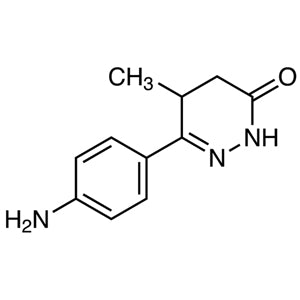
6-(4-Aminophenyl)-4,5-dihydro-5-methyl-3(2H)-pyridazinone TCI A2919
Regular price Rp 1.670.550,00Regular price -
4-[2-(2-Amino-4,7-dihydro-4-oxo-3H-pyrrolo[2,3-d]pyrimidin-5-yl)ethyl]benzoicAcid TCI A2618
Regular price From Rp 928.200,00Regular price
![6,7-Dihydro-4-benzo[b]thiophenone (CAS 13414-95-4) - TCI D5714 - AMI Scientific](http://amiscientific.com/cdn/shop/files/TCI2510D5714.jpg?v=1767109116&width=533)


![137281-39-1 4-[2-(2-Amino-4,7-dihydro-4-oxo-3H-pyrrolo[2,3-d]pyrimidin-5-yl)ethyl]benzoic Acid - AMI Scientific](http://amiscientific.com/cdn/shop/files/TCI2510A2618.jpg?v=1767083121&width=533)