TCI D5755, CAS 34764-02-8, is Decanal Diethyl Acetal — the diethyl acetal form of decanal, a straight-chain ten-carbon aldehyde. In this molecule, the aldehyde carbonyl group has been converted into an acetal function through the attachment of two ethoxy groups to the same carbon atom. In the laboratory, the compound serves as a non-heterocyclic building block and at the same time as a practical illustration of functional group protection strategy, because a reactive aldehyde group can be stored in a far more stable form until it is required at a later stage of a synthesis.
The property that makes this material a preferred choice is the resistance of the acetal group toward bases, nucleophiles, organometallic reagents, and many reducing agents, while the same group can still be released easily by hydrolysis under aqueous acidic conditions. This stability also means the compound is more resistant to air oxidation than free decanal, so storage and handling are more convenient. The ten-carbon alkyl chain imparts strongly lipophilic character, giving good solubility in non-polar organic solvents and making the compound relevant to interfacial studies as well as to formulation work.
In Indonesian laboratories, this grade of material fits the working pattern of academic synthetic chemistry groups, institutional research units, and industrial development laboratories that need a masked aldehyde for multi-step preparations. It is typically ordered as a catalogue building block for bench-scale reaction sequences, used where a protected carbonyl must survive basic or organometallic steps, and kept as a stock item by groups running organic synthesis, interfacial characterisation, or formulation studies on longer-chain aliphatic substrates.
Related TCI products
- TCI B3822 75148-49-1 3-Bromobenzaldehyde Diethyl Acetal
- TCI B3800 35822-58-3 2-Bromobenzaldehyde Diethyl Acetal
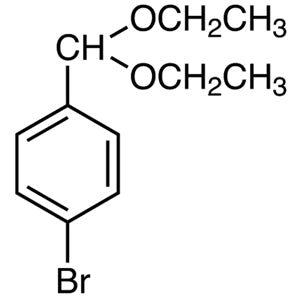
- TCI B2845 34421-94-8 4-Bromobenzaldehyde Diethyl Acetal
- TCI B1893 774-48-1 Benzaldehyde Diethyl Acetal
- TCI B0957 2032-35-1 Bromoacetaldehyde Diethyl Acetal
- TCI A0640 3054-95-3 Acrolein Diethyl Acetal
- Protected aldehyde intermediate in multi-step synthesis: the acetal masks the reactive carbonyl so that basic, nucleophilic, or organometallic steps can be carried out elsewhere in the molecule without side reactions.
- Non-heterocyclic building block for aliphatic frameworks: the straight ten-carbon chain provides a long, unbranched hydrocarbon segment that can be incorporated intact into larger target structures.
- Teaching and demonstration of protecting group strategy: the compound shows clearly how a carbonyl is masked as an acetal and then recovered by hydrolysis under aqueous acidic conditions.
- Controlled release of decanal by acid hydrolysis: chemists can generate the free aldehyde in situ when required, avoiding the air oxidation problems associated with storing decanal itself.
- Interfacial and formulation studies: the strongly lipophilic ten-carbon chain gives good solubility in non-polar organic solvents, which suits work on surfaces, interfaces, and organic-phase formulations.
| Brand | TCI |
|---|---|
| CAS number | 34764-02-8 |
| Molecular formula | — |
| Purity | — |
| Category | Chemistry > Building Blocks > Non-Heterocyclic Building Blocks |
| Pack sizes | available in TCI catalogue pack sizes; please confirm the required pack size when ordering |
| Physical form | — |
| Storage | keep in a tightly closed container, protected from acids and moisture |
- Chemical name: Decanal Diethyl Acetal
- Catalogue number: D5755
Store the container tightly closed in a cool, dry, and well-ventilated area, away from acids and from sources of moisture, since the acetal group is hydrolysed under aqueous acidic conditions. Original manufacturer packaging or clean, well-sealed glass containers with chemically compatible closures are suitable; label all secondary containers clearly. Handle in a fume hood or a properly ventilated work area, wearing safety glasses, gloves, and a laboratory coat. Keep away from ignition sources and strong oxidising agents, avoid the generation of vapour or aerosol, and dispense with clean, dry glassware to prevent contamination. Consult the manufacturer's safety data sheet before first use and follow institutional waste disposal procedures for organic chemical residues.
—
Produk Terkait
-
3-BromobenzaldehydeDiethylAcetal TCI B3822
Regular price Rp 2.625.000,00Regular price -
2-BromobenzaldehydeDiethylAcetal TCI B3800
Regular price Rp 2.121.000,00Regular price -
4-BromobenzaldehydeDiethylAcetal TCI B2845
Regular price Rp 3.419.850,00Regular price -
BenzaldehydeDiethylAcetal TCI B1893
Regular price Rp 1.776.600,00Regular price -
BromoacetaldehydeDiethylAcetal TCI B0957
Regular price From Rp 848.400,00Regular price -
AcroleinDiethylAcetal TCI A0640
Regular price From Rp 2.147.250,00Regular price -
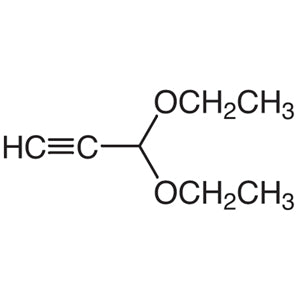
PropargylaldehydeDiethylAcetal TCI P1173
Regular price From Rp 955.500,00Regular price -
PropionaldehydeDiethylAcetal TCI P0781
Regular price From Rp 505.050,00Regular price