Bromoacetaldehyde Diethyl Acetal (BADEA), with the CAS number 2032-35-1, is a chemical compound widely used in laboratory settings as a building block for organic synthesis. It is a versatile reagent that plays a key role in various chemical reactions, particularly in substitution and oxidation processes. Its unique molecular structure makes it an essential component in the development of heterocyclic and aromatic compounds. BADEA is particularly valued for its ability to participate in reactions that require high reactivity and specificity.
The chemical properties of BADEA make it a preferred choice for synthetic chemists. It contains both a bromo group and an ethyl acetal group, which contribute to its reactivity and functional versatility. These groups enable it to undergo a variety of chemical transformations, making it suitable for complex synthetic pathways. Its stability under controlled conditions further enhances its utility in laboratory applications. However, it is important to note that BADEA is sensitive to moisture and air exposure, which necessitates careful handling and storage.
In Indonesian laboratories, BADEA is commonly used in organic chemistry research, especially in academic institutions and research centers. Its availability supports advanced chemical experiments and educational programs. Researchers and students rely on BADEA for its reliability and effectiveness in synthesizing complex organic molecules. Its role in both teaching and research underscores its importance in the Indonesian scientific community.
Related TCI products
- TCI B3822 75148-49-1 3-Bromobenzaldehyde Diethyl Acetal
- TCI B3800 35822-58-3 2-Bromobenzaldehyde Diethyl Acetal
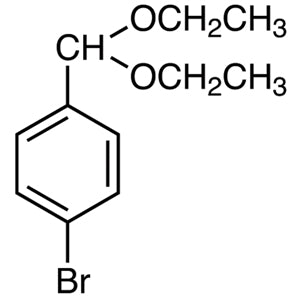
- TCI B2845 34421-94-8 4-Bromobenzaldehyde Diethyl Acetal
- TCI B1893 774-48-1 Benzaldehyde Diethyl Acetal
- TCI B1097 7252-83-7 Bromoacetaldehyde Dimethyl Acetal (stabilized with K2CO3)
- TCI A0640 3054-95-3 Acrolein Diethyl Acetal
- Heterocyclic Compound Synthesis: BADEA is ideal for creating complex ring structures due to its reactive functional groups.
- Aromatic Compound Production: Its ability to participate in oxidation reactions makes it suitable for aromatic compound synthesis.
- Organic Reaction Substitution: The bromo group facilitates substitution reactions, making it a valuable reagent in synthetic pathways.
- Educational Research Projects: BADEA is frequently used in academic settings to teach advanced organic chemistry techniques.
- Advanced Chemical Synthesis: Its versatility supports the development of new compounds through multi-step synthetic processes.
| Brand | TCI |
|---|---|
| CAS number | 2032-35-1 |
| Molecular formula | — |
| Purity | — |
| Category | Chemistry > Building Blocks > Non-Heterocyclic Building Blocks |
| Pack sizes | Available in standard laboratory quantities |
| Physical form | Liquid |
| Storage | Requires dry, cool, and well-ventilated conditions |
BADEA should be stored in a dry, cool, and well-ventilated area to prevent moisture and air exposure. It is recommended to use airtight containers made of glass or polyethylene to maintain its chemical integrity. Due to its sensitivity, it should be handled with care, using appropriate personal protective equipment such as gloves and goggles. Avoid direct contact with skin and eyes, and ensure proper ventilation during use. Storage away from incompatible materials is essential to maintain safety and effectiveness in laboratory settings.
—
Produk Terkait
-
3-BromobenzaldehydeDiethylAcetal TCI B3822
Regular price Rp 2.625.000,00Regular priceRp 1.835.400,00Sale price Rp 2.625.000,00 -
2-BromobenzaldehydeDiethylAcetal TCI B3800
Regular price Rp 2.121.000,00Regular priceRp 1.482.600,00Sale price Rp 2.121.000,00 -
4-BromobenzaldehydeDiethylAcetal TCI B2845
Regular price Rp 3.419.850,00Regular priceRp 2.390.850,00Sale price Rp 3.419.850,00 -
BenzaldehydeDiethylAcetal TCI B1893
Regular price Rp 1.776.600,00Regular priceRp 1.242.150,00Sale price Rp 1.776.600,00 -
BromoacetaldehydeDimethylAcetal(stabilizedwithK2CO3) TCI B1097
Regular price From Rp 1.298.850,00Regular priceRp 908.250,00Sale price From Rp 1.298.850,00 -
AcroleinDiethylAcetal TCI A0640
Regular price From Rp 2.147.250,00Regular priceRp 1.501.500,00Sale price From Rp 2.147.250,00 -
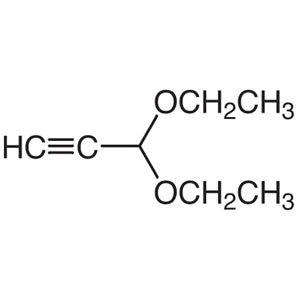
PropargylaldehydeDiethylAcetal TCI P1173
Regular price From Rp 955.500,00Regular priceRp 667.800,00Sale price From Rp 955.500,00 -
PropionaldehydeDiethylAcetal TCI P0781
Regular price From Rp 505.050,00Regular priceRp 352.800,00Sale price From Rp 505.050,00