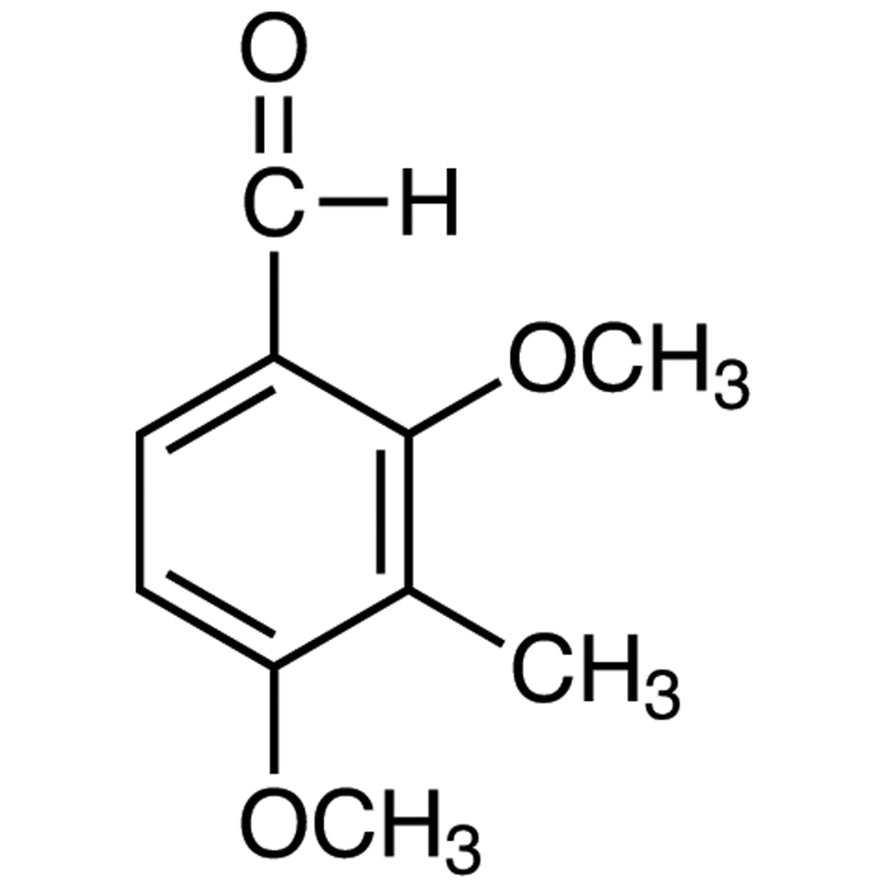
2,4-Dimethoxy-3-methylbenzaldehyde (TCI D5789) is a non-heterocyclic building block in the form of an aromatic aldehyde with a distinctive substitution pattern: two methoxy groups at positions 2 and 4, together with a single methyl group at position 3 of the benzene ring. In the organic synthesis laboratory, aromatic aldehydes are among the most versatile classes of starting material, because the formyl group can be directed into a wide range of transformations, from condensation and nucleophilic addition through to reduction and oxidation. The substitution pattern already in place on this compound saves several synthetic steps that would normally be required to install methoxy and methyl groups regioselectively.
The property that makes this compound a preferred choice is the electronic influence of the methoxy groups, which are strong electron donors, so that the aromatic ring becomes electron rich and readily undergoes electrophilic substitution at directed positions. The methyl group at position 3 provides a limited degree of steric hindrance that can steer reaction selectivity, while at the same time serving as a handle for further functionalisation such as benzylic oxidation. The aldehyde group, positioned between the ortho methoxy substituents, also shows characteristic reactivity arising from these electronic and steric effects.
In Indonesian laboratories, a pre-substituted aromatic aldehyde of this kind is typically used in organic synthesis work where a defined methoxy and methyl arrangement is needed on the ring without spending additional steps on regioselective installation. It is handled as a building block in multi-step preparative routes, in method development, and in academic and research settings where the formyl group serves as the point of entry for condensation, addition, reduction, or oxidation chemistry.
Related TCI products
- TCI H1578 39604-68-7 2'-Hydroxy-4',6'-dimethoxy-2-(4-methoxyphenyl)acetophenone
- TCI H1577 39604-66-5 2'-Hydroxy-4',6'-dimethoxy-2-phenylacetophenone
- TCI D5047 7706-67-4 2,4-Dimethoxy-beta-methylcinnamic Acid
- TCI C2101 92-72-8 5'-Chloro-3-hydroxy-2',4'-dimethoxy-2-naphthanilide
- TCI T1411 5779-72-6 2,4,5-Trimethylbenzaldehyde
- TCI T1368 487-68-3 2,4,6-Trimethylbenzaldehyde
- Condensation reactions — the formyl group readily engages carbon and nitrogen nucleophiles, letting the pre-set methoxy and methyl pattern be carried directly into larger target structures.
- Nucleophilic addition chemistry — the aldehyde carbonyl accepts nucleophiles to build new carbon–carbon and carbon–heteroatom bonds while the substituted ring stays intact throughout.
- Reduction of the aldehyde — converting the formyl group to the corresponding alcohol gives access to further derivatisation without disturbing the electron-rich methoxy-substituted aromatic core.
- Oxidation chemistry — both oxidation of the formyl group and benzylic oxidation at the position-3 methyl group provide alternative routes to carboxyl-type functionality.
- Electrophilic aromatic substitution — the strongly electron-donating methoxy groups make the ring electron rich and direct incoming electrophiles to defined positions on the ring.
| Brand | TCI |
|---|---|
| CAS number | 7149-92-0 |
| Molecular formula | — |
| Purity | — |
| Category | Chemistry > Building Blocks > Non-Heterocyclic Building Blocks |
| Pack sizes | available in standard TCI catalogue pack sizes; please confirm the required size when ordering. |
| Physical form | — |
| Storage | store in the closed original container under the conditions stated on the product label and safety data sheet. |
- Product code: D5789
Keep the material in its original tightly closed container, stored in a cool, dry, well-ventilated place away from heat, ignition sources, and incompatible chemicals, and follow the storage conditions given on the product label and safety data sheet. Aromatic aldehydes are generally sensitive to prolonged air exposure, so containers should be resealed promptly after use and kept protected from moisture. Handle in a fume hood using appropriate personal protective equipment, including safety glasses, gloves, and a laboratory coat. Avoid inhalation of dust or vapour and contact with skin and eyes, and dispose of residues and contaminated materials according to institutional chemical waste procedures.
—
Produk Terkait
-
2'-Hydroxy-4',6'-dimethoxy-2-(4-methoxyphenyl)acetophenone TCI H1578
Regular price From Rp 1.776.600,00Regular price -
2'-Hydroxy-4',6'-dimethoxy-2-phenylacetophenone TCI H1577
Regular price From Rp 1.326.150,00Regular price -
2,4-Dimethoxy-beta-methylcinnamicAcid TCI D5047
Regular price From Rp 1.431.150,00Regular price -
5'-Chloro-3-hydroxy-2',4'-dimethoxy-2-naphthanilide TCI C2101
Regular price Rp 928.200,00Regular price -
2,4,5-Trimethylbenzaldehyde TCI T1411
Regular price Rp 1.961.400,00Regular price -
2,4,6-Trimethylbenzaldehyde TCI T1368
Regular price Rp 2.147.250,00Regular price -
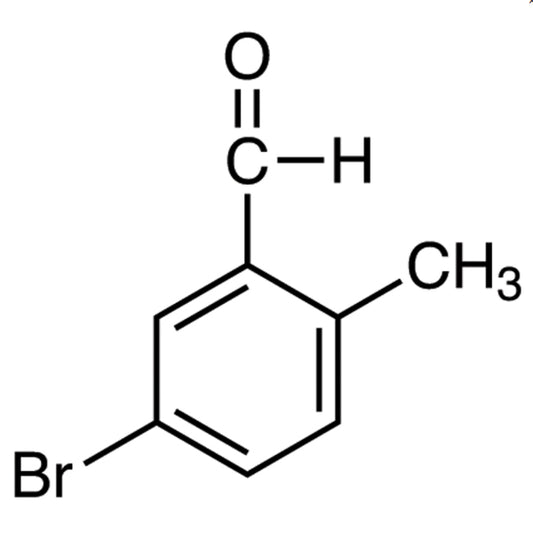
5-Bromo-2-methylbenzaldehyde TCI B5036
Regular price From Rp 2.677.500,00Regular price -
Pentamethylbenzaldehyde TCI P1351
Regular price Rp 1.008.000,00Regular price