TCI D5848 4453-90-1 1,4-Dihydro-1,4-methanonaphthalene, more commonly known as benzonorbornadiene, is a bridged bicyclic compound that fuses a benzene ring to a norbornene framework through a methano bridge. This architecture places a double bond inside a rigid, strained skeleton, which makes the compound a highly useful non-heterocyclic building block in organic chemistry and polymer chemistry laboratories. Its role is to supply a substrate that is strongly reactive yet completely defined in geometry, so the direction of reagent attack can be predicted and the stereochemical outcome can be controlled reliably.
The property that makes this compound a frequent choice is the ring strain stored in its bicyclic skeleton, which acts as the driving force for a wide range of reactions: transition-metal-catalysed ring opening, addition across the double bond from the exocyclic face, cycloaddition reactions, and ring-opening metathesis polymerisation. The double bond is also tucked beneath the bridging framework, so only one face of the molecule is readily accessible to reagents. This gives high diastereomeric selectivity without the need for additional directing groups, simplifying route design and reducing the burden of downstream separation.
In Indonesian laboratories, this building block is typically used in university and institutional research settings where synthetic methodology, catalysis, and polymer chemistry are studied. It suits work on stereoselective transformations, method development for metal-catalysed reactions, and the preparation of strained-ring monomers and scaffolds. Because it is a defined, single-compound reference material supplied by TCI, it is well suited to research groups that need reproducible starting material for repeated experimental series and for student training in advanced synthesis.
Related TCI products
- TCI T4428 13929-58-3 1,4,4a,5,8,8a-Hexahydro-1,4:5,8-dimethanonaphthalene (mixture of isomers) (stabilized with BHT)
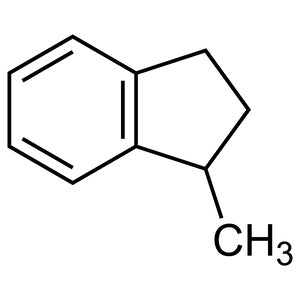
- TCI M3865 767-58-8 1-Methyl-2,3-dihydro-1H-indene
- TCI A0005 208-96-8 Acenaphthylene
- TCI D5970 131891-42-4 Decahydro-1H,3H-4,10:5,9-dimethanonaphtho[2,3-c:6,7-c']difuran-1,3,6,8-tetraone
- TCI M3689 22955-77-7 Methyl 1-Oxo-2,3-dihydro-1H-indene-2-carboxylate
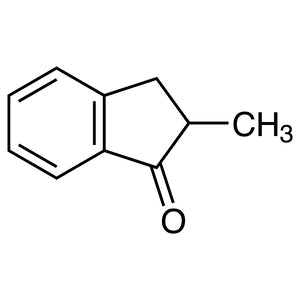
- TCI M3681 17496-14-9 2-Methyl-2,3-dihydro-1H-inden-1-one
- Transition-metal-catalysed ring-opening studies: the stored ring strain of the bicyclic skeleton drives the opening step, making this an informative model substrate for developing and comparing catalyst systems.
- Stereoselective addition reactions: because the bridging framework shields one face of the double bond, reagents approach from the exocyclic side and give predictable, high diastereomeric selectivity.
- Cycloaddition chemistry: the strained, well-defined alkene acts as a reliable partner in cycloaddition work, allowing researchers to build complex polycyclic frameworks with controlled geometry.
- Ring-opening metathesis polymerisation: the strained norbornene-type double bond makes this compound suitable as a monomer for preparing polymers with rigid, aromatic-containing repeat units.
- Non-heterocyclic building-block synthesis: as a purely carbocyclic scaffold, it serves as a starting point for multi-step routes where a rigid, aromatic-fused core is required.
| Brand | TCI (Tokyo Chemical Industry) |
|---|---|
| CAS number | 4453-90-1 |
| Molecular formula | — |
| Purity | — |
| Category | Chemistry > Building Blocks > Non-Heterocyclic Building Blocks |
| Pack sizes | available in standard TCI research-scale pack sizes; please confirm the required size when ordering |
| Physical form | — |
| Storage | keep in a cool, dark place in a tightly closed container as indicated on the manufacturer's label |
- Chemical name: 1,4-Dihydro-1,4-methanonaphthalene (benzonorbornadiene)
- Catalogue code: D5848
Store the container in a cool, dark, well-ventilated place, tightly closed and away from heat, ignition sources, and direct sunlight, following the storage class stated on the manufacturer's label and Safety Data Sheet. Use the original supplier container or a compatible tightly sealed glass vessel, and keep it upright to avoid leakage of the contents. Handle the material inside a fume hood, wearing safety glasses, gloves, and a laboratory coat, and avoid inhalation of vapours or contact with skin and eyes. Return the container to storage promptly after each use, keep it clearly labelled, and dispose of any residues and contaminated consumables through the laboratory's chemical waste route in accordance with local regulations.
—
Produk Terkait
-
1,4,4a,5,8,8a-Hexahydro-1,4:5,8-dimethanonaphthalene(mixtureofisomers)(stabilizedwithBHT) TCI T4428
Regular price From Rp 4.056.150,00Regular price -
1-Methyl-2,3-dihydro-1H-indene TCI M3865
Regular price Rp 9.514.050,00Regular price -
Acenaphthylene TCI A0005
Regular price From Rp 769.650,00Regular price -
Decahydro-1H,3H-4,10:5,9-dimethanonaphtho[2,3-c:6,7-c']difuran-1,3,6,8-tetraone TCI D5970
Regular price Rp 5.062.050,00Regular price -
Methyl1-Oxo-2,3-dihydro-1H-indene-2-carboxylate TCI M3689
Regular price Rp 3.843.000,00Regular price -
2-Methyl-2,3-dihydro-1H-inden-1-one TCI M3681
Regular price From Rp 1.696.800,00Regular price -
Ethane-1,2-diylBis(1,3-dihydro-1,3-dioxoisobenzofuran-5-carboxylate) TCI E1413
Regular price From Rp 2.650.200,00Regular price -
Dihydro-beta-ionone TCI D5751
Regular price From Rp 1.485.750,00Regular price


![Decahydro-1H,3H-4,10:5,9-dimethanonaphtho[2,3-c:6,7-c']difuran-1,3,6,8-tetraone (CAS 131891-42-4) - TCI D5970 - AMI Scientific](http://amiscientific.com/cdn/shop/files/TCI2510D5970.jpg?v=1767109510&width=533)