TCI D5864 2,7-Dimethyl-9H-carbazole is an aromatic heterocyclic compound from the carbazole family, supplied as a building block for organic synthesis. The carbazole framework consists of two benzene rings fused to a central pyrrole ring, producing a planar, electron-rich tricyclic system with a free N–H group at the nine position. In this variant, two methyl groups are attached at positions 2 and 7, the symmetrical positions on both aromatic wings. In the laboratory, this compound serves as a core scaffold that is subsequently modified through N-alkylation, N-arylation, halogenation, or coupling reactions to construct more complex target molecules, particularly organic electronic materials and ligands.
The characteristic that makes this compound a frequent choice is the combination of a strong electron-donating framework with clearly defined reaction points. The carbazole nitrogen is readily deprotonated and reacted, making it a reliable attachment point for installing solubilizing alkyl chains or electron-accepting units. Methyl substitution at positions 2 and 7 gives the molecule high symmetry, slightly raises the electron density of the ring system, and blocks two positions that would otherwise compete during further functionalization. This symmetry simplifies product characterization, since equivalent positions reduce the number of distinct signals in spectroscopic analysis.
In Indonesian laboratories, this compound is typically used in university research groups and institutional laboratories working on organic synthesis, materials chemistry, and optoelectronics. It is normally ordered in research-scale quantities for multi-step synthesis routes, method development, and thesis or dissertation work, rather than for production use. Researchers generally handle it in a fume hood as part of standard small-scale synthetic procedures, with the material stored centrally in the laboratory chemical store between experiments.
TCI brochures (PDF)
- 2,7-Substituted and 3,6-Substituted Carbazoles 2024-05-31 · p. 1
- Carbazoles 2025-06-27 · p. 2
- Building Blocks for Organic Semiconductor 2026-03-24 · p. 21
Related TCI products
- TCI T3882 6558-85-6 1,3,6,8-Tetramethyl-9H-carbazole
- TCI T3642 1630723-98-6 N,N,N',N'-Tetrakis(4-methoxyphenyl)-9H-carbazole-3,6-diamine
- TCI B5183 84359-61-5 9-(3-Bromopropyl)carbazole
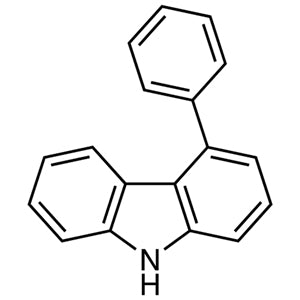
- TCI P2601 1201561-34-3 4-Phenyl-9H-carbazole
- TCI P2351 87220-68-6 9-Phenyl-9H-carbazole-3-carboxaldehyde
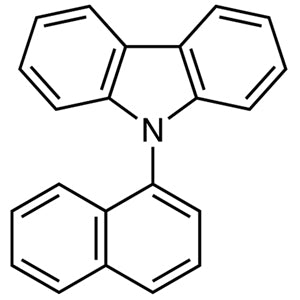
- TCI N1012 22034-43-1 9-(1-Naphthyl)carbazole
- Organic electronic material synthesis: the electron-rich carbazole core acts as a donor unit that researchers combine with acceptor fragments to build donor–acceptor systems for optoelectronic study.
- N-functionalization chemistry: the free N–H group at position nine provides a reliable, single site for deprotonation followed by alkylation or arylation to install tailored substituents.
- Cross-coupling substrate preparation: after halogenation, the scaffold serves as a partner in coupling reactions used to extend conjugation and assemble larger molecular architectures.
- Ligand framework development: the planar, electron-donating tricyclic system offers a rigid backbone that chemists elaborate into nitrogen-containing ligands for coordination chemistry studies.
- Structure–property relationship studies: the defined 2,7-dimethyl substitution pattern allows researchers to compare electronic and steric effects against other substituted carbazole analogues systematically.
| Brand | TCI |
|---|---|
| CAS number | 18992-65-9 |
| Molecular formula | — |
| Purity | — |
| Category | Chemistry > Building Blocks > Heterocyclic Building Blocks |
| Pack sizes | available in research-scale packaging; please confirm the currently offered size options when ordering |
| Physical form | — |
| Storage | store in a cool, dry place in a tightly closed container, protected from light |
- Product code: D5864
Store the container tightly closed in a cool, dry, and well-ventilated area away from direct sunlight, heat sources, and strong oxidizing agents. Amber glass or the original supplier container is suitable, and the cap should be resealed promptly after each use to limit exposure to moisture and air. Handle the solid in a fume hood, using gloves, safety glasses, and a laboratory coat, and avoid generating dust when weighing or transferring the material. Wash hands thoroughly after handling, keep the container clearly labelled, and consult the supplier safety data sheet before first use and for disposal guidance.
—
Produk Terkait
-
1,3,6,8-Tetramethyl-9H-carbazole TCI T3882
Regular price Rp 4.108.650,00Regular priceRp 2.888.550,00Sale price Rp 4.108.650,00 -
N,N,N',N'-Tetrakis(4-methoxyphenyl)-9H-carbazole-3,6-diamine TCI T3642
Regular price Rp 9.778.650,00Regular priceRp 6.853.350,00Sale price Rp 9.778.650,00 -
9-(3-Bromopropyl)carbazole TCI B5183
Regular price Rp 2.041.200,00Regular priceRp 1.442.700,00Sale price Rp 2.041.200,00 -
4-Phenyl-9H-carbazole TCI P2601
Regular price Rp 7.499.100,00Regular priceRp 5.259.450,00Sale price Rp 7.499.100,00 -
9-Phenyl-9H-carbazole-3-carboxaldehyde TCI P2351
Regular price Rp 3.419.850,00Regular priceRp 2.406.600,00Sale price Rp 3.419.850,00 -
9-(1-Naphthyl)carbazole TCI N1012
Regular price Rp 900.900,00Regular priceRp 645.750,00Sale price Rp 900.900,00 -
1-Methyl-9H-carbazole TCI M3317
Regular price Rp 4.054.050,00Regular priceRp 2.850.750,00Sale price Rp 4.054.050,00 -
3-Methyl-9H-carbazole TCI M2561
Regular price Rp 5.300.400,00Regular priceRp 3.722.250,00Sale price Rp 5.300.400,00