2,3-Dimethylthiophene is a chemical compound classified under the heterocyclic category, featuring a thiophene ring with two methyl groups at positions 2 and 3. This compound plays a crucial role in laboratory settings, particularly in the synthesis of complex organic compounds. Its unique chemical structure makes it a valuable building block for researchers aiming to develop new materials, pharmaceuticals, and agrochemicals. In the context of Indonesian laboratories, it is widely used in academic and industrial research to explore chemical reactivity and functional group transformations.
The chemical properties of 2,3-Dimethylthiophene make it a preferred choice for various synthetic applications. It exhibits stability under specific conditions but remains reactive in oxidation, reduction, and substitution reactions. This reactivity allows it to participate in a wide range of chemical transformations, making it versatile for different synthetic strategies. Additionally, its solubility in organic solvents like ethyl acetate and acetone facilitates efficient mixing and reaction processes, enhancing its utility in laboratory workflows.
In Indonesian laboratories, 2,3-Dimethylthiophene is commonly used in organic chemistry research, especially in higher education institutions and research centers. Its application spans across various fields, including pharmaceutical development, material science, and environmental chemistry. Researchers rely on this compound to explore its potential in creating new compounds with specific biological or industrial properties.
TCI brochures (PDF)
- Thiophenes 2026-06-29 · p. 9
Related TCI products
- TCI E1005 4815-24-1 Ethyl 2-Amino-4,5-dimethylthiophene-3-carboxylate
- TCI D6294 638-00-6 2,4-Dimethylthiophene
- TCI D1591 638-02-8 2,5-Dimethylthiophene
- TCI T1327 1795-05-7 2,3,5-Trimethylthiophene
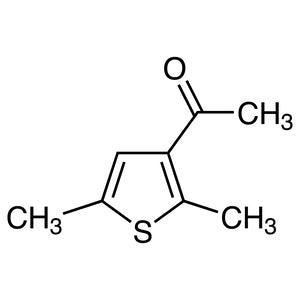
- TCI A3587 2530-10-1 1-(2,5-Dimethylthiophen-3-yl)ethan-1-one
- TCI A1181 13679-74-8 2-Acetyl-5-methylthiophene
- Organic synthesis is enhanced by 2,3-Dimethylthiophene due to its reactivity in forming sulfur-carbon bonds, enabling the creation of complex molecular structures.
- Pharmaceutical research benefits from this compound as it serves as a building block for developing drugs with targeted biological activities.
- Agrochemical development utilizes 2,3-Dimethylthiophene for synthesizing pesticides and herbicides with improved efficacy and selectivity.
- Material science applications leverage its chemical versatility to design new polymers and functional materials with unique properties.
- Environmental chemistry studies use this compound to investigate its behavior in chemical reactions relevant to pollution control and remediation processes.
| Brand | TCI |
|---|---|
| CAS number | 632-16-6 |
| Molecular formula | — |
| Purity | — |
| Category | Chemistry > Building Blocks > Heterocyclic Building Blocks |
| Pack sizes | Available in various quantities as per supplier specifications |
| Physical form | Liquid |
| Storage | Store in a cool, dry place away from light and incompatible substances |
2,3-Dimethylthiophene should be stored in a cool, dry location, away from direct sunlight and sources of heat. It is recommended to use sealed containers made of materials compatible with organic solvents to prevent evaporation and contamination. Due to its reactivity, it should be kept separate from strong oxidizing or reducing agents. Proper ventilation is essential when handling this compound to minimize exposure. Laboratory personnel should wear appropriate personal protective equipment, including gloves and safety goggles, to ensure safe handling. Regular monitoring of storage conditions is advised to maintain the compound's integrity and safety.
—
Produk Terkait
-
Ethyl2-Amino-4,5-dimethylthiophene-3-carboxylate TCI E1005
Regular price From Rp 6.679.050,00Regular price -
2,4-Dimethylthiophene TCI D6294
Regular price From Rp 1.298.850,00Regular price -
2,5-Dimethylthiophene TCI D1591
Regular price From Rp 875.700,00Regular price -
2,3,5-Trimethylthiophene TCI T1327
Regular price From Rp 3.551.100,00Regular price -
1-(2,5-Dimethylthiophen-3-yl)ethan-1-one TCI A3587
Regular price From Rp 2.359.350,00Regular price -
2-Acetyl-5-methylthiophene TCI A1181
Regular price Rp 1.644.300,00Regular price -
Methyl3-Methylthiophene-2-carboxylate TCI M2662
Regular price From Rp 717.150,00Regular price -
Methyl3-Amino-4-methylthiophene-2-carboxylate TCI M1772
Regular price From Rp 452.550,00Regular price