1-(2,5-Dimethylthiophen-3-yl)ethan-1-one is a chemical compound widely used as a building block in the synthesis of complex heterocyclic compounds. Its versatile structure allows chemists to modify it through various chemical reactions, enabling the creation of new molecules with tailored properties. In the laboratory, this compound plays a crucial role in organic chemistry research, particularly in the development of bioactive molecules. Its presence in synthetic pathways makes it an essential tool for researchers aiming to design compounds with specific functionalities.
This compound is valued for its heterocyclic structure and high reactivity, which make it suitable for a wide range of chemical transformations. Its ability to react with various functional groups enhances its utility in synthetic chemistry. The compound’s stability under controlled conditions further supports its application in laboratory settings. These properties contribute to its popularity among chemists working on drug discovery and organic synthesis projects.
In Indonesian laboratories, 1-(2,5-Dimethylthiophen-3-yl)ethan-1-one is commonly used in organic chemistry research, especially in academic and research institutions. It is frequently employed in the development of pharmaceuticals, agrochemicals, and specialty chemicals. Its role in creating complex molecular structures makes it a preferred choice for researchers in both academia and industry. The compound’s adaptability and reactivity make it an indispensable tool in modern chemical research.
TCI brochures (PDF)
- Thiophenes 2026-06-29 · p. 10
Related TCI products
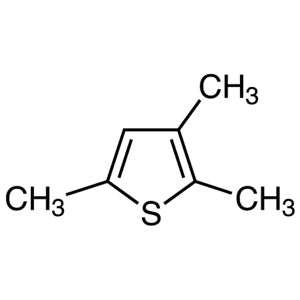
- TCI T1327 1795-05-7 2,3,5-Trimethylthiophene
- TCI A1181 13679-74-8 2-Acetyl-5-methylthiophene
- TCI M2662 81452-54-2 Methyl 3-Methylthiophene-2-carboxylate
- TCI M1772 85006-31-1 Methyl 3-Amino-4-methylthiophene-2-carboxylate
- TCI M0911 13679-70-4 5-Methylthiophene-2-carboxaldehyde
- TCI M0899 5834-16-2 3-Methylthiophene-2-carboxaldehyde
- Organic synthesis of bioactive compounds due to its reactivity and structural versatility.
- Development of pharmaceuticals as a key intermediate in drug molecule construction.
- Research in heterocyclic chemistry for the design of new functional molecules.
- Creation of agrochemicals through modification of its heterocyclic framework.
- Investigation of chemical reactivity in synthetic pathways for advanced material development.
| Brand | TCI |
|---|---|
| CAS number | 2530-10-1 |
| Molecular formula | — |
| Purity | — |
| Category | Chemistry > Building Blocks > Heterocyclic Building Blocks |
| Pack sizes | As available from supplier |
| Physical form | Solid (as per standard chemical form) |
| Storage | Store in a cool, dry place away from light and moisture |
This compound should be stored in a cool, dry place, away from direct light and moisture to maintain its stability. It is recommended to use airtight containers to prevent exposure to air and humidity. Proper labeling of containers is essential for safe handling and identification. In laboratory settings, it should be handled with appropriate personal protective equipment to ensure safety. Regular monitoring of storage conditions is advised to prevent degradation. Due to its reactivity, it should be stored separately from incompatible substances to avoid potential chemical interactions.
—
Produk Terkait
-
2,3,5-Trimethylthiophene TCI T1327
Regular price From Rp 3.603.600,00Regular priceRp 2.535.750,00Sale price From Rp 3.603.600,00 -
2-Acetyl-5-methylthiophene TCI A1181
Regular price Rp 1.696.800,00Regular priceRp 1.202.250,00Sale price Rp 1.696.800,00 -
Methyl3-Methylthiophene-2-carboxylate TCI M2662
Regular price From Rp 769.650,00Regular priceRp 553.350,00Sale price From Rp 769.650,00 -
Methyl3-Amino-4-methylthiophene-2-carboxylate TCI M1772
Regular price From Rp 505.050,00Regular priceRp 368.550,00Sale price From Rp 505.050,00 -
5-Methylthiophene-2-carboxaldehyde TCI M0911
Regular price From Rp 980.700,00Regular priceRp 701.400,00Sale price From Rp 980.700,00 -
3-Methylthiophene-2-carboxaldehyde TCI M0899
Regular price From Rp 1.590.750,00Regular priceRp 1.127.700,00Sale price From Rp 1.590.750,00 -
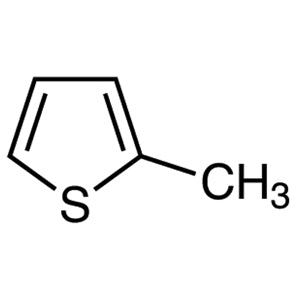
2-Methylthiophene TCI M0635
Regular price From Rp 1.881.600,00Regular priceRp 1.331.400,00Sale price From Rp 1.881.600,00 -
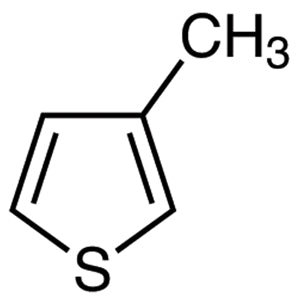
3-Methylthiophene TCI M0440
Regular price From Rp 1.510.950,00Regular priceRp 1.072.050,00Sale price From Rp 1.510.950,00