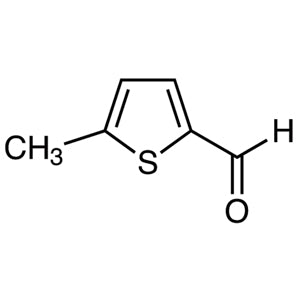
5-Methylthiophene-2-carboxaldehyde is a chemical compound widely used in organic reactions for the synthesis of complex heterocyclic compounds. It serves as a key building block in the creation of various heterocyclic structures, including thiazoles and thiophenes. This compound is commonly found in chemical laboratories as a primary raw material for the development of compounds with unique molecular frameworks. Due to its versatile reactivity, it is a valuable tool for chemists working on synthetic pathways that require functional group modifications or ring formation.
The chemical properties and molecular structure of 5-Methylthiophene-2-carboxaldehyde make it a preferred choice among researchers. It exhibits good solubility in organic solvents such as ethyl acetate and acetone, which simplifies its handling and application in chemical reactions. Its chemical stability and ability to participate in a wide range of reactions, including condensation, substitution, and catalytic processes, further enhance its utility. These characteristics make it a reliable and efficient reagent for the synthesis of complex organic molecules.
In Indonesian laboratories, 5-Methylthiophene-2-carboxaldehyde is extensively used in organic chemistry research, particularly in pharmaceutical and material science fields. Many research institutions and universities in Indonesia rely on this compound for the development of new compounds with potential applications in drug discovery and advanced materials. Its availability and performance make it a standard component in many chemical synthesis protocols within the country.
TCI brochures (PDF)
- Thiophenes 2026-06-29 · p. 3
Related TCI products
- TCI M0899 5834-16-2 3-Methylthiophene-2-carboxaldehyde
- TCI T1327 1795-05-7 2,3,5-Trimethylthiophene
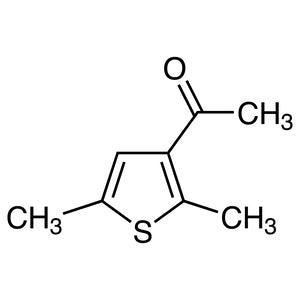
- TCI A3587 2530-10-1 1-(2,5-Dimethylthiophen-3-yl)ethan-1-one
- TCI A1181 13679-74-8 2-Acetyl-5-methylthiophene
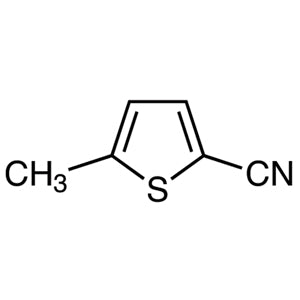
- TCI M2959 72835-25-7 5-Methylthiophene-2-carbonitrile
- TCI M2662 81452-54-2 Methyl 3-Methylthiophene-2-carboxylate
- Organic synthesis of heterocyclic compounds due to its reactivity and structural versatility.
- Development of pharmaceutical compounds as a key intermediate in drug molecule construction.
- Research in material science for the creation of advanced polymers and functional materials.
- Use in catalytic reactions to facilitate the formation of complex molecular architectures.
- Support for academic research in chemistry departments focusing on synthetic methodologies.
| Brand | TCI |
|---|---|
| CAS number | 13679-70-4 |
| Molecular formula | — |
| Purity | — |
| Category | Chemistry > Building Blocks > Heterocyclic Building Blocks |
| Pack sizes | Available in standard laboratory quantities |
| Physical form | Solid or liquid, depending on formulation |
| Storage | Store in a cool, dry place away from light and incompatible substances |
5-Methylthiophene-2-carboxaldehyde should be stored in a cool, dry place away from direct sunlight and sources of heat. It is recommended to keep the compound in a sealed container to prevent exposure to moisture and air. Suitable storage containers include glass or high-density polyethylene bottles that are resistant to chemical degradation. In a laboratory setting, it is important to handle the compound with appropriate personal protective equipment, such as gloves and safety goggles, to ensure safe handling. Avoid contact with incompatible materials and ensure proper ventilation when working with this compound. Regular monitoring of storage conditions will help maintain its chemical integrity and ensure safe usage in research applications.
—
Produk Terkait
-
3-Methylthiophene-2-carboxaldehyde TCI M0899
Regular price From Rp 1.538.250,00Regular price -
2,3,5-Trimethylthiophene TCI T1327
Regular price From Rp 3.551.100,00Regular price -
1-(2,5-Dimethylthiophen-3-yl)ethan-1-one TCI A3587
Regular price From Rp 2.359.350,00Regular price -
2-Acetyl-5-methylthiophene TCI A1181
Regular price Rp 1.644.300,00Regular price -
5-Methylthiophene-2-carbonitrile TCI M2959
Regular price Rp 1.749.300,00Regular price -
Methyl3-Methylthiophene-2-carboxylate TCI M2662
Regular price From Rp 717.150,00Regular price -
Methyl3-Amino-4-methylthiophene-2-carboxylate TCI M1772
Regular price From Rp 452.550,00Regular price -
2-Methylthiophenothiazine TCI M1387
Regular price Rp 4.161.150,00Regular price