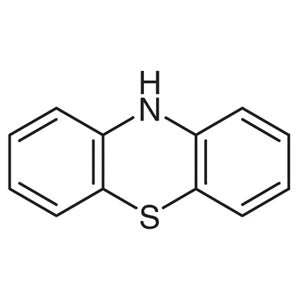
2-Methylthiophenothiazine is a chemical compound widely utilized in laboratory settings for the synthesis of heterocyclic compounds. As a building block in organic chemistry, it plays a crucial role in the development of complex molecular structures. Its unique molecular framework, incorporating sulfur and nitrogen atoms, makes it a versatile reagent for various synthetic pathways. This compound is particularly valuable in the creation of bioactive molecules, which are essential in pharmaceutical and environmental research.
The compound's reactivity and stability under different experimental conditions make it a preferred choice for chemists. Its ability to participate in substitution and cyclization reactions enhances its utility in synthetic chemistry. The presence of sulfur and nitrogen atoms contributes to its high reactivity, allowing it to be used in a wide range of chemical transformations. These properties make it a reliable component in both routine and advanced laboratory procedures.
In Indonesian laboratories, 2-Methylthiophenothiazine is commonly used in applied research projects. It is frequently employed in the development of pharmaceuticals, industrial chemicals, and environmental compounds. Its availability in the local market ensures that researchers and educational institutions can access it easily for their experiments. This accessibility supports ongoing scientific inquiry and innovation in various fields of chemistry.
Related TCI products
- TCI A1181 13679-74-8 2-Acetyl-5-methylthiophene
- TCI P0106 92-84-2 Phenothiazine
- TCI M3639 58736-69-9 10-(4-Methoxyphenyl)-10H-phenothiazine
- TCI M2662 81452-54-2 Methyl 3-Methylthiophene-2-carboxylate
- TCI M1772 85006-31-1 Methyl 3-Amino-4-methylthiophene-2-carboxylate
- TCI M0911 13679-70-4 5-Methylthiophene-2-carboxaldehyde
- Pharmaceutical research for the synthesis of bioactive compounds due to its heterocyclic structure and reactivity.
- Industrial chemical development as a building block for complex molecular structures with unique chemical properties.
- Environmental chemistry applications in the creation of compounds for pollution control and remediation processes.
- Organic synthesis experiments in academic and research laboratories for teaching and innovation.
- Drug discovery projects where heterocyclic compounds are essential for developing new therapeutic agents.
| Brand | TCI |
|---|---|
| CAS number | 7643-08-5 |
| Molecular formula | — |
| Purity | — |
| Category | Chemistry > Building Blocks > Heterocyclic Building Blocks |
| Pack sizes | Available in standard laboratory quantities |
| Physical form | Solid |
| Storage | Store in a cool, dry place away from light and moisture |
This compound should be stored in a cool, dry place, away from direct light and moisture to maintain its stability and reactivity. It is recommended to use airtight containers made of glass or polyethylene to prevent contamination and degradation. Proper labeling of storage containers is essential for safe handling and identification. Laboratory personnel should wear appropriate personal protective equipment, such as gloves and safety goggles, when handling this compound. Due to its chemical nature, it should be kept in a well-ventilated area to minimize exposure. Regular monitoring of storage conditions ensures the compound remains suitable for use in chemical synthesis and research applications.
—
Produk Terkait
-
2-Acetyl-5-methylthiophene TCI A1181
Regular price Rp 1.644.300,00Regular price -
Phenothiazine TCI P0106
Regular price From Rp 477.750,00Regular price -
10-(4-Methoxyphenyl)-10H-phenothiazine TCI M3639
Regular price From Rp 2.625.000,00Regular price -
Methyl3-Methylthiophene-2-carboxylate TCI M2662
Regular price From Rp 717.150,00Regular price -
Methyl3-Amino-4-methylthiophene-2-carboxylate TCI M1772
Regular price From Rp 452.550,00Regular price -
5-Methylthiophene-2-carboxaldehyde TCI M0911
Regular price From Rp 928.200,00Regular price -
3-Methylthiophene-2-carboxaldehyde TCI M0899
Regular price From Rp 1.538.250,00Regular price -
2-Methylthiophene TCI M0635
Regular price From Rp 1.829.100,00Regular price