10-(4-Methoxyphenyl)-10H-phenothiazine is a chemical compound belonging to the heterocyclic category, widely used in laboratory settings for its versatility in organic synthesis. This compound serves as a crucial building block in the development of complex molecular structures, particularly in pharmaceutical and chemical research. Its unique chemical structure enables it to participate in various synthetic pathways, making it an essential tool for researchers aiming to design new compounds with specific biological activities. Due to its stability and reactivity, it is frequently employed in the creation of drugs and industrial chemicals.
The compound’s key properties include the presence of a phenothiazine ring and a methoxy group, which contribute to its reactivity and specificity in chemical reactions. These functional groups allow for substitution and cyclization reactions under controlled conditions, enhancing its utility in synthetic chemistry. Its chemical stability ensures that it remains effective during various reaction steps, making it a reliable choice for laboratory applications. The presence of these groups also allows for the synthesis of compounds with targeted biological effects, such as antipsychotic or antidepressant properties.
In Indonesian laboratories, this compound is commonly used by researchers in organic chemistry, pharmacology, and biochemistry. It plays a vital role in the development of new drugs and the study of complex molecular structures. Its relevance extends to both academic and industrial research, supporting the creation of compounds with specific biological functions. This compound is particularly valuable in projects requiring the synthesis of heterocyclic compounds with tailored properties.
TCI brochures (PDF)
- Visible Light Photoredox Organocatalyst for Carbon (sp3)-Heteroatom Bond Formation 2026-09-10 · p. 1
- Organic Photoreaction Reagents 2025-02-13 · p. 7
- Organic synthesis applications benefit from this compound’s ability to participate in substitution and cyclization reactions, enabling the creation of complex molecular structures.
- Pharmaceutical research utilizes this compound to develop new drugs with antipsychotic or antidepressant properties due to its reactivity and structural versatility.
- Biochemical studies rely on this compound for the synthesis of compounds with targeted biological activities, supporting research in drug development and molecular biology.
- Industrial chemical production uses this compound as a building block for the creation of various chemical intermediates and specialty compounds.
- Academic research in chemistry and pharmacology employs this compound to explore its reactivity and potential applications in synthetic pathways.
| Brand | TCI |
|---|---|
| CAS number | 58736-69-9 |
| Molecular formula | — |
| Purity | — |
| Category | Chemistry > Building Blocks > Heterocyclic Building Blocks |
| Pack sizes | Available in various quantities as per standard laboratory supply |
| Physical form | Solid |
| Storage | Store in a cool, dry place away from light and moisture |
This compound should be stored in a cool, dry environment, away from direct light and moisture to maintain its chemical stability. It is recommended to use airtight containers made of glass or high-density polyethylene to prevent contamination and degradation. Due to its reactivity, it should be handled with care, using appropriate personal protective equipment such as gloves and safety goggles. Avoid exposure to strong oxidizing agents or reactive chemicals to ensure safe handling. In laboratory settings, it should be stored in a designated chemical storage area that is well-ventilated and accessible only to authorized personnel. Proper labeling and documentation of storage conditions are essential to ensure compliance with safety and regulatory standards.
—
Produk Terkait
-
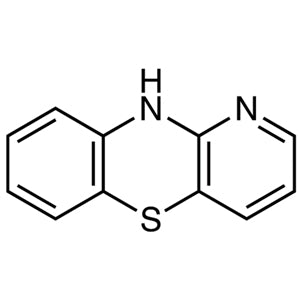
1-Azaphenothiazine TCI A2862
Regular price From Rp 505.050,00Regular price -
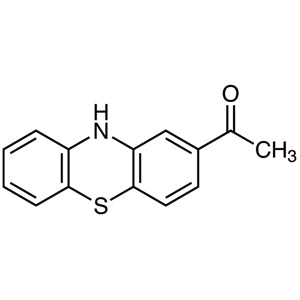
2-Acetylphenothiazine TCI A2815
Regular price From Rp 4.452.000,00Regular price -
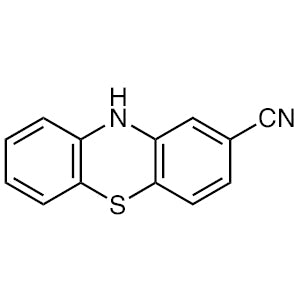
10H-Phenothiazine-2-carbonitrile TCI P2308
Regular price From Rp 848.400,00Regular price -
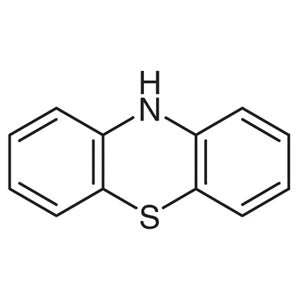
Phenothiazine TCI P0106
Regular price From Rp 477.750,00Regular price -
10-[2-(2-Methoxyethoxy)ethyl]-10H-phenothiazine TCI M3068
Regular price Rp 3.312.750,00Regular price -
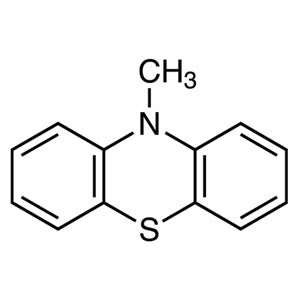
10-Methylphenothiazine TCI M2517
Regular price Rp 2.279.550,00Regular price -
2-Methylthiophenothiazine TCI M1387
Regular price Rp 4.161.150,00Regular price -
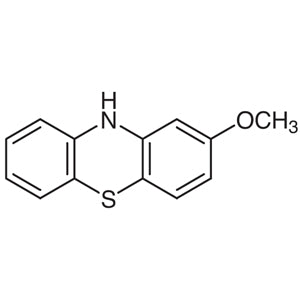
2-Methoxyphenothiazine TCI M0822
Regular price Rp 3.367.350,00Regular price
![2098786-35-5 10-[2-(2-Methoxyethoxy)ethyl]-10H-phenothiazine - AMI Scientific](http://amiscientific.com/cdn/shop/files/TCI2510M3068.jpg?v=1767127707&width=533)