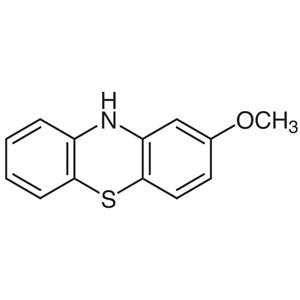
2-Methoxyphenothiazine is a chemical compound widely used in laboratory settings for its versatility in chemical reactions and molecular synthesis. As a heterocyclic compound, it contains a ring structure with nitrogen and sulfur atoms, making it a valuable building block in organic chemistry. Its unique molecular structure allows it to participate in various synthetic pathways, contributing to the development of complex molecules. This compound is commonly found in research laboratories where its chemical properties are exploited for the synthesis of pharmaceuticals, pesticides, and industrial chemicals.
The stability and controlled reactivity of 2-Methoxyphenothiazine make it a preferred choice for chemists and researchers. It exhibits relatively stable chemical behavior under normal conditions, yet it can react with specific reagents, enabling a wide range of chemical transformations. Its molecular complexity provides advantages in substitution reactions and ring-opening processes, making it a key component in the creation of new chemical compounds. These properties make it highly sought after in both academic and industrial research environments.
In Indonesian laboratories, 2-Methoxyphenothiazine is frequently used in organic chemistry research, drug synthesis, and the development of new chemical materials. Its reliability in various chemical reactions ensures its continued use in both academic and applied research. The compound's ability to participate in diverse chemical processes makes it an essential tool for scientists working on innovative chemical projects.
- Organic chemistry research benefits from 2-Methoxyphenothiazine due to its role in synthesizing complex organic molecules through substitution and ring-opening reactions.
- Pharmaceutical development utilizes this compound as a building block for the creation of new drugs, leveraging its heterocyclic structure for medicinal applications.
- Pesticide formulation incorporates 2-Methoxyphenothiazine because of its chemical stability and reactivity, enabling the synthesis of effective agrochemical compounds.
- Industrial chemical synthesis relies on this compound for the production of specialty chemicals, taking advantage of its versatile reactivity in different reaction conditions.
- Material science research employs 2-Methoxyphenothiazine to develop new chemical materials, using its molecular structure to create advanced functional compounds.
| Brand | TCI |
|---|---|
| CAS number | 1771-18-2 |
| Molecular formula | — |
| Purity | — |
| Category | Chemistry > Building Blocks > Heterocyclic Building Blocks |
| Pack sizes | Available in various quantities as per standard laboratory supply |
| Physical form | Solid, typically in crystalline or powder form |
| Storage | Store in a cool, dry place away from direct light and moisture |
2-Methoxyphenothiazine should be stored in a cool, dry environment to maintain its chemical stability. It is recommended to keep the compound in a tightly sealed container to prevent exposure to moisture and air. Suitable storage containers include glass or high-density polyethylene (HDPE) bottles, which provide protection against chemical degradation. In a laboratory setting, it is important to handle the compound with care, using appropriate personal protective equipment such as gloves and safety goggles. Due to its reactivity with certain reagents, it should be stored separately from incompatible substances. Regular monitoring of storage conditions ensures the compound remains in optimal condition for use in chemical experiments and research.
—
Produk Terkait
-
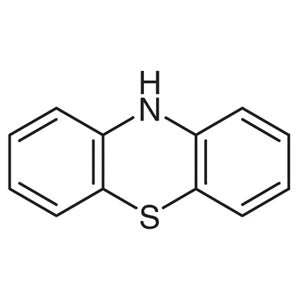
Phenothiazine TCI P0106
Regular price From Rp 477.750,00Regular price -
10-(4-Methoxyphenyl)-10H-phenothiazine TCI M3639
Regular price From Rp 2.625.000,00Regular price -
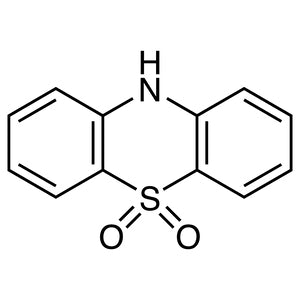
10H-Phenothiazine5,5-Dioxide TCI D6164
Regular price From Rp 3.232.950,00Regular price -
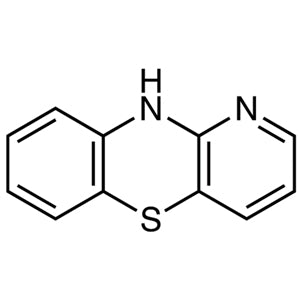
1-Azaphenothiazine TCI A2862
Regular price From Rp 505.050,00Regular price -
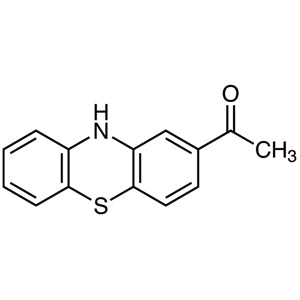
2-Acetylphenothiazine TCI A2815
Regular price From Rp 4.452.000,00Regular price -
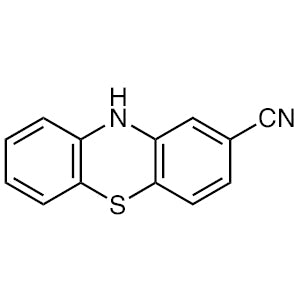
10H-Phenothiazine-2-carbonitrile TCI P2308
Regular price From Rp 848.400,00Regular price -
10-[2-(2-Methoxyethoxy)ethyl]-10H-phenothiazine TCI M3068
Regular price Rp 3.312.750,00Regular price -
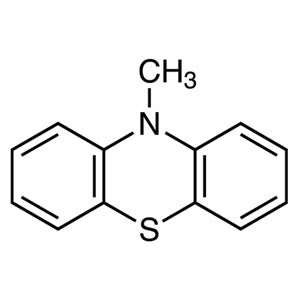
10-Methylphenothiazine TCI M2517
Regular price Rp 2.279.550,00Regular price

![2098786-35-5 10-[2-(2-Methoxyethoxy)ethyl]-10H-phenothiazine - AMI Scientific](http://amiscientific.com/cdn/shop/files/TCI2510M3068.jpg?v=1767127707&width=533)